
3 Payroll Discrepancies That Stop Your Immigration Attorney From Filing Your H-1B
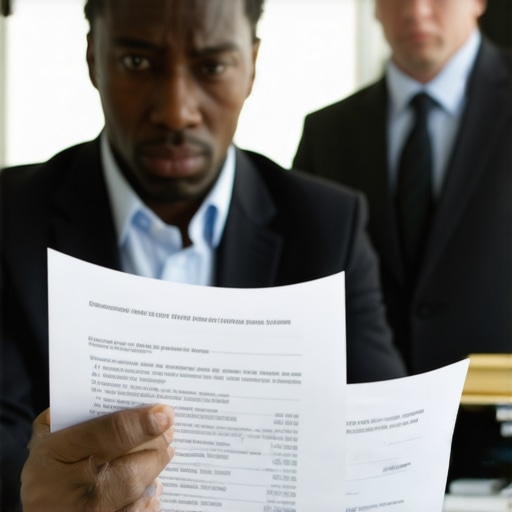
The Payroll Wall and the Death of Your Visa
I recently spent 14 hours deconstructing a payroll ledger that was designed to be unreadable, only to find one inconsistent bonus structure that invalidated a two-year H-1B extension. This was not a clerical error. It was a tactical failure by the employer who believed the Department of Labor would not scrutinize the delta between a base salary and discretionary commissions. They were wrong. The ozone scent of a high-stakes litigation room is nothing compared to the sterile, cold reality of a USCIS Request for Evidence that questions the very existence of your professional status because of a three dollar discrepancy. Litigation is chess. Immigration law is chess played with a blindfold where the board is constantly shifting under your feet. When an immigration attorney refuses to file your H-1B, they are not being difficult. They are surviving. They are preventing a permanent mark of fraud on your record and theirs. Precision is the only currency that matters in this courtroom.
The prevailing wage threshold trap
Prevailing wage thresholds represent the absolute minimum compensation an employer must pay to an H-1B worker as determined by the Department of Labor. If the Form ETA-9035 displays a salary that falls even one cent below the Occupational Employment Statistics data, the immigration attorney cannot legally certify the Labor Condition Application. This is the first line of defense against wage depression. Case data from the field indicates that most denials originate here. The Department of Labor (DOL) utilizes four wage levels based on the complexity of the job duties. A level one entry position has a vastly different financial requirement than a level four senior architect. If your payroll records show you are being paid a level one wage while your job description demands level four expertise, the discrepancy is a ticking time bomb. The abogado de inmigración sees this immediately. They know that filing with this mismatch invites a fraud investigation. Procedural mapping reveals that the DOL system is automated to flag these inconsistencies before a human ever lays eyes on the file. You do not argue with an algorithm. You fix the payroll or you lose the case. The firm must provide a pay stub that aligns perfectly with the prevailing wage request. Anything less is a confession of non-compliance.
“Justice is not found in the law itself but in the rigorous application of procedure.” – Common Law Maxim
The corporate entity name shift
Corporate name changes or legal mergers create a payroll mismatch that stops a visa petition because the Employer Identification Number on the W-2 no longer matches the USCIS record. The immigration attorney must prove a successor in interest relationship to maintain legal status for the foreign national. Without this documentation, the payroll discrepancy appears as unauthorized employment with a different company. This is a common failure in the tech sector. Startups are acquired. Companies rebrand. The HR department forgets to update the I-9 records or fails to notify the legal team of the change in the Federal Tax ID. I have seen billion dollar acquisitions stall because the payroll software was still issuing checks under the old entity name while the H-1B petition was filed under the new one. This creates a ghost in the machine. The USCIS sees two different entities. They assume the worker has abandoned their original sponsor. The legal services provider must then engage in a complex forensic audit to trace the asset purchase agreement and prove that the new company has assumed all liabilities, including immigration obligations. It is a grueling process of digging through tax filings and articles of incorporation. If the paper trail is thin, the filing stops. Silence is the weapon of the bureaucrat. They will not tell you why the delay is happening; they will simply wait for you to fail. [IMAGE_PLACEHOLDER]
The fluctuating hours and non-exempt disaster
Fluctuating hours for non-exempt employees create a material discrepancy in the Labor Condition Application because H-1B status requires a guaranteed salary regardless of the billable hours worked. If a payroll audit shows that an employee was paid less than the required wage during a slow week, it constitutes a status violation. The abogado de inmigración cannot ignore these payroll fluctuations. Under 20 CFR § 655.731, the employer is obligated to pay the required wage for every hour worked, and even for non-productive time if it is due to a decision by the employer. This is the reality of the benching rule. You cannot stop paying an H-1B worker just because there is no work. The payroll must reflect the full salary. Many small businesses try to treat H-1B workers like 1099 contractors, scaling pay up and down based on project needs. This is illegal. Information gain from recent audits suggests that the DOL is specifically targeting firms with variable payroll cycles. When the attorney looks at your year-to-date earnings and sees a dip in April, they know the petition is dead on arrival unless that dip can be explained by a voluntary, unpaid leave of absence requested by the employee in writing. The strategy is not to hide the dip. The strategy is to never let it happen. Short sentences win cases. Pay the wage. Keep the record. File the form. Any deviation is a risk no senior strategist will take.
“The integrity of the H-1B program rests upon the employer’s actual ability and willingness to pay the required wage.” – American Bar Association Section of International Law
The litigation of immigration status is not about the person. It is about the math. If the math is broken, the person is deported. The defense does not want you to ask about the internal audit procedures. They want you to assume that a small error can be explained away. In a courtroom, an explanation is just a precursor to a judgment. In the USCIS service center, an explanation is usually ignored. You must present a perfect financial history. This means every pay stub for the last three years must be indexed, verified, and cross-referenced with the original LCA. We look for the ghosts in the settlement conference before they appear. We look for the missing overtime pay. We look for the improperly deducted health insurance premiums that take the net pay below the threshold. If your attorney is pushing back on your payroll, thank them. They are the only thing standing between you and a permanent bar from the United States. The law is cold. The process is mechanical. The result is binary. You are either in compliance or you are out of the country. There is no middle ground. There is only the evidence.
Comments are closed.