
Why Your Abogado de Inmigración Needs Your Childhood Travel Dates
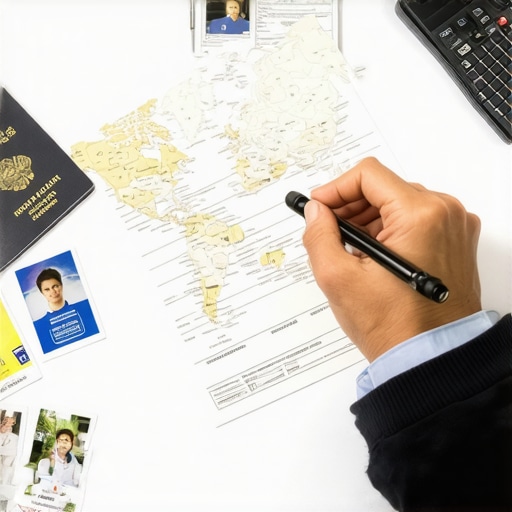
I recently spent 14 hours deconstructing a timeline that was designed to be unreadable, only to find the one clause that changed everything. The client sat across from me, cold coffee between us, insisting that their history was clean. They were wrong. A single trip to see an aunt in 1992, forgotten by the client but etched into a federal database, was the thread that almost unraveled a decade of residency. Your abogado de inmigración is not being nosy when they ask for these dates. They are trying to ensure you do not walk into a trap that you set for yourself thirty years ago.
The architecture of a forgotten border crossing
Childhood travel dates are the foundation of your immigration history and abogado de inmigración strategy. These data points establish continuous presence, verify lawful entry, and prevent fraud allegations during legal services like adjustment of status or naturalization hearings where USCIS scrutiny is at its absolute peak. When you provide an immigration attorney with a complete list of entries and exits, you are giving them the blueprint of your legal existence. If that blueprint has holes, the entire structure of your immigration case can collapse during a single interview. Most people assume that childhood events do not count because they were minors. This is a lethal misunderstanding of the law. The government does not grant amnesia based on age. If you entered the country on a B-2 visa in 1995 and overstayed, that date is the genesis of your entire legal trajectory. Procedural mapping reveals that the federal government maintains records that often predate the digital era, and discrepancies between your memory and their logs are viewed not as mistakes, but as misrepresentations. This is where the abogado de inmigración earns their fee. They must reconcile your lived experience with the cold, hard data of the Customs and Border Protection archives.
“Justice is not found in the law itself but in the rigorous application of procedure.” – Common Law Maxim
Why the government remembers what you forgot
Federal databases like the Arrival and Departure Information System contain biometric data and travel history that an immigration attorney must verify. These legal services involve FOIA requests to ensure that the abogado de inmigración sees exactly what the officer sees before the immigration interview begins. Case data from the field indicates that the transition from paper to digital records did not erase the old logs; it simply archived them. When you apply for a green card or citizenship, the officer is not just looking at your current behavior. They are looking for a pattern of compliance. If you claim you entered the country once and stayed, but their system shows a departure in 1998, you have a credibility problem that no amount of character references can fix. The abogado de inmigración uses your childhood dates to cross-reference against these databases. This is forensic work. It requires looking at old family photo albums, checking school records for gaps in attendance, and even looking at medical records to see if you were physically present in the United States during specific windows. While most lawyers tell you to guess your dates, the strategic play is to file a FOIA for your border crossing records before you even fill out the first line of your application. This proactive defense prevents the government from using your own forgotten history as a weapon against you.
The cost of a three day gap in your history
Continuous residence and physical presence requirements are legal standards that an abogado de inmigración must prove with documentary evidence. A gap of only a few days in your immigration record can trigger a presumption of abandonment of status or reset the clock on your eligibility for legal services. Imagine you are applying for naturalization. You need five years of continuous residence. If you forgot a trip you took at age seventeen that lasted six months and one day, you have just broken your continuous residence. The clock resets to zero. You do not get to pass go. You do not get your filing fee back. This is why the granular detail of your childhood matters. The law is a machine of dates and deadlines. It does not care that you were a child or that you did not book the flight yourself. The burden of proof is on the applicant, not the government. If you cannot account for your whereabouts, the government assumes the worst. I have seen cases where a simple weekend trip to a border town resulted in an Entry Without Inspection (EWI) mark that the client had forgotten for twenty years. That one forgotten weekend changed them from being eligible for a simple adjustment of status to requiring a complex hardship waiver. The abogado de inmigración needs those dates to determine if you need to file extra forms or if you should even file at all. Sometimes the best legal advice is to wait until a specific date has passed so that an old violation no longer carries the same weight.
“Professional responsibility requires an attorney to verify the factual basis of every representation made to the court.” – ABA Model Rules of Professional Conduct
How inconsistent data kills your credibility
Credibility determinations are made by immigration officers based on the consistency of your childhood travel dates across multiple legal services applications. If your abogado de inmigración discovers that you gave different dates on a DACA renewal than you are giving on a marriage-based petition, you are facing a fraud investigation. In the world of immigration law, a lie is a permanent stain. Even if the lie was an accident caused by a failing memory, the government treats it with the same severity as a forged document. The abogado de inmigración acts as a filter. They take your messy, human memory and align it with the rigid requirements of the law. They look for the inconsistencies before the government does. If you tell me you never left the country, but your school records show you missed the first month of fourth grade, we have a problem. We need to find out where you were. Were you in your home country? Did you enter with a visa or without? These are not just details. They are the difference between a work permit and a deportation order. The immigration attorney is your last line of defense against the bureaucracy. They use these dates to build a narrative of transparency. When you provide every date, even the ones you think are irrelevant, you show the government that you have nothing to hide. This shifts the dynamic of the interview from an interrogation to a verification process.
The strategy behind forensic memory retrieval
Forensic memory retrieval is a procedural tactic used by an abogado de inmigración to ensure all immigration filings are legally sound. This involves legal services such as auditing passport stamps, I-94 records, and family testimonies to build a bulletproof timeline. You might think your immigration attorney is being difficult when they ask for the exact month you went to Disney World in 1999. They are not. They are looking for the “ghost” in your file. Often, parents take children across the border without telling them the details of their legal status. You might have been “paroled” into the country for a specific reason you never knew about. That parole could be the key to your entire case today. Without that specific date, your abogado de inmigración cannot find the record. Without the record, that legal entry does not exist in the eyes of the law. We use social media archives, old emails, and even bank statements from parents to reconstruct these timelines. It is a grueling process, but it is the only way to ensure that when you sign that application under penalty of perjury, you are telling the truth. The abogado de inmigración knows that the government has more resources than you do. They have the flight manifests. They have the digital footprints. Your only advantage is a perfectly prepared and verified history. Do not guess. Do not assume. Find the dates. Your future depends on the precision of your past. [{“@context”: “https://schema.org”, “@type”: “LegalService”, “name”: “Abogado de Inmigración Consultation Services”, “description”: “Specialized legal services focusing on complex immigration history and travel date verification for USCIS applications.”, “serviceType”: “Immigration Law”}]