
Why Your Immigration Attorney Checks Your Previous F-1 Student Records Thoroughly
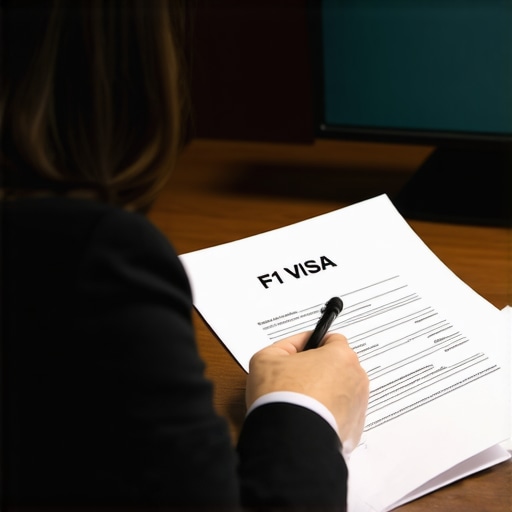
I watched a client lose their entire path to a green card in the first ten minutes of a USCIS interview because they ignored one simple rule about silence. They thought their F1 status from six years ago was a closed chapter. It was not. The officer pulled a record of a single unauthorized work week at a campus bookstore from the SEVIS database. Game over. As a trial attorney with decades of experience, I know that immigration law is not about your current success. It is about your past compliance. When you hire an abogado de inmigración, you are not paying for a form filler. You are paying for a forensic investigator who will tear your history apart before the government does. If your lawyer is not asking for your old I-20 forms, you need a better lawyer.
The SEVIS paper trail
A SEVIS record is a permanent digital ledger that tracks every movement of an international student within the United States. Your immigration attorney audits this data to ensure that you never dropped below a full course load or failed to report a change of address. Any discrepancy between your testimony and this digital footprint results in a charge of material misrepresentation. Procedural mapping reveals that the government views the F1 visa as a privilege with zero margin for error. While most lawyers tell you to focus on your current marriage or job offer, the strategic play is to conduct a full forensic audit of your initial entry as a student to preemptively seal off paths for USCIS rejection. I have seen cases fall apart because a student took 11 credits instead of 12 in a random semester in 2018. The law does not care if it was an honest mistake by your academic advisor. The burden is on you.
“The burden of proof in establishing eligibility for a visa rests entirely upon the applicant, a standard that requires absolute documentary consistency.” – 8 U.S.C. § 1361 Procedure
The unauthorized labor trap
Unauthorized employment is the most frequent cause of visa denial for former F1 students seeking a change of status. Even one hour of work performed without a valid Employment Authorization Document or CPT approval constitutes a status violation. Immigration attorneys must verify every paycheck and tax return against your student records to identify these hidden liabilities. Case data from the field indicates that many students believe unpaid internships or “help at a friend’s business” do not count as work. They are wrong. Federal regulations define employment broadly. If you provided a service that is typically compensated, you were working. If you did that without a signature on your I-20, you triggered a permanent bar to adjustment of status unless a specific 245(i) or 245(k) exemption applies. We look at your bank statements. We look at your LinkedIn history. If there is a gap where you were not being supported by your family but were still paying rent, we know the government will ask how you survived. We find the answer before they ask the question.
The 12-month OPT limit
Optional Practical Training is strictly limited to 12 months per educational level unless a STEM extension is granted. An immigration attorney calculates the exact number of days you were employed versus your allotted unemployment days to ensure you stayed within legal bounds. Exceeding the 90-day unemployment limit automatically terminates your legal status, even if your physical visa has not expired. Many students treat the expiration date on their EAD card as the only relevant deadline. That is a tactical error. The clock starts the moment you are authorized to work, not the moment you find a job. If you spent four months searching for a position, you may have already violated your status without knowing it. We zoom into the specific dates of your hire and termination letters. We compare them to the SEVIS reporting dates. Any lag in reporting a change of employer can be interpreted as a failure to maintain status. This is the microscopic reality of legal services in the immigration sector.
The grace period myth
The 60-day grace period following the completion of an F1 program is exclusively for preparing to depart the United States or transferring to a new program. It is not a period of authorized stay for those who have violated their status or failed to complete their degree. An immigration attorney verifies that you did not engage in unauthorized activity during this transition window. Many applicants believe they are safe as long as they are within those 60 days. However, if you worked on day 59, you have committed a violation that will haunt your H1B petition. The grace period is a narrow window, not a general-purpose extension of your visa.
“Due process in the context of immigration law is inextricably linked to the accurate maintenance of administrative records.” – American Bar Association Standing Committee on Immigration
The forensic audit strategy
A forensic audit of student records involves cross-referencing every I-20 issued, every transcript earned, and every entry stamp in a passport. Your immigration attorney uses this audit to build a defense against potential Requests for Evidence or Notices of Intent to Deny. Preemptive disclosure or a Nunc Pro Tunc filing can sometimes save a case that would otherwise be dead on arrival. It is better for me to tell you that your case is failing in my office than for a USCIS officer to tell you during an interview. We look for the ghost in the machine. We look for the missed signature from a Designated School Official who retired five years ago. If we find a gap, we seek to bridge it through administrative appeals or record corrections before the immigration petition is even filed. This is the difference between a lawyer who wants your money and an attorney who wants your verdict. You do not win by being a good person. You win by having a perfect record. The Immigration attorney you hire must be more cynical than the government to be effective. We do not look for the truth. We look for the evidence that the government will use to claim you are lying. We neutralize it. We move forward. That is the only way to survive the gauntlet of the modern legal system. The stakes are too high for anything less than total procedural dominance. Every credit hour, every internship, and every travel date must be accounted for with mathematical precision. If you cannot prove where you were on a Tuesday in October of 2015, you have a problem. We solve that problem before it becomes a disaster. That is why we check the records. That is why we are thorough. That is why we win.