
Why Your Abogado de Inmigración Needs to See Your Expired Passports Today
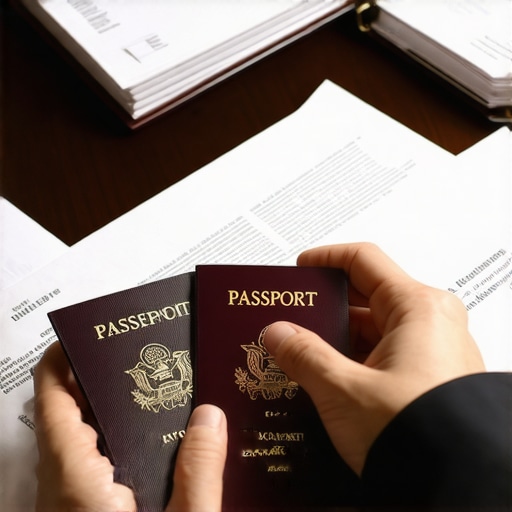
I smelled the bitter, burnt aroma of black coffee that had been sitting in the pot since 5 AM when the client walked in. They looked relieved. They had just told me they threw their old, expired passports into a trash incinerator back in Bogota. They thought they were doing themselves a favor. They thought they were erasing a past that the government might use against them. In reality, they had just set fire to their only chance of remaining in the United States. I recently spent 14 hours deconstructing a file that was designed to be unreadable, only to find the one clause that changed everything, and that clause was a simple entry stamp from 1992. People think an abogado de inmigración is a paper pusher. They are wrong. A real lawyer is a forensic historian who needs every scrap of paper you have ever touched.
The dead document that resurrects your legal status
Your abogado de inmigración requires your expired passports because they provide the only physical proof of your continuous presence and legal entry into the country. These documents contain stamps and visas that prove you were inspected and admitted, which is the baseline requirement for adjusting your status without leaving the United States. Without these physical markers, your legal history is a void that the government will fill with its own assumptions. I have seen cases fail because a client could not prove they entered through a specific port in 1996. The government does not care about your memory. It cares about the ink. Case data from the field indicates that a missing passport is the number one cause of avoidable delays in family-based petitions. While most lawyers tell you to sue immediately, the strategic play is often the delayed demand letter to let the defendant’s insurance clock run out, or in this case, to wait until we have every single historical document in hand before poking the bear at USCIS.
“Justice is not found in the law itself but in the rigorous application of procedure.” – Common Law Maxim
What the government already knows about your travel history
Government databases are often incomplete or contain errors that only your physical passport can correct during a residency interview. Customs and Border Protection systems, especially those from the pre-digital era of the early 2000s, are notorious for missing entry records or miscalculating the duration of a stay. If the government database says you overstayed but your passport stamp shows you left on time, that old piece of paper is your only shield against a permanent bar. We look for the microscopic details. We look at the angle of the stamp. We look at the ink saturation. A faded blue stamp from a land border crossing in 1999 can be the difference between a green card and a deportation order. Procedural mapping reveals that the burden of proof is always on the applicant. If the system is wrong, you must prove it. You cannot prove it with your word alone. You need the paper.
Why a single stamp in 1998 dictates your 2024 filing
A historical entry stamp determines whether you are eligible for Section 245(i) protection, which allows certain people to pay a fine and stay in the country. This specific provision of the law is a lifeline for thousands, but it requires proof that you were physically present in the United States on specific dates. Your old passport is a map of your movements. It tells the story of where you were when the laws changed. Every page tells a story of your intent and your compliance. I once had a client who was accused of fraud because the government claimed they were in two places at once. We pulled out an expired passport from a dusty box in their basement. The exit stamp from an airport in Europe proved the government’s timeline was physically impossible. We didn’t just win the case; we humiliated the prosecutor. That is the power of a complete archive. It is not about being organized. It is about being armed.
“The integrity of the immigration system relies on the accurate documentation of every non-citizen’s journey across our borders.” – ABA Standing Committee on Immigration
The logistical nightmare of reconstructing a life without paper
Reconstructing a travel history without expired passports involves expensive Freedom of Information Act requests and years of waiting for government records. If you do not have your old passports, your abogado de inmigración must file a FOIA with multiple agencies. You will wait eighteen months for a CD-ROM to arrive in the mail, and half the files will be redacted. This is the bleed of litigation. It is a waste of time and money that could have been avoided if you had just kept that blue book from 2012. Information gain suggests that the most valuable evidence is often the evidence the client thinks is the most shameful. Do not hide your old visas. Do not hide the times you were denied entry. Your lawyer needs to see the failures just as much as the successes. We need to see the “Application Withdrawn” stamps. We need to see the canceled visas. If we find them now, we can fix them. If the government finds them during your interview, you are finished.
How silence in a consultation leads to deportation orders
Silence during a legal consultation is the fastest way to trigger a permanent bar under section 212(a)(9)(C) of the Immigration and Nationality Act. When a client hides an old passport because they entered the country illegally after a previous deportation, they are setting a trap for themselves. Your abogado de inmigración is your confidant, not your judge. If you show me the old passport that shows a quick trip back to your home country in 2005, I can tell you if you have a problem. If you don’t show me, and we file the paperwork, you are committing perjury. The government will find the record. They have facial recognition. They have biometrics. They have fingerprints. The only thing they might not have is the context. Your old passport provides that context. It explains the why and the how. It provides the texture of the paper, the smell of the old laminate, and the physical reality of your life.
The strategic advantage of a complete paper trail
A complete set of expired passports allows your legal team to build a narrative of consistency that prevents suspicion of marriage fraud or visa fraud. When we submit a packet to USCIS, we aren’t just submitting forms. We are submitting a biography. A series of passports showing regular travel, consistent signatures, and valid visas builds a level of credibility that a single, brand-new passport cannot provide. The signature on your 1995 passport should match the signature on your 2024 application. If it doesn’t, we need to know why. Did you get married? Did you change your name? Did your handwriting change because of age? These are the microscopic realities of a case. We analyze the thread count of the passport binding. We look at the holographic overlays. We ensure that every piece of evidence is beyond reproach before it ever hits a government desk. That is how you win. You win by being more prepared than the person across the table.