
The Critical Move to Make if Your Visa Is Denied at the Consulate
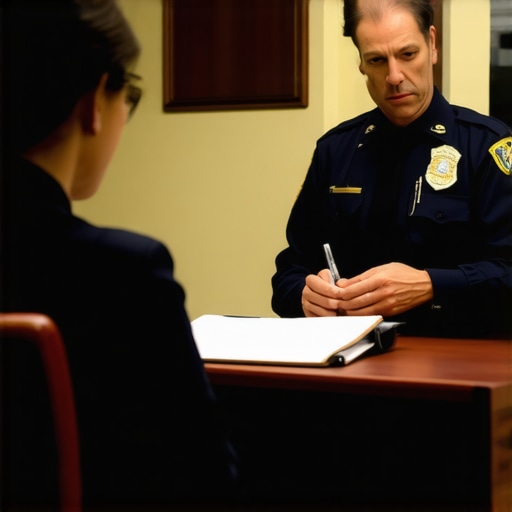
I watched a client lose their entire claim in the first ten minutes of a consular interaction because they ignored one simple rule about silence. They felt the need to fill the dead air while the officer typed. In that frantic effort to be helpful, they contradicted a minor date on a form from six years ago. The officer stopped typing, looked up, and handed back a blue sheet. Game over. Most people think a visa interview is a conversation. It is not. It is a cross-examination where the judge has already decided you are guilty of wanting to stay in the United States forever. You are fighting a legal presumption of immigrant intent that is hard-coded into the law. If you walk into that building without a clinical understanding of how to neutralize that presumption, you are just donating your application fee to the federal government. This is the cold reality of the immigration system. It does not care about your dreams. It cares about the evidentiary chain and the risk profile you represent on a computer screen. My office smells like strong black coffee because we spend all night deconstructing these failures. Most cases do not fail because of bad luck. They fail because of a lack of tactical preparation and a fundamental misunderstanding of the officer’s mandate.
The immediate action after the blue sheet
The **Consular Officer** provides a **refusal letter** under **Section 221g** or **Section 214b** which serves as the formal record of your **visa denial**. You must immediately document every word spoken during the **visa interview** while your memory is fresh, as this **evidence** determines the strategy for an **abogado de inmigración** to challenge the finding. Do not throw away the paper. Do not argue with the person behind the glass. Your only job at that moment is to exit the building and record the transcript of the interaction in a notebook. Did the officer ask about your ties to your home country? Did they look at your bank statements? The specific questions asked reveal the internal notes the officer is making in the system. While most lawyers tell you to sue immediately, the strategic play is often a delayed demand for a supervisor review or a carefully timed reapplication that addresses the specific gap in the record. The law allows for a re-evaluation, but only if you provide new, material facts that were not present during the initial failure.
Why your initial application was already dead
The **DS-160 form** and the **biometric data** you submitted weeks ago created a **digital profile** that flagged your **immigration risk** before you even reached the **consulate window**. An **Immigration attorney** knows that the **Consular Electronic Application Center** uses algorithms to highlight discrepancies in **employment history** or **prior travel** which triggers a high-scrutiny environment. Most applicants believe the interview is where they win. In reality, the interview is where you are permitted to lose. The officer has likely spent less than ninety seconds looking at your file before you walk up. If your documents are disorganized or your answers are long-winded, you are confirming their suspicion that you are a risk. The goal is to be a boring applicant. Complexity is the enemy of an approval. If your story requires a ten-minute explanation, you have already failed the test of clear non-immigrant intent.
“Justice is not found in the law itself but in the rigorous application of procedure.” – Common Law Maxim
Tactical silence during the Section 214b rebuttal
A **Section 214b denial** means the **Consular Officer** was not convinced of your **strong ties** to your **home country** as required by the **Immigration and Nationality Act**. Rebutting this requires a **legal services** professional to help you curate **objective evidence** such as **property deeds**, **employment contracts**, and **family registries** that prove your intent to return. The biggest mistake is talking too much. When the officer asks why you want to visit the United States, you give a one-sentence answer. Any additional information is just more surface area for them to find a contradiction. Silence is a tool. It forces the officer to move to the next question. If you start babbling about how much you love America, they will interpret that as a desperate desire to never leave. You must project the aura of someone who is far too busy and successful at home to consider overstaying a visa.
The hidden mechanics of the Administrative Processing delay
When a **visa application** enters **Administrative Processing** under **Section 221g**, it triggers a **security clearance** or **background check** handled by multiple **federal agencies** including the **Department of State**. This **legal limbo** can last months, and an **Immigration attorney** must monitor the **case status** to ensure the **application** does not languish in a bureaucratic black hole. This is not a denial, but it is a functional rejection for anyone with a deadline. The process is opaque. There is no phone number to call where a human will give you an update. You are waiting for the system to finish its silent audit of your life. During this time, the worst thing you can do is withdraw the application and start over. That resets the clock and marks you as someone trying to bypass the security protocols. You wait, or you have your counsel file a formal inquiry if the delay exceeds the standard processing times for that specific consulate.
How a specialized immigration attorney deconstructs the denial
Professional **legal services** involve a forensic audit of your **immigration history** to identify if the **denial** was based on a **factual error** or a **misapplication of the law**. An **abogado de inmigración** will review the **notes** from the **consular file** to determine if a **Waiver of Inadmissibility** is required or if a **Motion to Reconsider** is the appropriate **procedural move**. We look for the technicalities. Did the officer fail to consider a specific piece of evidence? Is there a misunderstanding of your local tax laws? We treat the denial like a crime scene. We look for the one piece of evidence that does not fit the narrative the officer built. Often, it is a simple matter of translating a document correctly or providing a more authoritative letter from an employer. We do not use fluff. We use statutes. We cite the Foreign Affairs Manual, which is the guidebook the officers themselves are supposed to follow. If they deviated from their own manual, we have leverage.
“The power of the lawyer is in the uncertainty of the law.” – Jeremy Bentham
Strategic timing for a reapplication versus a waiver
Applying for a **visa waiver** under **Form I-601** requires proving **extreme hardship** to a **U.S. citizen** or **permanent resident**, whereas a **standard reapplication** focuses on correcting the **record of intent**. Knowing which **immigration path** to take depends on the **grounds of inadmissibility** cited by the **Consulate** during your **visa refusal**. If you were denied for fraud, you cannot just reapply and hope they forget. Fraud is a permanent bar. You need a waiver, and you need to prove that your absence will cause a devastating impact on your family in the states. If it was a simple 214b denial, you can reapply as soon as your circumstances change. But if you reapply two days later with the exact same information, you are wasting your time and signaling desperation. You wait until you have a promotion, a new property purchase, or a significant change in your life that fundamentally alters your risk profile.
What the consular officer wrote in the notes
The **Consular Lookout and Support System** contains permanent **officer notes** that follow your **alien registration number** for the rest of your life. An **Immigration attorney** understands that these **confidential records** dictate the success of all future **visa interviews** and **immigration benefits**. You do not get to see these notes, but we can infer what they say based on the questions you were asked. If the officer asked about your brother in Chicago three times, the note says “Suspected family-based chain migration intent.” We then build the next application to specifically prove why you have no interest in your brother’s life in Chicago. We address the ghost in the room. We don’t wait for them to ask. We provide the evidence that kills their assumption before it can be written down again.
Rebuilding the evidentiary chain for a second attempt
To secure a **visa approval** after a **prior rejection**, you must submit a **comprehensive evidence packet** that addresses the **legal deficiencies** identified in the **refusal letter**. This includes **certified translations**, **financial affidavits**, and **verified employment records** that stand up to the **scrutiny** of an **Immigration attorney**. The second attempt is your last real chance for a long time. If you fail twice in a row, you are marked as a persistent seeker. That label is hard to wash off. Your evidence must be bulletproof. It should be organized with a table of contents, clear tabs, and a cover letter that summarizes the law. You make it easy for the officer to say yes. You take away any excuse they have to say no. You provide the conclusion you want them to reach, backed by so much data that any other conclusion would look like an error in judgment.
The cost of waiting for a miracle
Ignoring a **visa denial** or attempting to bypass the **consular process** through **illegal entry** results in a permanent **ban from the United States** and the loss of all **legal standing**. Engaging an **abogado de inmigración** immediately ensures that your **legal rights** are protected and that you have a clear **strategic roadmap** for your **immigration goals**. Time is your enemy in litigation. Documents get lost. Memories fade. Statutes of limitations on certain types of relief can expire. If you sit on a denial for a year, you are telling the government that the trip wasn’t that important to you. If it wasn’t important, then the officer was right to deny you. Movement is life in the legal world. You must act with precision and you must act now. Stop listening to your cousin who got a visa ten years ago. The world has changed. The algorithms have changed. The officers are more cynical. You need a strategist who knows how to navigate the mud.