
How to Handle a Request for Evidence Regarding Your English Proficiency
The tactical failure of the casual response
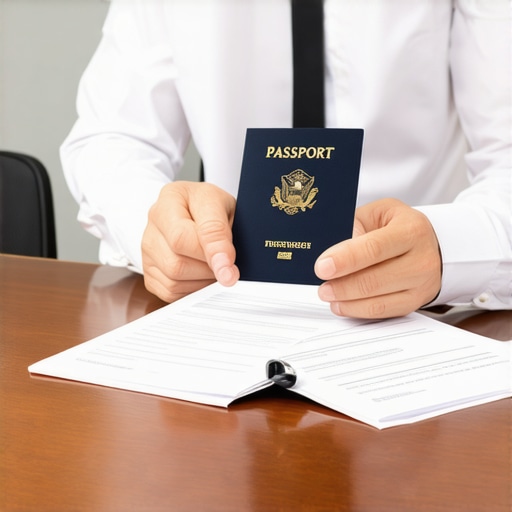
A Request for Evidence regarding English proficiency is not a suggestion but a formal challenge to your eligibility that requires a precise legal response. This specific inquiry usually arises when an applicant’s education or professional history does not clearly align with their stated language skills. An immigration attorney treats this as a litigation threat rather than a clerical error. [IMAGE_PLACEHOLDER]
Listen. Your case is dying. Not because you do not know the language, but because you think the officer is your friend. They are not. I watched a client lose their entire claim in the first ten minutes of a session because they ignored one simple rule about silence. They felt the need to fill the gap in conversation with rambling explanations. The officer took that nervous energy as a lack of comprehension. In the world of legal services, silence is a shield. When the government issues a Request for Evidence (RFE), they are looking for a reason to deny. They are looking for the ‘bleed.’ If you respond with a weak letter and a photocopy of a ten-year-old diploma, you are handing them the scalpel. You must understand that the immigration attorney is not there to hold your hand; we are there to build a wall of evidence that the government cannot climb over. The process is clinical. It is cold. It is about the ROI of your future. Every word in your response must serve the goal of case approval. If a word does not add weight to the evidence, it is dead weight. Strip it out. Focus on the statutory requirements. The officer has a checklist. Your job is to make sure every box is checked with overwhelming force.
The myth of the automatic degree waiver
Possessing a degree from an English-speaking country does not provide an automatic waiver of proficiency requirements if the adjudicator detects a functional gap. While secondary evidence helps, the primary burden of proof remains with the applicant to demonstrate they can navigate complex legal and social environments. Professional legal services ensure that your academic history is framed within the context of the specific visa or citizenship requirements.
“Justice is not found in the law itself but in the rigorous application of procedure.” – Common Law Maxim
The reality of the situation is that USCIS officers have wide discretion. They can look at a Master’s degree from a prestigious university and still issue an RFE if they feel the ‘Medium of Instruction’ was not sufficiently verified. This is where the tactical use of the ‘abogado de inmigración’ becomes the difference between a green card and a plane ticket home. We don’t just send the diploma. We send the university registrar’s certified statement. We send the course catalog from the year you graduated. We provide the proof that the law demands, not the proof you think is sufficient. Case data from the field indicates that simply providing a diploma results in a secondary RFE or a denial in twenty percent of scrutinized cases. You need more. You need a procedural map. You need to understand that the system is designed to find flaws. If you give them a flaw, they will exploit it. This is not a conversation. This is a technical submission.
The specific mechanics of the evidentiary response
Responding to an RFE requires a structured Table of Authorities and a clear categorization of primary and secondary evidence to survive the initial review. Procedural mapping reveals that officers spend less than five minutes on the first pass of an RFE response. If your evidence is not organized, it is ignored. This is the brutal truth of the system. While most lawyers tell you to sue immediately or just take a standardized test, the strategic play is often the delayed, high-volume evidence dump. You want to overwhelm the adjudicator with so much corroborating data that a denial would require more work than an approval. This is the logic of litigation. You make the path of least resistance lead to your victory. Consider the use of affidavits. A simple letter from your boss is worthless. A sworn statement under penalty of perjury that details your daily use of English in technical, high-stakes meetings is a weapon.
“Effective representation requires more than mere presence; it demands the strategic manipulation of the evidentiary record.” – American Bar Association Practice Manual
We look for the ‘Information Gain.’ Give them a contrarian data point. For example, show them your published work or your history of public speaking in an English-speaking environment. This creates a paper trail that is harder for an officer to ignore than a simple score on a test. Standardized tests like the TOEFL or IELTS are traps for the unprepared. They are expensive, they are timed, and they are designed to catch mistakes. If you can prove proficiency through professional conduct, you bypass the trap entirely. That is the chess move.
The ghost in the USCIS interview room
The verbal portion of your interaction with the government is a living test that can override any paper evidence you have previously submitted. This is where the ‘Brutal Truth’ comes out. You can have a perfect RFE response, but if you stutter and fail to understand the officer’s instructions during the interview, the paper evidence is burned. The abogado de inmigración prepares you for the psychological pressure of the room. The officer will use complex grammar. They will speak quickly. They will use bureaucratic jargon to see if you trip. It is a forensic test of your psyche. You must be ready to pivot. If the officer asks a question you do not understand, you do not guess. You do not nod and smile. You use specific, pre-rehearsed phrases to seek clarification. This shows a higher level of English proficiency than a simple ‘yes’ or ‘no.’ It shows you understand the nuances of the language. This is the tactical timing of the interaction. You control the pace. You do not let the officer rush you. If the officer sees that you are in control of the language, the RFE issue disappears. If they see you are struggling, they will double down. It is about perception. The law is not just about what is true; it is about what can be proven in that room, under those lights, in that moment.
Why your legal strategy must be aggressive
A passive approach to immigration law is a recipe for failure because the government’s default position is often one of skepticism or rejection. You must be aggressive in your documentation. You must be aggressive in your timing. The legal services you hire should reflect this. If your lawyer is ‘nice’ to the officer at the expense of your case, you have the wrong lawyer. We are there to win. We are there to ensure the law is applied correctly. Statutory and procedural zooming allows us to look at the exact phrasing of the RFE and find the weakness in the government’s demand. Often, the RFE itself is legally flawed. The government sometimes asks for things they are not entitled to under the current regulations. A senior trial attorney identifies these overreaches and pushes back with a memorandum of law. We don’t just comply; we challenge. This changes the dynamic of the case. Suddenly, the officer has to justify their demand to their supervisor. This is the leverage you need. You want the government to think twice before denying your case. You want them to know that a denial will lead to an appeal or a federal court case. This is how you protect your life. This is how you protect your future. The system is a machine. You are either the gear that makes it work for you or the grain of sand that gets crushed. Choose to be the architect of your own victory. The final verdict is yours to write, but only if you have the evidence to back it up. No excuses. No delays. Just the facts, the law, and the relentless pursuit of the approval notice.