
Why an Abogado de Inmigración Reviews Your Entire Travel History
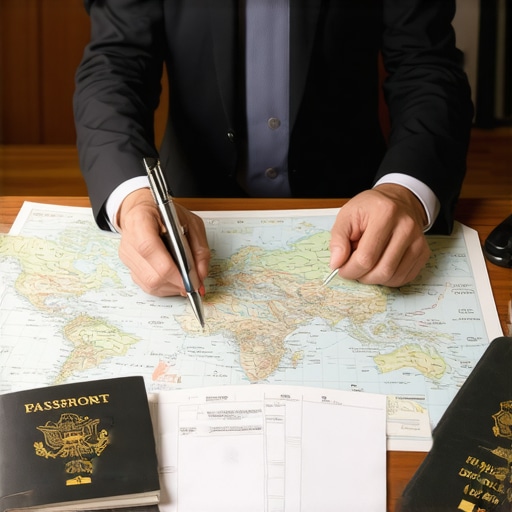
Why an Abogado de Inmigración Reviews Your Entire Travel History
I watched a client lose their entire claim in the first ten minutes of a deposition because they ignored one simple rule about silence regarding a weekend trip to Tijuana that they thought did not matter. They sat there, sweating under the fluorescent lights of a federal office, while the officer pulled up a digital record of a crossing they had forgotten to list on their Form N-400. That single omission turned a routine naturalization into a fraud investigation. In this business, what you forget can hurt you more than what you remember. It is not about the trip itself. It is about the fact that you lied about it, even if by accident. My office smells like strong black coffee because we spend late nights cross-referencing your memories with the cold reality of Department of Homeland Security databases. We do not do this to be difficult. We do it to keep you in the country.
The invisible paper trail behind every border crossing
Every professional abogado de inmigración scrutinizes your travel history to identify patterns of residency abandonment or security triggers that USCIS officers use to deny petitions. This audit prevents permanent bars and identifies material misrepresentations before the government finds them. When you hire legal services for your immigration case, you are paying for an investigator who finds the ghosts in your passport. The record of your movement is the primary tool the government uses to challenge your continuous residence. They are looking for the exact moment you decided the United States was no longer your primary home. If you stayed out for more than 180 days, you have created a legal presumption that you abandoned your status. If you stayed out for more than a year, that presumption becomes almost impossible to overcome without a re-entry permit. This is the microscopic reality of the law. One day can be the difference between a green card and an order of removal.
“Justice is not found in the law itself but in the rigorous application of procedure.” – Common Law Maxim
Why the I-94 record is often wrong
The I-94 travel history record provided by Customs and Border Protection is often incomplete or contains data entry errors that can lead to a denial of benefits. An experienced immigration attorney will verify these dates against stamps in your physical passport and airline itineraries to ensure 100 percent accuracy on your legal filings. Many people assume the government’s data is the absolute truth. It is not. It is a government database managed by overworked agents. We have seen cases where a client was logged as entering the country on a boat when they actually flew into JFK. If you sign a form that matches the government’s error instead of the truth, you are validating a mistake that could lead to a charge of fraud. We often tell our clients that the strategic play is to file a Freedom of Information Act request to see what the government thinks they know before we tell them the truth. This is the information gain that separates a trial lawyer from a paper pusher.
The mathematical danger of the 180 day threshold
Exceeding 180 days outside the United States triggers a specific statutory scrutiny under the Immigration and Nationality Act that can restart your naturalization clock. Every abogado de inmigración must perform a day-by-day calculation to ensure you have met the physical presence requirements for your specific visa or status. This is not a rough estimate. It is a forensic accounting of your life. We look at the date you cleared customs and the date you boarded your return flight. We count the partial days. If you are one day short of the 913 days required for a five-year residency period, your application is dead on arrival. There is no mercy in the math. Most people think they can explain away a long trip by saying they had a family emergency. The law does not care about your reasons as much as it cares about the calendar. The burden of proof is on you, not the government. If you cannot prove where you were, the government assumes the worst.
“The lawyer’s duty of candor to the tribunal is the bedrock of the adjudicatory process.” – American Bar Association
How digital footprints haunt the Form N-400
Modern immigration enforcement uses facial recognition and flight manifests to track movement, making it impossible to hide trips that were previously off the grid. Your abogado de inmigración must ensure that your social media presence and financial records match the travel dates listed on your immigration forms. Case data from the field indicates that officers are now trained to look for discrepancies between your stated travel and your digital life. If you claim you were in the United States for the last three years but your social media shows you at a wedding in Bogota, you have a problem. This is why we audit everything. We are looking for the flank attacks the government will use to undermine your credibility. It is better to have a difficult conversation in my office than a disastrous one in a government interview room. Procedural mapping reveals that the most common reason for a secondary inspection is a mismatch in travel dates. We fix that before we file.
The strategic silence of a seasoned legal counselor
While most lawyers tell you to provide as much information as possible, the strategic play is often the focused disclosure that provides only what is legally required to prove your case. We do not offer more than what is asked, but what we do offer must be bulletproof. When an abogado de inmigración reviews your travel, they are looking for triggers for inadmissibility. Have you visited a country on a restricted list? Have you spent an unusual amount of time in a region known for drug trafficking? These things do not mean your case is over, but they mean we need a plan. We prepare the evidence for the why before the government asks the question. This is how you win a high-stakes case. You do not react to the government; you anticipate them. We take the case to the edge of the law and hold the line there. That is the value of legal services that understand the forensic psychology of a USCIS officer. They are trained to find the lie. Our job is to give them nothing but the undeniable truth.
[image_placeholder]
The final procedural reality of your travel history
Your travel history is a map of your legal status and any deviation from the truth on a government form can lead to permanent exile from the United States. Working with a skilled abogado de inmigración ensures that your map is accurate and that your immigration journey ends in success rather than a legal nightmare. We do not accept the surface-level story. We dig into the logistics. We check the flight numbers. We verify the stamps. We do the work that other firms avoid because it is tedious and difficult. But it is that work that wins cases. If you want a lawyer who will tell you everything is fine while your case is falling apart, go somewhere else. If you want the brutal truth and a strategy to overcome it, you are in the right place. The law is a game of evidence, and we intend to have more of it than the other side.