
How an Immigration Attorney Protects Your Rights at the Border
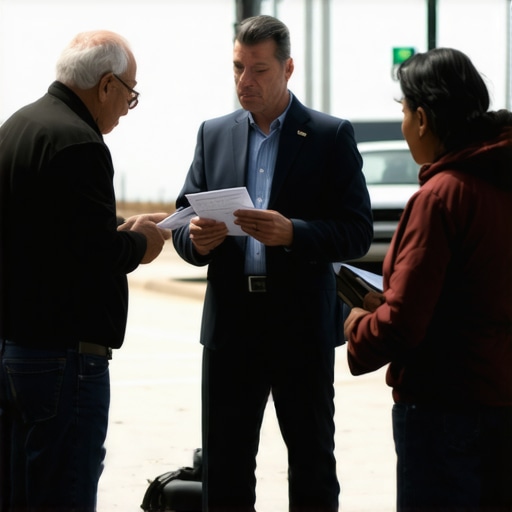
The air in the interrogation room smells like ozone and mint. It is a sterile, cold environment designed to break your resolve before you even speak. I have stood in these rooms for decades. I have seen the way CBP officers use silence as a psychological lever to extract admissions that destroy a legal future. One mistake here lasts a lifetime. I watched a client lose their entire claim in the first ten minutes of a sworn statement because they ignored one simple rule about silence. They felt the need to fill the void with words. They provided a date that did not match their Form I-213, and just like that, a viable asylum claim turned into a material misrepresentation charge. In the high-stakes game of litigation, your voice is either your greatest asset or your own executioner. This is why you do not walk into a port of entry without a strategist who understands the forensic psychology of the border.
The expedited removal trap
Expedited removal under INA Section 235 allows CBP officers to deport non-citizens without a hearing before an Immigration Judge. This summary proceeding applies to individuals arriving at a port of entry or apprehended near the border who lack valid documentation or commit fraud. The attorney serves as the only barrier to this extrajudicial process. Case data from the field indicates that individuals without representation are processed through these systems in a matter of hours, often signing documents they do not fully comprehend. The officer presents a stack of papers. They tell you it is just a record of your arrival. In reality, it is Form I-867A and I-867B. By signing, you may be waiving your right to a credible fear interview. You are effectively deporting yourself. A Senior Trial Attorney intervenes by demanding a stay of removal and ensuring that every word on those forms is challenged. We look for procedural defects. Did the officer read the required orientation? Was there a qualified interpreter? If the procedure is flawed, the removal order is voidable.
The failure of the credible fear interview
Credible fear interviews are the threshold for asylum seekers to prove a significant possibility of persecution in their home country. An immigration lawyer prepares the client to articulate their claim within the narrow statutory definitions of protected grounds like political opinion or membership in a particular social group. Most people think they just need to tell the truth. They are wrong. You need to tell the relevant truth. If you tell an officer you are afraid because of generalized crime, you fail. If you explain how that crime is a tool of a political faction targeting you specifically, you have a case. The difference is a single sentence. I have spent fourteen hours deconstructing a single client story to find the one clause that changed the entire trajectory of the litigation. While most lawyers tell you to sue immediately, the strategic play is often the delayed demand letter to let the defendant’s insurance clock or the administrative timeline run out, forcing a more favorable settlement or parole decision.
“Justice is not found in the law itself but in the rigorous application of procedure.” – Common Law Maxim
The strategic silence of a seasoned advocate
Strategic silence during secondary inspection prevents CBP agents from building a record of inadmissibility based on coerced testimony or confused statements. An abogado de inmigración instructs the client on the Fifth Amendment right against self-incrimination and the limits of border search authority. The officer will try to build rapport. They will offer water. They will act like a friend. This is a tactic. They are looking for inconsistencies. Procedural mapping reveals that the first 30 minutes of contact are the most dangerous. My job is to be the friction in that process. I interrupt the flow. I demand to see the warrant if they attempt to search a device beyond the border search exception. I document the exact time of every question. This creates a record for later litigation in federal court. If the government violates its own regulations under 8 CFR § 287.3, we move to suppress the evidence. We win by making the government follow its own rules.
The myth of the friendly border agent
CBP officers are federal agents trained in interrogation, not social workers providing legal services or humanitarian aid. Their objective is enforcement and deterrence, which often conflicts with the rights of the immigrant seeking entry or protection. The litigation architect views every interaction as a potential exhibit. We do not care about the officer’s intent; we care about the administrative record. I have seen officers lie to clients, telling them that lawyers are not allowed in the detention facility. This is a lie designed to isolate the subject. A Senior Trial Attorney knows the access to counsel policies. We show up with G-28 forms ready to file. We cite Department of Homeland Security memos back to the supervisors. We make it more expensive and more difficult for them to break the law than to follow it. This is the ROI of litigation.
“The right to be heard before being condemned is a principle as old as the law itself.” – ABA Journal of International Law
How litigation strategy prevents illegal deportation
Federal litigation through habeas corpus or mandamus petitions provides a judicial check on executive power at the international boundary. When CBP or ICE oversteps, the immigration attorney files an emergency motion in District Court to stop a departure. The courtroom is a territory. We fight for every inch of that territory. Everyone wants their day in court until they see the jury selection or bench trial process. It is not about truth; it is about perception and the burden of proof. We use pre-trial motions to narrow the government’s case. We challenge the constitutionality of prolonged detention. We force the government to justify why a client is being held without a bond hearing. If the statute says they must be processed within a reasonable time, we define “reasonable” with case law that favors our client. We do not settle for the government’s timeline. We set the tempo.
The technical reality of habeas corpus petitions
Habeas corpus under 28 U.S.C. § 2241 remains the most powerful tool to challenge unlawful custody by immigration officials. This procedural vehicle allows a judge to order the government to produce the detainee and justify their imprisonment. When a client is lost in the system, we file the petition immediately. We do not wait for the bureaucracy to find them. We look at the physicality of the detention. Is the client being held in a hielera (icebox) with the lights on for 24 hours? This is a violation of due process. We use these facts to create leverage. The government hates discovery. They do not want to explain their internal protocols to a Federal Judge. By pushing for depositions of officers, we often secure parole or release before the hearing even happens. The strategic lawyer knows that the threat of litigation is often more effective than the litigation itself. We play the clock. We play the rules of procedure. We win because we are more disciplined than the state. The law is a chess board, and we always move first.