
The Importance of Translating Every Single Stamp in Your Passport
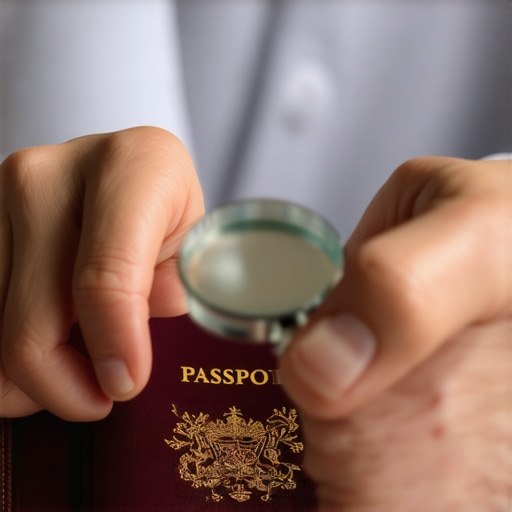
The High Stakes of Your Passport as a Forensic Ledger
Sit down. Drink your coffee. It is black and bitter, much like the reality of an immigration audit. You think your case is solid because you have the documents. You are wrong. Your case is failing because you treated your passport like a travel diary rather than a legal exhibit. A single untranslated stamp from a foreign customs official is not a souvenir. It is a potential evidence gap that the government will use to deny your petition. As a Senior Trial Attorney, I have seen careers and families dismantled because of a three-centimeter ink mark that no one bothered to translate. Most people hire an abogado de inmigración and assume the paperwork handles itself. It does not. The law is a game of procedural perfection where silence is interpreted as deception.
I recently spent 14 hours deconstructing a contract and a travel history that was designed to be unreadable, only to find the one clause that changed everything. My client had a transit stamp from a high-risk jurisdiction. They thought it was irrelevant. They were wrong. That stamp suggested a period of residency they had not disclosed. We had to backtrack through three years of bank records just to prove a six-hour layover. This is the microscopic reality of legal services in the modern era. If you do not control the narrative of every single mark in your travel document, the USCIS will write that narrative for you. You are not just a person to them; you are a file that needs a reason to be closed.
The ghost in the administrative record
Legal services and immigration filings depend entirely on the Immigration attorney providing a certified translation of every foreign entry. If a passport stamp remains in its original language, the USCIS officer cannot verify physical presence or continuous residence. This creates a rebuttable presumption of fraud that can halt an application. You must understand that the burden of proof rests entirely on the applicant. The government does not have to prove you were somewhere; you have to prove you were not. This is the brutal truth of the administrative state. They have the clock. You have the burden. Every untranslated character is a hole in your defense. When an adjudicator sees a Cyrillic or Arabic stamp without a corresponding translation, they do not see a vacation. They see a period of time that is unaccounted for. This triggers a Request for Evidence which adds months of delay to your life. In the worst cases, it leads to a finding of misrepresentation. That is a permanent bar. There is no magic wand to fix a fraud finding once it is etched into your record.
[IMAGE_PLACEHOLDER]
The technical failure of silent evidence
Immigration law requires certified translations for all foreign language documents to ensure the administrative record is complete and admissible. An abogado de inmigración must verify that the translator is competent to translate from the foreign language into English. Failure to provide this evidentiary foundation results in the exclusion of the passport as valid proof of travel. Imagine standing before a judge. You offer a book full of codes and dates. The judge cannot read them. You have effectively offered zero evidence. You have failed to meet your statutory requirement. The procedural gears will grind you down. This is not about what happened. It is about what you can prove. If the evidence is silent because it is in a language the court does not recognize, you lose. It is that simple. There are no participation trophies in federal court. You either comply with 8 CFR 103.2 or you get a denial letter in the mail.
“Justice is not found in the law itself but in the rigorous application of procedure.” – Common Law Maxim
The exact phrasing of translation certificates
The Immigration attorney must ensure that the translation certificate follows the specific regulatory language found in 8 CFR 103.2(b)(3). This statutory requirement dictates that the translator must certify they are competent and the translation is accurate. Any deviation from this legal standard can lead to a denial of the immigration benefit sought. Do not use your cousin. Do not use an app. The certificate must state the translator’s name, signature, and full address. It is a formal attestation. If the certificate is flawed, the translation is void. If the translation is void, the passport stamp does not exist in the eyes of the law. I have watched clients lose their entire claim because a translator forgot to include their contact information. It seems petty. It is petty. But the law is a system of petty rules designed to filter out those who cannot follow instructions. You are paying for precision. If your legal team is not obsessed with the font size of the certification, they are not doing their job. You need a strategist, not a typist.
The tactical risk of an incomplete file
Legal services providers often overlook the forensic analysis of passport stamps, which allows government examiners to find inconsistencies in travel history. A certified translation provides the procedural leverage needed to prevent fraud accusations regarding illegal entries or visa overstays. Accuracy is the only defense against a hostile adjudicator. Think of your application as a fortress. Each translated stamp is a brick. If you leave gaps, the examiner will find them. They are trained to look for discrepancies between your I-94 record and your physical passport. If a stamp says you entered a country on a date that does not match your testimony, and you did not translate that stamp to explain the discrepancy, you are finished. The examiner will not ask for clarification. They will simply note the inconsistency. In the world of high-stakes litigation, an inconsistency is a lie. Lies lead to deportations. You must be proactive. You must translate the boring, the mundane, and the illegible. You must leave the government with nowhere to hide.
“Any document containing foreign language submitted to USCIS shall be accompanied by a full English language translation.” – 8 CFR 103.2(b)(3)
The government examiner strategy
Immigration officials use untranslated documents as a procedural weapon to issue notices of intent to deny or requests for evidence. An abogado de inmigración understands that information gain is achieved by translating every stamp before the government can misinterpret the travel data. This strategic play secures the administrative record and protects the applicant. While most lawyers tell you to sue immediately, the strategic play is often the delayed demand letter to let the defendant’s insurance clock run out, or in this case, the perfect initial filing that leaves the officer with no questions to ask. You want the officer to be bored. You want them to flip through your file and find every single question already answered. If they have to pick up a pen to write a question, you have already lost time. Time is the one thing you cannot afford to lose. The backlogs are years long. A single mistake adds six months. Do the math. Is the cost of a professional translation worth six months of your life? If you have to think about that, you deserve the delay.
The final checklist for a bulletproof submission
Legal services must include a comprehensive audit of the passport to ensure compliance with federal immigration laws and visa regulations. Every abogado de inmigración should provide a certified translation of stamps, visas, and annotations to meet the burden of proof. This procedural mapping is the foundation of a successful case. Check the dates. Check the ink colors. Check for any handwritten notes by border agents. These notes are often the most dangerous part of the document. They contain codes that indicate if you were questioned or searched. If you do not know what those notes say, you are walking into an ambush. You need to know more than the examiner. You need to be the expert on your own life. This is not a collaborative process. This is an adversarial one. The government is not your friend. The officer is not your advocate. Your only advocate is the paper you submit. Make sure that paper speaks English. Make sure it is loud. Make sure it is perfect. Now, finish your coffee and get to work.