
Why Your Abogado de Inmigración Checks Your Passport for Entry Stamps
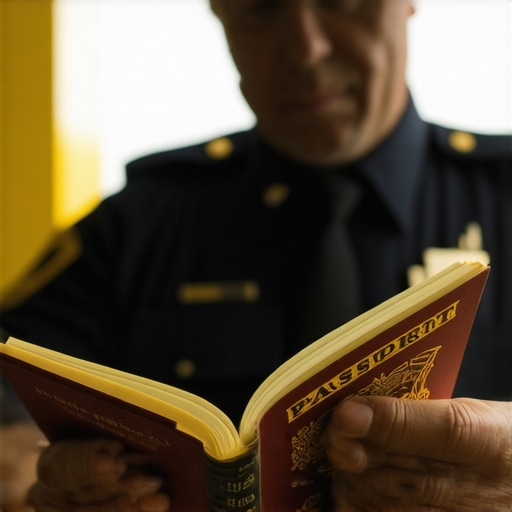
I watched a client lose their entire claim in the first ten minutes of a meeting because they ignored one simple rule about silence. They handed me a passport that was suspiciously clean. The pages were crisp. No dog-eared corners. No faded ink from a humid jungle border or a frantic airport layover. They swore they had not left the country in seven years. I sat there, the smell of strong black coffee filling the room, and flipped to page 14. A faint, violet stamp from a small European airport sat there like a landmine. In that moment, the legal strategy shifted from a standard adjustment of status to a desperate damage control operation. That single stamp was not just ink. It was a contradiction of their sworn testimony and a potential trigger for a permanent bar. This is why a real abogado de inmigración treats your passport like a crime scene. We are looking for the fingerprints of your movement because the government already has the digital map.
The passport serves as a physical evidence log
Your immigration history is recorded in CBP databases, but the physical passport remains the primary document for visa verification and entry stamps. An attorney must verify lawful entry or admission to determine adjustment of status eligibility under Section 245 of the Immigration and Nationality Act. The physical proof of your arrival is often the only way to overcome a missing I-94 record in legacy systems. I have seen cases where a missing stamp meant the difference between a green card and a deportation order. The Immigration attorney acts as a forensic auditor long before the USCIS officer ever sees your file. We are looking for the ‘Last Entry’ because that date starts the clock on everything. If you entered on a B1/B2 visa and stayed, that stamp is your ticket to a legal services strategy. If you entered without inspection, the absence of that stamp is the first hurdle we have to clear.
“Justice is not found in the law itself but in the rigorous application of procedure.” – Common Law Maxim
The brutal reality of the 245i trap
Section 245i allows certain undocumented individuals to pay a penalty fee and adjust their legal status despite an unlawful entry if they had a petition filed before April 30, 2001. A legal services provider must use passport stamps to establish physical presence during specific windows of time. If those stamps are missing or contradict your story, the abogado de inmigración faces a procedural wall. While most lawyers tell you to sue immediately, the strategic play is often the delayed demand letter to let the defendant’s insurance clock run out, or in this context, waiting for a FOIA request to return from Customs and Border Protection. We need to see if you have a multiple entry history that could trigger the permanent bar. If you accumulated more than one year of unlawful presence and left the country, then tried to come back, you are walking into a trap that most people do not understand until the consular officer denies their visa.
The math of three and ten year bars
Unlawful presence triggers statutory bars under INA 212(a)(9)(B) when an immigrant departs the United States after staying past their authorized stay. The immigration attorney uses passport stamps to calculate the exact number of days spent outside the country. A departure of more than 180 days but less than a year triggers a three-year bar. A departure after one year of unlawful presence triggers a ten-year bar. This is a mathematical certainty. There is no room for ‘about’ or ‘around’ when dealing with Department of Homeland Security records. I spend hours looking at entry and exit dates because a single day of miscalculation is the difference between a waiver (Form I-601) and a decade of exile. The passport is the only document that tracks the physical movement that the digital I-94 system sometimes misses, especially at land borders where CBP might not have scanned a physical document in years past.
“The integrity of the immigration system depends on the accurate verification of every individual’s entry and exit history to maintain national security.” – American Bar Association Journal
The phantom entry that triggers a permanent bar
The permanent bar under INA 212(a)(9)(C) is the most dangerous legal consequence in immigration law and is often discovered via passport stamps. If an individual has been unlawfully present for more than one year in the aggregate or has been deported and then enters or attempts to re-enter without being admitted, they are barred forever. An abogado de inmigración looks for stamps from nearby countries like Mexico or Canada that might suggest a quick trip across the border. Many clients think a weekend trip does not count. They are wrong. That weekend trip is a re-entry that closes the door on their legalization. I have seen visa stamps from consulates in Juarez or Bogota that prove the client left the United States, which immediately alerts me that we need to investigate if they triggered a bar upon their return. We are looking for the ‘phantom entry’ which is the entry that was never recorded but happened nonetheless.
How a single weekend in Cancun kills a green card
Continuous residence and physical presence are essential requirements for naturalization and certain forms of relief from removal. Any exit from the United States recorded in a passport can break the continuous presence required for cancellation of removal (the ’10-year law’). If you are a Lawful Permanent Resident seeking citizenship, a trip of more than six months creates a presumption that you have abandoned your residency. A trip of more than a year breaks it automatically. I check the entry stamps to ensure my client has not spent more than 180 days abroad in any single year. It is not just about the total time. It is about the pattern. If you are spending five months abroad every year, the USCIS officer will argue your domicile is not in the United States. We use the passport to build a defense against the claim of abandonment before the government even makes it.
Strategic silence during the USCIS interview
The interview with a USCIS officer is a high-stakes interrogation where the passport is the government‘s evidence. If the abogado de inmigración has not already reconciled the passport stamps with the Form I-485 or N-400, the case is already dead. We look for ‘Visa Fraud’ or ‘Misrepresentation’ which occurs if a client entered on a tourist visa with the secret intent to marry and stay. The entry stamp date compared to the marriage certificate date is the first thing the fraud unit checks. If the gap is less than 90 days, there is a legal presumption of misrepresentation. This is why I tell my clients that the passport is a diary of their intentions. We must be prepared to explain every single ink mark. If there is a stamp from a country known for visa scams, we need a procedural explanation ready before we walk through those metal detectors at the federal building.
The logic of the secondary inspection
Secondary inspection at the airport or border often results in handwritten notes in the back of a passport that the immigrant might not even notice. An attorney looks for expedited removal orders or ‘voluntary return’ notations that are often scribbled in a CBP officer’s shorthand. These marks indicate that the person was technically deported without a hearing, which carries a five-year bar to re-entry. If you try to apply for legal services without disclosing this, you are committing material misrepresentation. The abogado de inmigración must be a skeptic. I do not trust the client‘s memory because the client‘s memory is filtered by hope. The passport is filtered only by the CBP officer’s blue or black ink. We audit the travel document to ensure that the administrative record we submit to the government is 100 percent consistent with the physical evidence in their hand.
Why your memory fails where the scan succeeds
Digital records such as the I-94 website only go back a certain number of years, making the physical passport the only primary source for older entries. Case data from the field indicates that CBP systems are often riddled with errors, misspelling names or flipping birthdates, which causes a ‘no record found’ result. When this happens, the passport stamp is the only thing that saves the visa petition. Procedural mapping reveals that without that physical stamp, an immigrant may be forced to file a Form I-102 to replace a missing entry document, which costs hundreds of dollars and months of waiting time. The immigration attorney uses the passport to bypass this bureaucratic nightmare. We are not just looking at the stamps. We are looking at the visa foil, the holograms, and the machine-readable zone to ensure the document is authentic. In a world of biometric tracking, the passport remains the most critical piece of litigation leverage we possess.