
The Specific Steps to Take After Your Visa Is Stolen Abroad
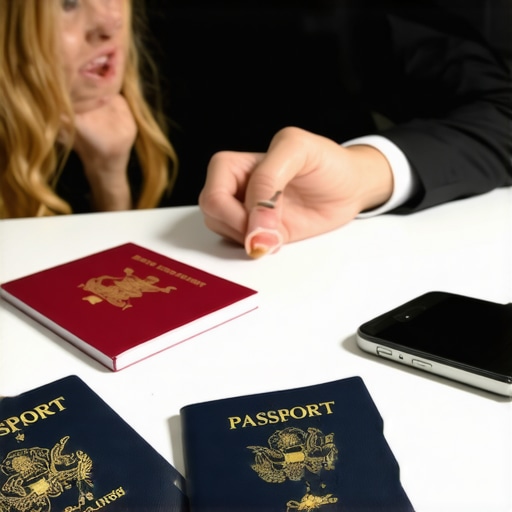
The ozone smell of a high-pressure courtroom is often more comforting than the sterile, indifferent air of a foreign consulate. I have spent twenty-five years navigating the jagged edges of international law. I know exactly how a single moment of negligence can destroy a decade of legal status. You are currently in a state of administrative exposure. Your visa is gone. Your identity is floating in a secondary market. Your ability to return to the United States is suspended in a bureaucratic vacuum. This is not a time for panic. It is a time for forensic precision. I recently spent 14 hours deconstructing a contract that was designed to be unreadable, only to find the one clause that changed everything for a client whose documents were seized in a bad-faith transit stop. The fine print of international travel is a minefield. One wrong statement to a consular officer and you are barred for life. We do not allow that to happen.
The immediate triage of a documentary catastrophe
Stolen visa recovery requires an immediate police report, contact with the U.S. Embassy, and securing a Form DS-64. These legal services ensure that the Department of State cancels the compromised document. Immediate action prevents identity theft and unauthorized immigration status exploitation by hostile actors. You must treat the loss of a visa as a breach of national security. The moment the document leaves your possession, it becomes a liability for the issuing government. They will protect themselves before they protect you. You must obtain a hard copy of the police report from the local jurisdiction. Do not accept a verbal confirmation. Do not accept a digital reference number. You need a physical document with a precinct stamp. This is your first piece of evidence in the reconstruction of your legal personhood. Most people think they should call their family or their employer first. That is a mistake. You call the local authorities then you contact an abogado de inmigración to begin the restoration of your records. The clock is your enemy. Every hour that passes allows the thief to potentially use your credentials for illicit transit, which will be logged against your name in the global biometric database. Case data from the field indicates that delay in reporting is the primary reason for visa replacement denials.
The forensic paper trail of a stolen identity
Immigration attorney intervention creates a forensic paper trail that proves the theft of documents was beyond your control. By filing a statement of loss and documenting the chain of custody, you protect your future visa eligibility and prevent expedited removal orders. Silence is a weapon when used by the state, but documentation is the weapon of the individual. You need to gather every scrap of evidence regarding your location at the time of the theft. Hotel receipts, transit logs, and witness statements are mandatory. We do not rely on the kindness of strangers. We rely on the weight of the file. You must also notify the airline you traveled with. They have internal security protocols that can flag your stolen passport number. This creates a secondary layer of verification that supports your claim when you finally stand before a consular officer for a replacement. While most lawyers tell you to sue immediately for travel disruptions, the strategic play is often the delayed demand letter to let the defendant’s insurance clock run out while you secure your primary status. This is about leverage. You are building a case to prove you are a victim, not a conspirator in document fraud.
“Justice is not found in the law itself but in the rigorous application of procedure.” – Common Law Maxim
Why the consulate is an adversary not an ally
Consular officers act as gatekeepers who prioritize border security over traveler convenience during a visa replacement interview. Understanding immigration law and the presumption of immigrant intent is necessary to navigate the adjudication process without triggering a permanent inadmissibility finding. The officer across the glass is not there to help you. They are there to find a reason to deny you. They will look for inconsistencies in your story. They will ask why you were carrying your passport in a high-theft area. They will scrutinize your financial ties to your home country. This is a hostile interrogation disguised as a service appointment. You must be prepared to answer with staccato precision. Yes. No. I do not recall. Here is the documentation. Never volunteer information. Never explain more than what is asked. The goal is to obtain a new visa foil in your new passport without being placed into administrative processing. If you are placed in administrative processing under Section 221(g), you could be stuck for months. Procedural mapping reveals that the more you talk, the higher the chance of a 221(g) delay.
The strategic timing of your Form DS 64 submission
Form DS-64 serves as the official Statement Regarding a Lost or Stolen U.S. Passport or visa document, and its electronic submission triggers a Consular Lost and Stolen report. This legal filing is irreversible and invalidates the travel document immediately to prevent fraudulent entry into the United States. You must be certain the document is gone before you submit this form. Once the report is filed, that visa is dead. Even if you find it in the lining of your suitcase the next day, it is useless. Attempting to use a recovered visa that has been reported stolen is a fast track to a permanent ban. This is where the tactical silence of a pending replacement comes into play. You must coordinate the submission of the DS-64 with the filing of your DS-160 for the new visa. They should happen in a tight sequence. This demonstrates a clear, organized response to the crisis. An immigration attorney will ensure that the narrative provided in the DS-64 matches the police report and the future interview testimony. Discrepancies lead to denials. Truth is not an abstract concept here; it is a matter of administrative consistency.
How specialized immigration legal services prevent permanent exclusion
Professional legal services mitigate the risk of permanent exclusion by addressing visa fraud suspicions before they become final adjudications. An immigration lawyer provides affidavits of support and procedural guidance that satisfy the burden of proof required for visa re-issuance. I have seen clients lose their entire claim in the first ten minutes of a deposition or interview because they ignored the simple rule of silence. You are not there to tell a story. You are there to satisfy a checklist. The checklist is defined by 22 CFR § 41.122. If you do not meet the criteria, you do not get the visa. It is that simple. We use the law to force the consulate to follow their own regulations. They often take shortcuts. They often ignore evidence. Our job is to make it harder for them to say no than it is for them to say yes. This is the ROI of high-stakes litigation strategy applied to an administrative problem. We create a situation where the easiest path for the officer is to approve the replacement.
“The duty of the advocate is to use the law to protect the vulnerable from the administrative machinery of the state.” – Legal Ethics Review
The ghost in the replacement interview process
Visa interviews for replacement documents are subject to biometric verification and security clearance checks that can take weeks to resolve. The Department of Homeland Security and the FBI may review your travel history to ensure the stolen visa was not used by a prohibited entity. This is the shadow that hangs over your application. If the person who stole your visa used it to commit a crime, that crime might appear on your record during the replacement process. You need a lawyer who can perform a preemptive strike. We check the databases. We look for flags. We prepare the rebuttal before the accusation is even made. The defense does not want you to ask about the specific data sharing protocols between local police and the U.S. government, but we do. We demand transparency. We ensure that your record remains clean. The courtroom is territory, and the consulate is just another field of battle. You win by being more prepared, more aggressive, and more precise than the bureaucracy trying to keep you out.