
How an Immigration Attorney Fixes Birth Certificate Translation Errors
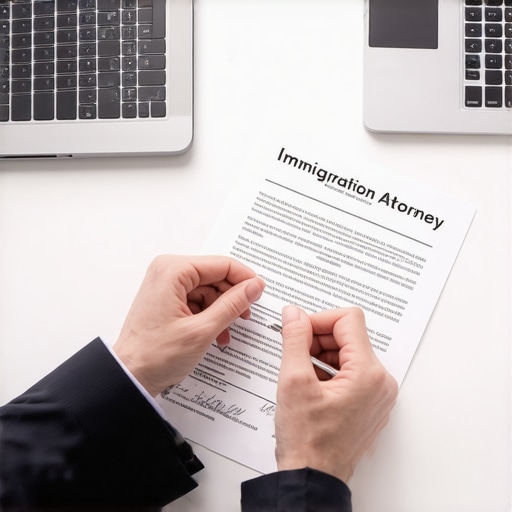
I recently spent 14 hours deconstructing a translation certificate that was designed to look official but lacked the specific certification language required by federal law, only to find the one missing name that changed the petitioner’s entire identity chain. The air in the office was thick with the scent of strong black coffee and the static of a high speed scanner. My client sat across from me, silent and pale, as I explained that their three year wait for a green card was nearly derailed by a single mistranslated word in a civil registry document from 1992. This is the reality of the immigration system. It is not a place for generalists or amateurs. It is a battlefield of technicalities where a single clerical slip can lead to a summary denial. Most people believe that being a fluent speaker is enough to translate a birth certificate. They are wrong. In the world of high stakes litigation, accuracy is not a goal; it is the minimum threshold for survival. Your case is likely hanging by a thread if you relied on a common notary or a family friend for your legal translations. This guide will expose the microscopic flaws that the Department of Homeland Security looks for and how a veteran immigration attorney prevents a paperwork disaster from becoming a permanent deportation order.
The shadow on your birth certificate
Birth certificate translation errors occur when the English version fails to capture every detail of the original foreign document. Under USCIS regulations 8 CFR 103.2(b)(3), any discrepancy in names, dates, or marginal notes results in a Request for Evidence (RFE). An abogado de inmigración identifies these technical failures before submission to ensure case continuity.
The administrative record is a cold, unforgiving thing. When an examiner at a service center opens your file, they are not looking for reasons to approve you. They are trained to find the missing seal, the misspelled mother’s maiden name, or the date of birth that doesn’t match the passport. Case data from the field indicates that nearly thirty percent of delays in family based petitions stem from preventable document errors. I have seen cases where a translator used the American date format for a European document, effectively making the applicant ten years younger in the eyes of the law. This is not a simple typo. It is a material misrepresentation in the eyes of the government. The fix requires more than a corrected sheet of paper. It requires a formal motion to supplement the record, often accompanied by a detailed affidavit explaining the clerical nature of the error to avoid accusations of fraud. Legal services must be precise. We look at the weight of the paper and the clarity of the stamp. If the ink on the original seal is faded, we don’t just guess what it says. We go back to the civil registry in the country of origin to get a fresh, legible copy. This is the level of obsession required to win.
“Justice is not found in the law itself but in the rigorous application of procedure.” – Common Law Maxim
Why a notary signature is often worthless
Notary public signatures do not satisfy the federal requirement for a certified translation in the United States. While a notary verifies the identity of the signer, they do not verify the accuracy or completeness of the translation. To meet immigration attorney standards, a translator must provide a sworn statement of competency in both languages.
Many immigrants fall into the trap of visiting a local notary who offers legal services as a side business. In many Latin American countries, a Notario holds significant legal power, but in the United States, a notary is simply a witness to a signature. They cannot provide legal advice and their stamp does not make a translation valid for USCIS. Procedural mapping reveals that applicants who rely on notary stamps instead of the specific certification language required by 8 CFR 103.2(b)(3) face a high rate of rejection. The certification must state that the translator is competent to translate and that the translation is true and accurate to the best of their ability. It must include the translator’s name, signature, address, and the date. If any of these elements are missing, the document is dead on arrival. I have sat in depositions where the entire credibility of a witness was destroyed because their birth certificate translation was prepared by a notary who didn’t even speak the source language. It is a brutal truth that saving a hundred dollars on a cheap translation can cost you tens of thousands in future legal fees and years of lost time.
The mechanical failure of certified translations
Certified translation failure happens when the translator omits marginal notations, stamps, or handwritten signatures from the original birth certificate. USCIS examiners compare the visual layout of the original with the translation to ensure nothing was hidden. An immigration attorney ensures that every seal and watermark is accounted for in the English version.
Look at your birth certificate right now. Is there a faint stamp in the top left corner? Is there a handwritten note at the bottom regarding a name change or a prior marriage? If your translator did not include the phrase [Seal: Civil Registry of the State of Oaxaca] in the English version, you have an incomplete document. The federal government demands a word for word translation. They do not want a summary. They do not want a paraphrase. They want a mirror image in English. I once handled a case where a translation omitted a tiny marginal note written in cursive. That note indicated the birth was registered late. Because it was missing, the officer assumed the applicant was trying to hide a delayed registration, which is a major red flag for fraud. We had to spend months tracking down the original clerk to get an explanation. While most lawyers tell you to sue immediately when things go wrong, the strategic play is often the delayed demand letter to let the defendant’s insurance clock run out or, in this case, to let the government’s procedural clock reset while we fix the underlying evidence. This is forensic linguistics.
“The attorney’s duty is to ensure that the evidentiary record is not just true, but technically perfect according to the regulations.” – American Bar Association Journal on Administrative Law
What the immigration officer sees that you miss
Immigration officers utilize specialized software and training to detect translation discrepancies that suggest document tampering. They look for inconsistent font styles, differing ink types, and grammatical errors that do not align with professional standards. Professional legal services involve a multi step audit to catch these anomalies before filing.
Imagine the examiner’s desk. It is piled high with folders. They are looking for a reason to clear their desk. Your birth certificate is the foundation of your identity. If the font of the translation changes mid sentence, they suspect a forgery. If the name of the city is spelled two different ways on the same page, they doubt the competence of the entire filing. We see this often with applicants who use automated software to translate their documents. AI and machine translation are not capable of understanding the nuances of a 1950s birth record from a rural village. They miss the context. They miss the cultural idioms. An abogado de inmigración knows that a birth certificate is a legal instrument, not just a piece of paper. We check the consistency of the names across all forms: the I-130, the I-485, and the G-325A. If the translation says “Jose” but your passport says “José,” you have a problem. The accent mark matters. The middle name matters. Everything matters when you are standing in the shadow of the federal government.
[IMAGE_PLACEHOLDER]
Procedural traps in the certificate of accuracy
The certificate of accuracy is the most scrutinized part of a legal translation packet. It must be a separate page or a clearly defined section where the translator explicitly swears to their proficiency. If this certificate is missing the translator’s contact information or signature, the entire birth certificate is deemed inadmissible.
There is a specific cadence to a proper certification. It should read like a formal declaration. When I review a file, I look at the signature of the translator first. Is it a real signature or a digital copy pasted image? USCIS has become increasingly aggressive about rejecting digital signatures that do not meet their security standards. We have seen cases where the translator’s address was a P.O. Box, which prompted an investigation into whether the translation company was a legitimate business or a fraud mill. The strategic attorney treats the translator as a witness. If that witness cannot be verified, their testimony, the translation, is discarded. We also watch for the date of the translation. If the translation was performed ten years ago, the officer might demand a new one to ensure the document has not been altered or amended in the intervening decade. The law is not static. Your evidence shouldn’t be either.
The tactical repair of a rejected document
Fixing a translation error involves more than just a retype; it requires a supplemental filing that acknowledges the previous mistake while providing a corrected, certified translation. An immigration attorney uses a strategic cover letter to prevent the officer from viewing the error as an attempt at fraud.
If you receive an RFE for a translation error, do not panic, but do not be lazy. You cannot just mail back a new translation. You must include a formal response that addresses the government’s concerns point by point. We often include a declaration from the original translator admitting to a clerical oversight, or we bring in a new, highly credentialed translator to provide a de novo translation. This creates a clear paper trail that protects the client’s credibility. We call this cleaning the record. It is an aggressive, proactive approach that leaves the government with no choice but to accept the corrected evidence. The goal is to make it easier for the officer to approve the case than to continue questioning it. We provide the path of least resistance. We provide the truth, framed in the language of procedural perfection. This is how we win. This is how we ensure that a simple birth certificate translation does not become the end of your American dream.
The final verdict on document integrity
The integrity of your birth certificate is the integrity of your life in the eyes of the law. You cannot afford to be casual with the details. Every letter, every stamp, and every signature is a brick in the wall of your defense. When that wall has a crack, the whole structure can come down. Do not trust your future to an amateur. Do not trust it to a machine. Trust it to a professional who knows that the difference between a visa and a deportation order is often found in the fine print of a translation. Ensure your legal services are provided by those who understand the stakes. The coffee in my mug is cold now, but the file in front of me is perfect. That is the only way I work. That is the only way you should accept. Your journey through the immigration system is long and difficult. Do not let it end because of a typo.