
Why Your Expired Passport Still Matters for Your Green Card File
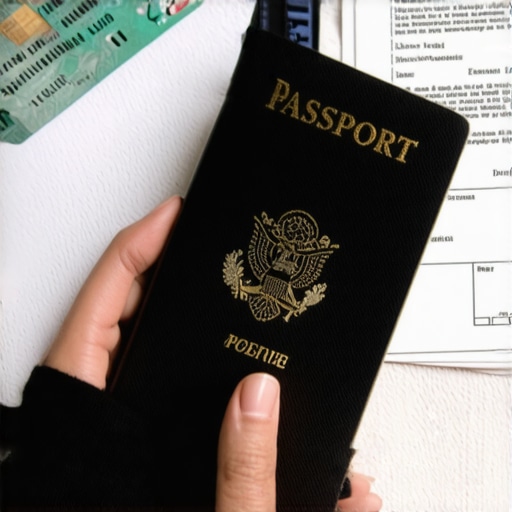
The office smells of strong black coffee and the metallic tang of a laser printer that has been running for six hours straight. I do not have time for pleasantries because your immigration status does not care about your feelings. It cares about evidence. I recently spent 14 hours deconstructing a client’s travel history from a water-damaged passport issued in 1998. That single document contained the only evidence of a legal entry that the digital databases had purged decades ago. Without it, the client was looking at a permanent bar. With it, they are now a permanent resident. People treat their expired passports like old newspapers, tossing them into junk drawers or the trash. This is a tactical error that can destroy a legal strategy before the first form is even filed. An immigration attorney is only as good as the paper trail you provide, and that old blue or red book is the most dense piece of evidence you own. It is a forensic record of your movements, your compliance with the law, and your very identity.
The ghost in the green card file
An expired passport acts as a primary source of travel history and legal entry verification for Green Card applicants. Even if the document is void for travel, it contains the I-94 stamps and visa endorsements required to prove continuous presence and legal status maintenance during the adjustment process. Every stamp in those pages is a recorded interaction with a federal officer. When you apply for a green card, specifically through an adjustment of status under Section 245 of the Immigration and Nationality Act, you must prove you were inspected and admitted or paroled. If you cannot prove that first entry, your case is dead on arrival. Many people assume the government has all this on their computers. They do not. Systems crash, data is corrupted, and pre-2013 records are notoriously spotty. Your old passport is the only physical shield you have against a bureaucratic system that would rather deny a case than hunt for a lost digital record.
“Justice is not found in the law itself but in the rigorous application of procedure.” – Common Law Maxim
Proof of lawful admission when the digital trail goes cold
Lawful admission is the cornerstone of most adjustment of status applications in the United States. The expired passport provides physical evidence of an I-94 arrival record that may no longer exist in the Customs and Border Protection online database, which often only archives the last five years. Before the automation of the I-94 system, travelers received a paper card. If that card was lost, the stamp in the passport became the secondary evidence of record. Even today, digital errors are common. I have seen names misspelled by one letter in the system, making the record unsearchable. In those moments, the physical stamp in a ten year old passport is the only thing that saves the client from a grueling and expensive process of filing a Form I-102 to replace a document the government lost. A competent abogado de inmigración will demand every book you have held since you were a child. We are looking for the entry stamp that proves you did not sneak across a border, which is the difference between a simple interview and a decade of litigation.
The danger of discarding your travel history too early
Discarding an expired passport removes your ability to prove the exact dates of your departures and arrivals, which is mandatory for calculating physical presence requirements. This data is essential for naturalization eligibility and for defending against accusations of abandoning your residence or violating the terms of a non-immigrant visa. While most lawyers tell you to simply bring your current passport, the strategic play is to include a full forensic scan of every expired book to preemptively shut down questions about your ten year presence. Every day you spent outside the country must be accounted for on Form I-485 or N-400. If your testimony says you were gone for two weeks but a forgotten stamp in an old passport shows you were gone for six months, you have just committed a material misrepresentation. The government will use your own lack of records against you. They will check their internal travel logs (the ATS-P or IDENT systems) and compare them to your filing. If there is a discrepancy and you do not have the old passport to clarify the date, the adjudicator will side with the government’s flawed data every single time.
“The burden of establishing eligibility for a requested immigration benefit remains entirely with the applicant.” – Matter of Skirball Cultural Center
What the adjudicator will not tell you about your entry
Adjudicators at USCIS are trained to look for gaps in your history that suggest unauthorized employment or status violations. An expired passport fills these gaps by showing the duration of previous visas, such as F-1 or H-1B, and the corresponding entry and exit stamps that confirm you left. Case data from the field indicates that officers are increasingly scrutinizing the time between visa expiration and the next entry. If you have an old passport with a valid visa but no exit stamp, the officer might assume you overstayed. However, a seasoned immigration attorney can use the entry stamp of another country in that same expired book to prove you left the United States on time. This is procedural mapping at its most granular level. It is not just about the American stamps; it is about the foreign ones too. Every ink mark tells a story of where you were. If you throw away that book, you throw away the map of your innocence.
The forensic reality of the expired document
The physical condition and ink quality of stamps in an old passport can be forensically examined to prove the authenticity of a claim. In cases where the government suspects fraud, the specific sequence of pages and the chronological order of stamps provide a verifiable timeline that is difficult to forge. We are dealing with a regime of high-stakes verification. When you walk into an interview with an immigration attorney, we are looking for the “bleed” of the ink. We are looking at the font of the CBP officer’s stamp from the Newark or LAX port of entry in 2004. These details matter because they are undeniable. If the government claims you entered without inspection, and you produce a passport from 1995 with a faint but legible stamp, you have just won the chess match. The litigation of an immigration case is won in the discovery of these small, physical details. Do not trust a digital scan. Keep the physical book in a fireproof safe. It is more valuable than the current one because the current one only shows who you are now, while the old one proves you followed the rules to get here.
Why an immigration attorney needs your oldest records
Immigration attorneys use old passports to screen for potential legal obstacles such as the three year or ten year bar, which are triggered by periods of unlawful presence. By reviewing every page, an attorney can determine if a client accidentally overstayed a previous visit by even a few days. Procedural mapping reveals that many clients are unaware they ever violated their status. They might have stayed until the date on their visa, not realizing the I-94 date was shorter. The old passport reveals these traps before you walk into an interview and get blindsided by an officer. It allows us to prepare waivers or arguments before the government even raises the issue. In legal services, information is the only currency that matters. If you hide your old passports because you think they are irrelevant, you are essentially walking into a courtroom with a blindfold on. I have seen clients lose their entire claim in the first ten minutes of a deposition because they ignored one simple rule about silence and evidence. Do not let your old passport be the missing link that the government uses to pull the rug out from under your life. Your history is your defense. Hold onto it with everything you have.