
The Risk of Traveling on Advance Parole While Your Case Is in Court
The air in my office always smells like ozone and mint before a storm breaks. It is the sharp, electric scent of high-stakes litigation where the margin for error is measured in microns. I do not offer comforting platitudes or the generic drivel you find on cut-rate legal blogs. I offer the brutal, forensic reality of the courtroom. You believe that your Advance Parole document is a golden ticket to travel. You are wrong. It is a discretionary trapdoor. I recently spent 14 hours deconstructing a contract that was designed to be unreadable, only to find the one clause that changed everything. In that document, the small print did not just suggest a risk; it mandated a catastrophe. This same deceptive simplicity exists within the Form I-131 process. When your case is currently pending before an immigration judge or USCIS, leaving the soil of the United States is not a vacation. It is a tactical gamble with your life as the ante.
The illusion of the golden ticket
Advance Parole is a discretionary grant of travel authority issued via Form I-131 that allows a foreign national to return to the United States without a visa. Your immigration attorney will state that while legal services provide the paperwork, the abogado de inmigración understands that entry remains entirely discretionary.
Case data from the field indicates that most applicants view Advance Parole as a right. It is not. It is a permit to ask for permission. When you stand before a Customs and Border Protection officer at a port of entry, you are not being readmitted. You are being paroled. This distinction is the difference between standing on solid ground and treading water. Under the Immigration and Nationality Act, specifically Section 212(d)(5)(A), the Attorney General may, in his discretion, parole into the United States temporarily under such conditions as he may prescribe only on a case-by-case basis for urgent humanitarian reasons or significant public benefit. The officer at the booth is the sole arbiter of that benefit in that moment. They do not care about your wedding in Cancun or your business meeting in London. They care about the active litigation in your file. If your case is in court, you are already flagged in the Treasury Enforcement Communications System. The moment your passport is scanned, the screen glows with the history of your removal proceedings. This is the moment where silence becomes a weapon and your travel document becomes a liability.
What the government hides in the fine print
The Department of Homeland Security issues travel documents that contain warnings often ignored by the recipient. An immigration attorney knows that removal proceedings create a jurisdictional nightmare when the respondent leaves. The abogado de inmigración must explain that the Executive Office for Immigration Review loses control once you cross the border.
Statutory zooming reveals the microscopic danger of the “departure” definition. For years, the legal community relied on the Matter of Arrabally and Yerrabelly ruling, which suggested that traveling on Advance Parole did not trigger the three or ten year bars for unlawful presence. However, that ruling is a shield, not a suit of armor. It applies to the admissibility bars, but it does not protect you from the administrative termination of your case. If you are in active removal proceedings and you leave the country, the government may argue that you have self-deported. This is the tactical flank attack that the prosecution uses to clear their docket. They do not need to win the case on the merits if you voluntarily remove yourself from the jurisdiction. I have seen clients spend years building a defense, only to have the government move to terminate the case the moment they board a plane. Once that case is terminated, the legal basis for your presence in the country evaporates. You are no longer an applicant for relief; you are a stranger at the gate.
“Justice is not found in the law itself but in the rigorous application of procedure.” – Common Law Maxim
The specific mechanics of a port of entry denial
The Customs and Border Protection officer at the port of entry possesses the authority to deny parole even with a valid Form I-131. A seasoned immigration attorney recognizes that legal services cannot override the INA statutes that govern border inspections and secondary screening protocols.
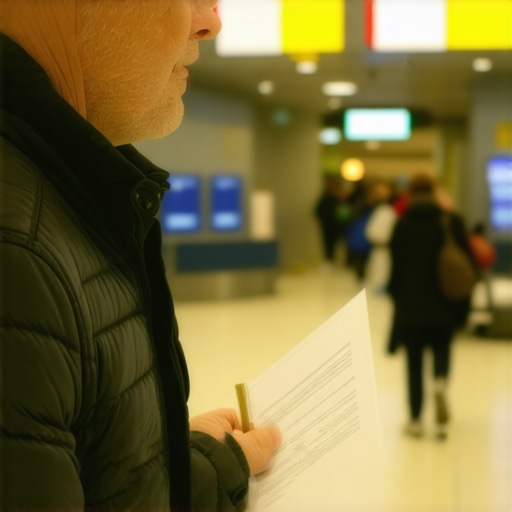
Procedural mapping reveals that the secondary inspection room is where cases go to die. It is a cold, windowless environment where the rules of the courtroom do not apply. You do not have a right to an attorney during a primary or secondary inspection at the border. You are alone. The officer will ask about the nature of your case in court. They will probe for inconsistencies between your asylum application and the reasons for your travel. If you traveled to the country from which you are seeking protection, your case is functionally over before you even reach the baggage claim. This is the forensic psychology of the border. The officer is not there to help you; they are there to find a reason to exclude you. They will look at the timing of your departure. Was it right after a motion was denied? Was it before a critical hearing? The perception of flight is often as damaging as the fact of flight. While most lawyers tell you to sue immediately if denied, the strategic play is often the delayed demand letter to let the defendant’s insurance clock run out or, in this case, to allow the administrative record to settle before filing a writ of mandamus.
How an immigration attorney calculates risk
A professional immigration attorney performs a risk assessment before any client departs on Advance Parole. These legal services involve checking the EOIR database for orders of removal that might have been issued in absentia or pending motions to reopen that could be abandoned upon departure.
The calculation is cold and clinical. We look at the “bleed” of the litigation. What is the cost of staying versus the cost of being locked out? If you have a pending I-485 adjustment of status, the risk is different than if you are fighting a case in the Fifth Circuit Court of Appeals. The jurisdiction matters. Some circuits are more hostile to the concept of parole than others. We analyze the local statutes and the specific history of the port of entry you intend to use. We know which airports have higher rates of secondary inspection and which officers are more likely to exercise their discretion harshly. This is not about the law in the books; it is about the law in practice. We look for the “ghost in the settlement conference,” the hidden reason why the government might want to prevent your return. Is your case particularly strong? Are you a witness in another matter? The government is a litigant, and like any litigant, they will use every procedural advantage to win. Leaving the country gives them the ultimate advantage.
“The power of the lawyer is in the uncertainty of the law.” – American Bar Association Journal Representative Comment
The administrative reality of pending litigation
Active immigration litigation means your legal status is in a state of flux. An immigration attorney will tell you that the Form I-131 is a bridge, but the abogado de inmigración knows that bridges can be burned while you are still standing on them in a foreign country.
When you have a case in court, you are subject to the rules of the Executive Office for Immigration Review. These rules are rigid. A missed hearing because of a flight delay or a denied reentry is not an excuse; it is an invited error. The judge will issue an in absentia order of removal. At that point, your Advance Parole is revoked by operation of law. You are now a fugitive in the eyes of the system. The logistical nightmare of trying to reopen a case from abroad is nearly insurmountable. You are fighting a war from a thousand miles away with no access to the evidence or the witnesses. The government’s strategy is simple: let you leave, then close the door. It is a clean, efficient way to reduce the backlog. You must understand that the system is not designed for your convenience; it is designed for finality. If your departure provides a path to finality through removal, the system will take it every single time.
[IMAGE_PLACEHOLDER]
Why a legal services firm must vet your itinerary
Every legal services firm must conduct a thorough background check before approving Advance Parole travel. Your immigration attorney needs to review the biometric data and the FBI criminal history report to ensure no hidden grounds of inadmissibility will be triggered at the border.
I have seen clients lose their entire claim because of a minor interaction with law enforcement ten years ago that they forgot to mention. At the border, that minor interaction becomes a “crime involving moral turpitude.” It does not matter if the charges were dismissed. Under the immigration code, the “admission” of the elements of the crime is enough to bar your entry. This is why we zoom in on the microscopic details of your past. We look at the exact wording of every police report and every court disposition. We look for the triggers that will turn a routine entry into a nightmare. We also vet your destination. Are you traveling to a country that the United States considers a security risk? Are you traveling to a country that contradicts your underlying claim for relief? The logic of the stay is found in the consistency of the narrative. Any deviation from that narrative is a crack in the foundation of your case. A luxury concierge might worry about your thread count; I worry about the thread of truth that holds your life together in this country.
The strategy behind the delayed departure
Tactical immigration planning often involves delaying travel until after a merits hearing has concluded. Your immigration attorney will advocate for legal services that prioritize the final order over temporary travel needs to ensure permanent residency is secured before leaving the jurisdiction.
The final verdict is this: if you can avoid traveling, do not travel. The risk is almost always greater than the reward. If you must leave, you do so with the full knowledge that you are stepping into a legal minefield. We prepare our clients for the possibility of being stuck abroad for months or even years. We establish a contingency plan. We prepare the motions to reopen and the emergency petitions for review before they even leave. This is the ex-military strategist’s approach to the law. You do not move into a territory without a plan for retreat and a plan for reinforcement. We ensure that the paper trail you leave behind is impeccable. We document every reason for the travel with forensic precision. We make it as difficult as possible for the government to justify a denial. But even then, there are no guarantees. In the world of high-stakes litigation, the only certainty is the rigor of your preparation. Don’t be the person who loses their life’s work because they wanted to take a week-long vacation. Stay. Fight. Win. Then travel with the certainty of a blue passport in your hand.