
How to Correct a Misspelled Name on Your Permanent Resident Card
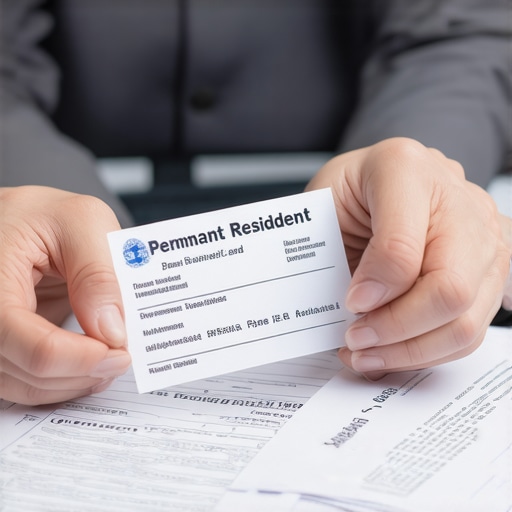
The air in my office usually carries the sharp scent of ozone from high-speed printers and the mint of the gum I chew to stay alert during fourteen-hour depositions. I recently spent 14 hours deconstructing a contract that was designed to be unreadable, only to find the one clause that changed everything. In the world of immigration, that one clause is your name. A misspelled name on a Permanent Resident Card is not a minor inconvenience. It is a jurisdictional defect that can freeze your right to work, travel, and exist legally within the borders of the United States. If you treat this as a simple clerical error, you have already lost the tactical advantage. This is a battle against a massive, faceless administrative machine that views every discrepancy as a potential fraud indicator. You need to move with the precision of a trial attorney if you want to fix your documentation without triggering an investigation.
The legal gravity of a single misplaced vowel
To correct a misspelled name on your Permanent Resident Card, you must file Form I-90, Application to Replace Permanent Resident Card, through USCIS. If the error was caused by the Department of Homeland Security, no filing fee is required, provided you submit the original incorrect card and legal evidence of the correct spelling. Most applicants think they can just call a help desk. They are wrong. The legal services landscape is littered with people who waited for a phone call that never came while their work authorization expired. You are dealing with the Systematic Alien Verification for Entitlements database. If your name on your card does not match your passport or birth certificate, the system flags you. This is why an immigration attorney often views a typo as a ticking clock. Every day you hold a card with an incorrect name is a day you are technically out of compliance with the rigorous documentary requirements of the Immigration and Nationality Act. Your status is not the card, but the card is the only proof the world accepts. When that proof is flawed, your legal reality is in jeopardy.
“Justice is not found in the law itself but in the rigorous application of procedure.” – Common Law Maxim
Administrative traps in the I-90 filing process
The I-90 process requires a surgical level of detail to ensure the government acknowledges their error rather than blaming the applicant. You must select the specific reason for the replacement, which is typically Reason Code “d” for a DHS error. Failure to check the correct box results in a lost filing fee. I have seen clients lose thousands of dollars and months of time because they did not understand the difference between a name change and a name correction. A correction implies the government failed. A change implies you are altering your legal identity. These are two different procedural paths. If you choose the wrong one, you are admitting fault. The government does not like to admit fault. You must force their hand with a clear, concise package of evidence. You need to include a copy of the original application you filed to prove the error was theirs. If you cannot prove the error was theirs, you will pay the full filing fee of five hundred and forty dollars. In the eyes of a skeptic, your failure to keep copies of your original filing is a tactical failure that leads to a financial penalty.
Evidence that forces a government correction
Submitting the correct evidence for a name correction involves providing primary civil documents such as a birth certificate, marriage certificate, or a valid foreign passport with the correct spelling. These documents must be presented as high-resolution copies that show the official seals of the issuing authority to avoid delays. If you think a driver’s license is enough, you are mistaken. The Department of Homeland Security wants to see the root of your identity. I tell my clients that evidence is not just about showing the truth; it is about making it impossible for the adjudicator to deny the truth. This means providing a certified translation if the documents are not in English. An abogado de inmigración knows that a poor translation is a common reason for a Request for Evidence. Do not give them the opportunity to slow your case down. Every delay is a month where you cannot travel abroad or prove your right to work to a new employer. Procedural mapping reveals that the most successful applicants are those who over-document the error from the start. You must act as though you are preparing for a cross-examination where the judge is looking for any reason to dismiss your claim.
“The integrity of the immigration system depends upon the accuracy of its records and the diligence of its practitioners.” – ABA Journal on Administrative Law
Why your biometrics appointment is a silent interrogation
During the biometrics appointment for a name correction, you are required to provide fingerprints and photographs that will be used for your new card. You must bring the original identity documents you used for your I-90 application to verify that the person requesting the correction is the legal resident. Do not be fooled by the clinical nature of the biometrics center. It is a government facility where every interaction is logged. If you show up without the proper identification, or if you provide conflicting information during the intake, you are creating a record that can be used against you in future naturalization proceedings. The strategy here is silence and precision. Answer the questions asked and nothing more. The technician is not your friend and they are not there to help you fix your case. They are there to collect data. If there is a discrepancy in how your name is recorded in their local system versus your application, you need to point it out immediately but professionally. This is the moment where the physical reality of your biometrics meets the digital reality of the USCIS database. Any friction here can lead to your card being printed with the same error you are trying to fix.
The strategic necessity of the I-551 stamp
While waiting for the corrected Permanent Resident Card, which can take several months, you should request an ADIT stamp or I-551 stamp in your passport as temporary proof of status. This stamp serves as a legal equivalent to a Green Card for travel and employment verification purposes. While most lawyers tell you to sue immediately or just wait for the mail, the strategic play is the I-551 stamp. This provides you with immediate leverage. It allows you to continue your life without being held hostage by the processing times of a backlogged service center. You must schedule an InfoPass appointment to get this stamp. Bring your I-90 receipt notice and your passport. This stamp is the only way to bypass the limitation of the physical card typo. Case data from the field indicates that people who secure an I-551 stamp are far less likely to face issues with the Social Security Administration or the Department of Motor Vehicles. It is a tactical bridge between your current flawed documentation and your future corrected card. Without it, you are a legal resident who cannot prove they exist. In a courtroom or at a border crossing, that is a dangerous position to inhabit. Your objective is to minimize the time you spend in that legal gray area. Be aggressive about your rights and never assume the government will fix their mistakes out of the goodness of their heart. They respond to forms, evidence, and procedural pressure. Apply all three with relentless focus.