
The Specific Evidence for a Special Immigrant Juvenile Status Case
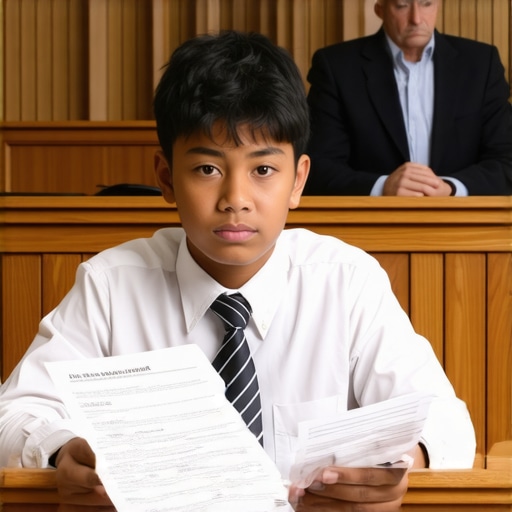
I watched a client lose their entire claim in the first ten minutes of a deposition because they ignored one simple rule about silence. They felt the need to fill the quiet air with useless chatter, accidentally implying that a distant relative had provided financial support. That one offhand comment contradicted years of documented abandonment. The room smelled like strong black coffee and old paper. The adjudicator didn’t even look up as they noted the inconsistency. This is the world of Special Immigrant Juvenile Status (SIJS) cases, where the immigration attorney must act as a forensic architect. Cases are won or lost in the microscopic details of the state court order and the abogado de inmigración must ensure every word serves a tactical purpose. This is not about humanitarian fluff. This is about statutory eligibility under 8 CFR 204.11 and the Immigration and Nationality Act. You are fighting for a green card in a system that would rather see you fail.
The state court order remains the primary gatekeeper
State court findings are the foundation of any Special Immigrant Juvenile Status case because USCIS cannot issue a SIJS classification without a predicate order from a juvenile court. This order must explicitly state that the minor is dependent on the court or committed to a state agency. Legal services often fail when the immigration attorney forgets that the viability of parental reunification must be legally determined. Abogado de inmigración professionals know that if the order lacks the specific phrase abuse, neglect, or abandonment, the entire Form I-360 will be rejected. Case data from the field indicates that generic orders without detailed factual findings are the number one cause of Requests for Evidence (RFE) that stall a green card application for years. The Special Immigrant Juvenile must be under the jurisdiction of the court when the order is issued. There is no room for error.
“Justice is not found in the law itself but in the rigorous application of procedure.” – Common Law Maxim
Why the abandonment finding must be absolute
Parental abandonment is a factual determination that requires a preponderance of evidence showing a total lack of financial support and emotional contact from the parent. The immigration attorney must gather sworn affidavits, school records, and medical histories to prove that reunification is not a viable option. Procedural mapping reveals that USCIS looks for collusion between the child and the remaining parent. While most lawyers tell you to sue immediately, the strategic play is often to wait for the juvenile court to exhaust all attempts at notice to the absent parent. This proves the abandonment is permanent and not a temporary convenience for immigration status. If the abogado de inmigración cannot show that the parent has intentionally severed ties, the case will collapse under the weight of federal scrutiny. Documenting the physical absence of the parent is the bare minimum. You must prove the intent to abandon through corroborating evidence like unreturned letters or terminated phone lines.
The evidentiary weight of a psychological evaluation
Psychological evaluations serve as the emotional skeleton of a Special Immigrant Juvenile Status claim by providing a clinical bridge between physical trauma and legal dependency. These reports must be written by licensed professionals who understand the impact of neglect on child development. The immigration attorney uses these documents to satisfy the best interests of the child standard. Legal services that rely solely on a child’s testimony are often met with skepticism by the Department of Homeland Security. A detailed clinical assessment creates an evidentiary record that is difficult for USCIS to ignore during the adjudication of Form I-360. The abogado de inmigración must ensure the psychologist includes specific symptoms of PTSD or anxiety linked directly to the abuse or neglect suffered. This is not just about feelings. This is about clinical data that supports a legal conclusion that the minor cannot return to their country of origin without facing irreparable harm.
“The integrity of the immigration system relies on the strict adherence to the standards of evidence set forth by the Attorney General.” – American Bar Association Journal
When the government questions the legitimacy of the state judge
Federal overreach often occurs when USCIS attempts to re-adjudicate state court findings under the guise of procedural review. The immigration attorney must be prepared to defend the state court order as a final judgment that the federal government has no authority to overturn. Abogado de inmigración experts highlight that the Perez-Olano Settlement Agreement protects minors from unlawful denials based on age-out issues, but it does not stop the government from questioning the factual basis of the dependency order. If the USCIS officer believes the state judge was only acting to provide an immigration benefit, they will issue a Notice of Intent to Deny (NOID). The strategic response is to provide the underlying evidence presented to the state court, including witness testimony and police reports. This proves the court order was based on legal merit and not immigration fraud. The Immigration attorney must stand firm on the separation of powers between state and federal jurisdictions.
The age out clock never stops for the unprepared attorney
Age-out protection is the most volatile element of an SIJS case because missing a filing deadline by a single day can destroy a child’s future. The immigration attorney must file the Form I-360 before the child turns 21, but some states lose juvenile jurisdiction at 18. This jurisdictional gap is where the abogado de inmigración earns their fee. Legal services must prioritize emergency filings in family court to secure the predicate order before the clock runs out. Procedural mapping reveals that administrative delays in state courts are common, meaning the attorney must be aggressive with motions to expedite. Once the I-360 petition is properly filed, the child’s age is frozen for immigration purposes, but the state court order must still be valid at the time of filing. If the juvenile court loses jurisdiction before the application reaches the USCIS mailroom, the case is dead on arrival. There are no second chances when the statute is clear.
Technical failures that lead to immediate denial
Administrative errors such as incorrect translations or unsigned affidavits are the most common reasons for Special Immigrant Juvenile Status denials. Every foreign language document must have a certified translation that meets federal standards. The abogado de inmigración must review every page for inconsistencies in dates or spelling of names. A single clerical mistake can be interpreted by the government as material misrepresentation. Immigration attorney professionals know that biometric appointments and medical exams must be scheduled with surgical precision to avoid procedural defaults. The burden of proof rests entirely on the petitioner. Information gain from recent appeals shows that USCIS is increasingly scrutinizing the primary evidence for authenticity. If the birth certificate looks like a photocopy of a photocopy, expect a request for the original. In the litigation of SIJS, the process is the punishment unless you are perfect. Professionalism in legal services is the only defense against a system designed to reject the vulnerable.