
The Danger of Signing a Document You Don’t Fully Understand at the Border
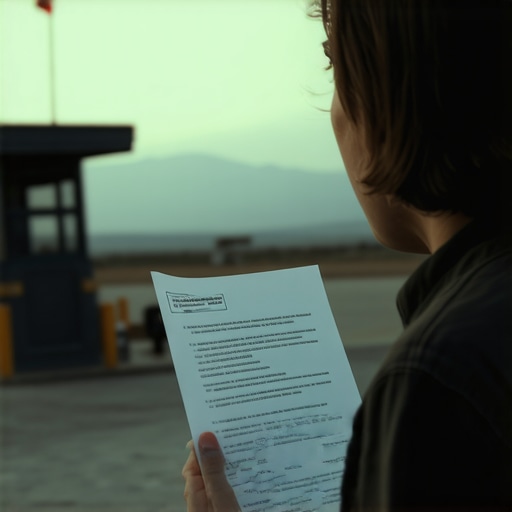
The signature that ends your legal stay
Signing an I-860 Expedited Removal form at the United States border triggers an immediate five-year ban from reentry. This document acts as a formal waiver of your right to a hearing before an immigration judge, effectively finalizing your deportation without further judicial review.
I recently spent 14 hours deconstructing a contract that was designed to be unreadable, only to find the one clause that changed everything. That experience mirrors the nightmare I see weekly at the port of entry. My office smells like strong black coffee because the truth of immigration law is a bitter stimulant. You walk into a room with a Customs and Border Protection officer. You are tired. You are scared. They hand you a stack of papers. They tell you it is just a routine acknowledgement of your statement. This is a lie. That paper is often a sworn statement under 8 U.S.C. § 1225(b)(1). If you sign it, you are admitting to fraud or lack of valid documents even if those facts are false. Your life changes in seconds. One scribble. Five years of exile. This is the reality of the immigration attorney who has to clean up the mess after the damage is done. The ink is barely dry before the handcuffs are back on. You think you are cooperating. You are actually convicting yourself. I see the legal services industry try to sugarcoat this. I will not. If you sign a document you do not understand, you are walking into a trap set by a system designed to process you, not protect you. The officer is not your friend. The officer is a witness for the prosecution. Your signature is the evidence they need to bypass the court system entirely.
Why bilingual skills fail at the checkpoint
An abogado de inmigración understands that linguistic nuances at the border often lead to procedural errors during the sworn statement process. While a guest might speak conversational English, the legal terminology used in Form I-867A requires certified translation to ensure due process and prevent unintended admissions.
I have watched clients lose their entire future because they thought they knew what ‘misrepresentation’ meant in a legal context. It is not just lying. In the eyes of the law, it can be a failure to disclose a fact that you did not even think was relevant. The immigration machine operates on technicalities. When you are standing in a secondary inspection room, the humidity is thick. The lights are too bright. The officer speaks a version of Spanish or English that is clipped, bureaucratic, and designed for speed. They use the word ‘voluntary’ as if it is a suggestion. It is not. They are asking you to voluntarily give up your right to see a judge. This is where legal services fail if they do not train you for the sensory overload. You are not just signing a paper. You are signing a narrative written by an adversary. Every abogado de inmigración worth their salt knows that a signed statement is almost impossible to walk back once the expedited removal order is signed. The system values finality over accuracy. They want the file closed. They want the bus moving. Your confusion is their efficiency. They do not care if you misunderstood the question. They only care that you signed the answer.
“Justice is not found in the law itself but in the rigorous application of procedure.” – Common Law Maxim
The anatomy of a coerced confession
The record of sworn statement or Form I-867B is a forensic document that records the interrogation of an individual at the port of entry. This document serves as the foundational evidence for permanent inadmissibility charges under Section 212(a)(6)(C)(i) of the Immigration and Nationality Act.
The process is mechanical. It is cold. The officer types as you speak, but they are not a court reporter. They are summarizing. They are paraphrasing. They are shaping your words to fit the immigration statute. I have seen transcripts where a client said ‘I don’t know’ and the officer wrote ‘Subject refused to answer.’ There is a violent difference between those two phrases in a courtroom. If you sign that summary, you are adopting the officer’s interpretation as your own. This is why the abogado de inmigración is often fighting an uphill battle. We are fighting your own signature. The legal services provided after the fact are often just damage control. You must understand the statutory zooming required here. Under 8 C.F.R. § 235.3, the officer has the power to act as judge and jury. The only thing they need is your signature on that statement to prove you were given the chance to explain. It is a procedural box they must tick. Do not help them tick it. If you do not understand, do not sign. It sounds simple. In that room, it feels impossible. The pressure is immense. The threat of detention looms. But a signature is a permanent scar on your immigration record.
How to refuse without triggering an immediate arrest
A formal refusal to sign a legal document at the border must be handled with strategic silence and a request for legal counsel. This action forces the Customs and Border Protection officer to either parole the individual for a deferred inspection or initiate a formal detention process that allows for judicial oversight.
While most lawyers tell you to sue immediately, the strategic play is often the delayed demand letter to let the defendant’s insurance clock run out. At the border, the play is different. You do not want to be aggressive. You want to be immovable. You state, clearly and repeatedly, that you do not understand the legal implications of the document. You ask for an abogado de inmigración. They will tell you that you do not have a right to a lawyer at the border. Technically, for the immediate inspection, they are right. But they cannot force your hand to sign a confession. Silence is your only weapon. Use it. Every word you speak is a potential brick in the wall they are building to keep you out. The immigration system relies on your cooperation to deport you quickly. If you stop cooperating, the gears grind. It becomes expensive for them to hold you. It becomes a headache. Sometimes, that headache is the only thing that gets you a deferred inspection instead of an expedited removal. This is the procedural mapping that saves lives. It is not about being right. It is about being difficult to process. If you are easy to process, you are gone.
“The power of an administrative official at the border is near-absolute, yet it remains subject to the constitutional requirements of due process when a signature is obtained through coercion.” – American Bar Association Journal
The reality of administrative finality
The doctrine of administrative finality prevents federal courts from reviewing most expedited removal orders issued at the border. Once the Form I-860 is signed and processed, the jurisdiction of Article III courts is severely limited, making habeas corpus the only remaining, albeit narrow, legal remedy.
This is the