
Why Your Social Media Posts Could Be Used Against Your Refugee Claim
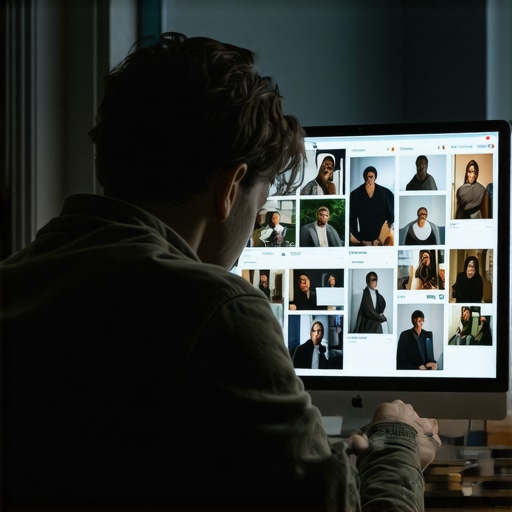
The room smells like strong black coffee and the clinical ozone of a high speed scanner. You are sitting across from me, and you think your case is about the trauma you suffered back home. You think the law is a shield. I am here to tell you that your case is currently failing. It is failing because you believe the internet is a private diary when, in reality, it is a forensic goldmine for the Department of Homeland Security. As an immigration attorney with decades in the trenches, I see the same mistake every week. Clients treat their digital lives with a level of negligence that borders on legal suicide. You cannot hide behind a screen when the government is looking for any excuse to find you non-credible. Litigation is not about your truth; it is about the evidence we can prove and the evidence the prosecution will use to shred your character.
I watched a client lose their entire claim in the first ten minutes of a deposition because they ignored one simple rule about silence and digital consistency. We were in a high stakes asylum hearing. The client claimed they were in hiding for three months, unable to leave a basement in Caracas. The government counsel didn’t even argue. They simply produced a color printout of a Facebook post from that same three-month window. It was a photo of the client at a crowded birthday party, holding a beer, smiling at the camera. The metadata showed the location was three blocks from the government headquarters. In that ten-second silence while the client stared at the photo, the case died. No amount of legal gymnastics could fix the lie. The judge didn’t care about the context. The judge only cared that the testimony and the digital record were in direct conflict. This is the reality of modern immigration law. Your social media is not your friend; it is a witness for the prosecution that never forgets and never sleeps.
The digital trap for asylum seekers
Social media posts provide impeachment material for immigration officers during refugee claim evaluations. Anything contradicting the asylum application triggers a negative credibility finding under the REAL ID Act. An Immigration attorney must vet every digital footprint to ensure legal services effectively protect the immigration status of the claimant. Failure to scrub or explain online history results in immediate refusal of status. The government uses sophisticated scrapers to build a timeline of your life that often contradicts the narrative you present in your I-589 application.
“Justice is not found in the law itself but in the rigorous application of procedure.” – Common Law Maxim
The procedural reality of a refugee claim is governed by the REAL ID Act of 2005. This statute gives immigration judges massive latitude to find a witness non-credible based on any inconsistency, even if that inconsistency does not go to the heart of the claim. If you say you are a member of an oppressed religious group but your Instagram shows you participating in secular festivals that your religion forbids, you have a problem. The government does not need to prove you are lying about the persecution. They only need to prove you are lying about the small things. Once the judge decides you are a liar, the entire claim is discarded. This is the microscopic reality of the courtroom. We look at the exact phrasing of your captions. We look at the dates. We look at the people you are tagged with. If one person in your network is flagged as a person of interest, your association with them is documented before you even sit down for your interview.
The government strategy for social media surveillance
Government agents use automated tools to monitor social media accounts belonging to asylum seekers and refugees. This surveillance targets public profiles to find prior inconsistent statements that undermine immigration petitions. Effective legal services require a forensic audit of all online activity to anticipate cross-examination during asylum hearings. The abogado de inmigración must be the first person to find the damaging evidence, not the last. Information gain is found in the way the Fraud Detection and National Security (FDNS) directorate operates. While most people assume they only look at your current posts, the FDNS often uses cached versions of deleted pages to see what you tried to hide.
I have seen the internal manuals. They are trained to look for “lifestyle inconsistencies.” If you claim poverty as part of your refugee narrative but your social media shows you in designer clothing or at expensive resorts, the government will use this to argue that your economic situation is not what you claim. They will argue that your fear of return is not well-founded because you appear to have the resources to relocate internally or lived a life of privilege that contradicts a fear of the state. This is not about the law being fair. It is about the government using your own vanity against you. They know that people cannot resist the urge to look successful online, and they use that human weakness to build a case for deportation.
“A witness whose testimony is contradicted by their own prior statements loses all standing before the court.” – American Bar Association Journal
Consider the technical aspect of a metadata extraction. When you upload a photo to certain platforms, the EXIF data might remain accessible. This data contains the exact GPS coordinates of where the photo was taken and the timestamp. If your asylum claim depends on you being in a specific city on a specific date to witness a crime or an act of persecution, but your digital data puts you fifty miles away, your case is over. This is statutory zooming at its most lethal. We are talking about the difference between a grant of asylum and a final order of removal based on a few kilobytes of data hidden in a JPEG file. Most lawyers will tell you to just set your profile to private. The strategic play is to realize that privacy settings are often bypassed by government requests to the platforms or by using “friend” accounts that are actually government plants.
Facts that conflict with your testimony
Inconsistent digital evidence is the primary reason for denial of refugee status in the modern era. Immigration judges weigh social media photos and comments as documentary evidence that can override oral testimony. Accessing professional legal services early allows for a risk assessment of your social media history. An experienced abogado de inmigración will tell you that a deleted post can still be recovered or screenshotted by opposing counsel. You must assume that every digital action you have taken since 2010 is available to the government for review.
Let us look at the procedural mapping of a typical USCIS interview. The officer has a file. In that file, there is likely a printout from a search engine. They will ask you broad, open-ended questions. They are not looking for information. They are looking for a contradiction. If they ask, “Have you ever used any other names?” and you say no, but your old Twitter handle is a pseudonym, they have caught you in a material misrepresentation. Under the Immigration and Nationality Act (INA), a material misrepresentation can lead to a permanent bar from entering the United States. This is the trap. The trap is not the social media itself; it is the human tendency to forget the digital trail we leave behind. The government relies on your memory being worse than their hard drive. This is why the strategic play is often a preemptive disclosure of digital inconsistencies before the government can use them as a weapon of surprise.
The procedural weight of a single photo
Visual evidence from social media carries disproportionate weight in immigration court due to its perceived authenticity. Refugee claimants must understand that metadata and geotags are used to verify locations mentioned in asylum claims. Proper immigration legal services include a thorough review of all digital assets to prevent impeachment by the DHS attorney. A single incriminating photo can negate years of documented persecution. We are not just talking about what you posted. We are talking about what your friends posted and tagged you in. The network effect means you are responsible for the digital behavior of your entire social circle.
The litigation process is cold. It does not care about your intentions. It only cares about the record. When we go to trial, we are building a narrative. The government is building a counter-narrative. If their counter-narrative is supported by a time-stamped photo and yours is supported only by your word, you will lose. The skeptical investor of litigation looks at the ROI of a case. If your case is cluttered with digital contradictions, the “bleed” is too high. No attorney can fix a client who continues to post sensitive information while their case is pending. It is an act of tactical insanity. You are effectively providing the bullets the government will use to execute your legal status. Stop thinking of social media as a place for expression. Start thinking of it as a sworn affidavit that you are constantly updating in front of a police officer.
How your attorney manages digital risk
Strategic legal counsel involves mitigating digital damage before it reaches the immigration judge. An abogado de inmigración will conduct a background check on the client to see what immigration officers will find. These legal services are necessary to rehabilitate credibility or explain discrepancies in the social media record. Managing immigration risk requires absolute transparency between the attorney and the client. If you hide your online presence from your lawyer, you are sabotaging your own defense and guaranteeing a denial.
Procedural leverage is gained by being the first to mention a problem. If we find a problematic post, we don’t wait for the government to find it. We address it in the initial filing. We provide the context. We explain the cultural nuance. We take the weapon out of the government’s hand. This is how you win. You win by being more prepared and more forensic than the bureaucrat sitting across the desk. Litigation is a game of territory. If the government owns the digital territory of your life, they own the case. We must reclaim that territory by treating every post, every like, and every share as a potential piece of evidence in a capital murder trial. Because for many refugees, the denial of a claim is a death sentence. There is no room for amateur mistakes. There is no room for the vanity of the internet. There is only the law, the evidence, and the brutal truth that your phone is the most dangerous witness against you.