
The Proof of Residency Needed for a Successful Cancellation of Removal
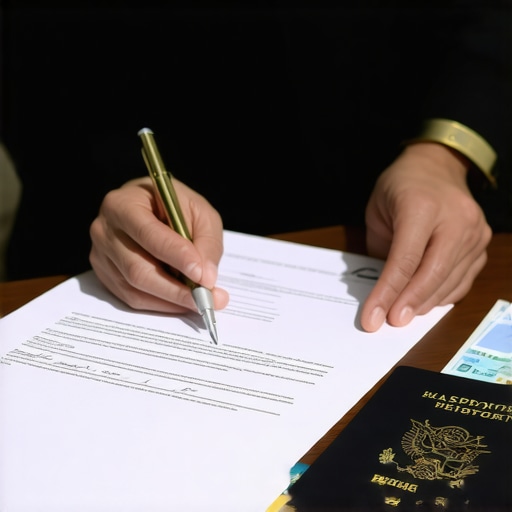
The office smells like strong black coffee and old paper. Across my desk, a family looks at me with hope. I have to tell them the truth. Their case is failing. Most people believe that living in the United States for a decade is a simple fact to prove. It is not. It is a forensic battle against a system designed to find a single day of absence that breaks the chain. If you are seeking a Cancellation of Removal, you are fighting the ten year clock. I recently spent 14 hours deconstructing a residency file for a client. We found the one hospital bill from 2016 that the government was going to use to prove my client was actually in a different state during the month he claimed to be in Los Angeles. That single document changed the entire strategy. Without that catch, he would have been deported. This is the reality of legal services in the immigration world. The immigration attorney is not just a representative; they are a forensic auditor of your life. If you cannot prove where you were on a Tuesday in March eight years ago, the abogado de inmigración has a problem that no amount of rhetoric can fix.
The documentary burden of proof under INA 240A
To win a Cancellation of Removal under INA 240A(b), you must establish ten years of continuous physical presence. This requires legal services that prioritize primary evidence like SSA records, certified tax transcripts, and medical history over weak secondary affidavits that judges often ignore during a hearing. The law demands more than just a story. It demands a receipt for every year. Most applicants think a letter from a friend counts as proof. It does not. In the eyes of an immigration judge, a letter is easily forged. A Social Security earnings statement is not. We look for the paper trail of money. Where did you work? Where did you pay rent? If you were paid under the table, you have a massive hole in your evidence that needs to be filled with something more substantial than a pastor’s promise. You need a legal strategy that accounts for the Stop-Time Rule. This rule dictates that your ten year clock stops the moment you are served with a Notice to Appear. If you reached nine years and 364 days when that paper hit your hand, you are ineligible. There is no mercy in the math.
“Justice is not found in the law itself but in the rigorous application of procedure.” – Common Law Maxim
Why tax returns are not enough to prove physical presence
Tax returns show you filed a form, not that you were physically standing on American soil for 365 days. An immigration attorney knows that the government will argue you could have filed those taxes from your home country. You need bridge documents. These are the small, mundane proofs of life. A grocery store loyalty card history. A gym membership check-in log. A child’s immunization record. These documents place you at a specific coordinate at a specific time. While most lawyers tell you to sue immediately or file your application the moment you are eligible, the strategic play is often to wait. You should collect every scrap of paper first. A delayed filing that includes a decade of utility bills is stronger than a fast filing that relies on memory. The abogado de inmigración must be a collector of ghosts. We find the digital and physical footprints you forgot you left behind. If you have a gap of six months in your records, the Department of Homeland Security will jump on it. They will suggest you left the country. They will suggest you abandoned your residence. You must be prepared to prove them wrong with a granular level of detail that feels like an interrogation.
The forensic reality of continuous physical presence
Continuous presence is a legal fiction that requires constant maintenance through documentation. If you left the United States for more than 90 days in a single trip, or 180 days in total across the decade, your case is dead. This is where many immigration claims fall apart. The legal services provider must scrutinize every exit and entry. We look at flight manifests and bus tickets. We look at bank statements to see where the last withdrawal was made before a suspected trip. I have seen cases won because we found a parking ticket from a local municipality dated during a window where the government claimed the respondent was abroad. It is that specific. You are not just proving you lived here; you are proving you never left for too long. This is why legal representation is not about filling out forms. It is about building a wall of evidence that the government cannot climb over. The immigration attorney must be obsessed with the calendar. We count the days. We check the leap years. We ensure that the timeline presented to the court is an unbreakable chain of 3,650 days of presence. Anything less is a gamble with your future.
“The right to be heard would be, in many cases, of little avail if it did not comprehend the right to be heard by counsel.” – Supreme Court of the United States
How the immigration judge identifies fraudulent utility bills
Judges are trained to spot fake documents. They look at the font. They look at the logo. They look at the consistency of the billing cycles. If you bring in ten years of water bills and the account number changes halfway through without explanation, the judge will suspect fraud. An abogado de inmigración must verify the authenticity of every piece of paper before it reaches the court. We contact the companies. We ensure the records match the official archives. Fraud is the fastest way to a permanent bar from any legal relief. The risk is too high. If a document looks too clean, it is suspicious. Real life is messy. Real records have coffee stains, folds, and errors. A perfect set of records is often a red flag for the court. We prefer the grit of reality. We want the actual lease agreement from 2012 with the fading ink. We want the original pay stubs from the construction job you had in 2015. These are the artifacts of a life lived in the shadows, and they are the only things that can bring you into the light of legal status. The immigration attorney navigates this minefield by being more skeptical than the judge. We cross-examine our own clients. We tear the case down to see if it can stand the weight of a federal inquiry.
The strategic leverage of witness testimony in non-LPR cases
Witnesses are the backup, not the lead actors. If your case relies solely on people talking, you are in trouble. However, a witness who can testify to a specific event can be powerful. A neighbor who remembers you helping them during a specific snowstorm in 2014 provides a different kind of proof. This is where legal services become about storytelling backed by facts. The witness must be prepared for a hostile cross-examination by the government counsel. They will be asked about your habits, your home, and your history. If their story deviates from your documents, the case collapses. The immigration process is a test of consistency. We spend hours preparing witnesses not to tell them what to say, but to ensure they understand the gravity of the legal proceeding. The courtroom is a cold place. It is not a place for vague memories. It is a place for hard dates and undeniable truths. The abogado de inmigración knows that one bad witness is worse than no witness at all. We filter the noise. We only present the testimony that adds a layer of concrete to the foundation of your residency. This is the difference between a settlement mill and a trial lawyer. We prepare for the verdict, not the conversation. Success in a Cancellation of Removal case is earned through a thousand small victories of documentation. It is a slow, grinding process of proving your existence to a government that would rather you didn’t exist at all. You need a strategist, not just a lawyer. You need someone who knows that the smallest receipt can be the most powerful weapon in the room.