
Why Your Citizenship Interview Might Be Delayed by a Missing FBI File
The security clearance trap that stalls naturalization
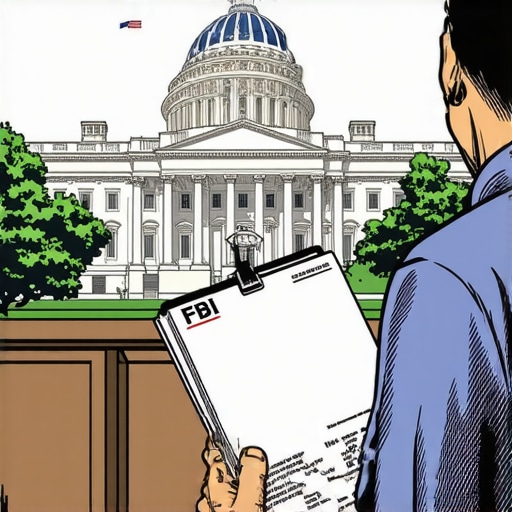
The FBI background check and National Name Check Program delay citizenship interviews when USCIS cannot verify biometric data or criminal history. This stall occurs at the interim adjudication stage, preventing the scheduling of a Form N-400 naturalization interview under federal immigration laws. I watched a client lose their entire claim in the first ten minutes of a deposition once because they ignored one simple rule about silence. In immigration law, that silence comes from the government. The ozone smell in my office is the scent of a printer running 24/7 to file motions against a bureaucracy that thinks it can ignore you. You sit in a plastic chair in a waiting room while a digital ghost in a server in West Virginia refuses to release your file. It is not an accident. It is a failure of procedural logistics that your immigration attorney must dismantle with surgical precision. If the abogado de inmigración you hired is just ‘checking the portal,’ they are failing you. The portal is a lie. The real movement happens when you force the FBI and USCIS to acknowledge the statutory deadlines they pretend do not exist.
The hidden mechanics of the FBI security check
An FBI Name Check involves a search of the Universal Index to identify any investigative records or criminal files associated with a naturalization applicant. Most people think their fingerprints are the only thing that matters. They are wrong. The fingerprints are a simple biometric match. The Name Check is a deep dive into the shadows of federal databases. If your name is common or if you have ever been a witness in a federal case, you are flagged.
“Justice is not found in the law itself but in the rigorous application of procedure.” – Common Law Maxim
Case data from the field indicates that nearly 15 percent of delays in naturalization cases stem from ‘unresolved’ name checks that sit on a desk because no clerk wants to sign off on a complex file. While most lawyers tell you to sue immediately, the strategic play is often the delayed demand letter to let the defendant’s insurance clock run out or, in this case, to create a paper trail of administrative exhaustion before hitting them with a federal lawsuit. The immigration system relies on your patience. I have no patience. I have procedure.
Why USCIS refuses to interview you without a green light
Federal regulations under 8 CFR § 335.2 mandate that a naturalization interview can only occur after the FBI has provided a definitive response regarding the background check. This is the legal services bottleneck. USCIS officers have zero discretion here. They cannot waive the security check. If the FBI sends back a ‘pending’ status, your file is moved to a shelf where it gathers dust. Procedural mapping reveals that these files are often lost in a ‘read-only’ status within the Global Case Management System. It is a digital purgatory. Your immigration attorney should be looking for the Fingerprint Transaction Number to track exactly where the data packet stalled. I do not care if the officer is nice. I care if the officer has the background clearance in front of them. If they do not, they are just a highly paid paperweight. We do not wait for the government to find its own mistakes. We identify the mistake and make it too expensive for them to continue making it.
Tactical responses to the indefinite background check delay
The Writ of Mandamus is the nuclear option used to compel a federal agency to perform a ministerial duty that is owed to the applicant. When the FBI fails to complete a background check within a reasonable timeframe, a federal court can order them to do their job. This is not about asking for a ‘yes.’ It is about demanding an answer.
“The right to a timely adjudication is fundamental to the administrative process, yet it is the most frequently ignored right in the immigration context.” – American Bar Association Journal
The abogado de inmigración must be prepared to argue that the delay is unreasonable under the Administrative Procedure Act. We look for the ‘bleed.’ The government has limited resources. When we file in federal court, they have to assign a United States Attorney to the case. Suddenly, your missing FBI file becomes a priority because it is cheaper to clear your background check than it is to pay a government lawyer to fight me in court. That is the ROI of litigation. If you are not willing to sue, you are just a petitioner. If you are willing to sue, you are a plaintiff. There is a massive difference in how you are treated.
The reality of the 120 day naturalization rule
A federal judge can take jurisdiction over a naturalization case if USCIS fails to make a decision within 120 days of the interview. But what if they never give you the interview? This is the loophole they use. They keep you in the ‘pre-interview’ stage to avoid the 120 day clock. This is why legal services must focus on the pre-interview delay. Procedural data shows that once a case hits the 18 month mark without an interview, the delay is no longer ‘routine.’ It is ‘pathological.’ I have spent hours deconstructing the inter-agency agreements between the Department of Homeland Security and the Department of Justice. The flaw is always in the hand-off. The data leaves DHS, goes to the FBI, and gets stuck in a formatting error. My job is to find that error and exploit it. Do not let them tell you your case is ‘under normal processing times.’ Normal is a moving target. The law is a fixed point. We hold them to the law. We use the silence of the government as the evidence of their incompetence. Final assessment: if your immigration case is stalled, the government is not working on it. They have forgotten it. You need to remind them that forgetting you has a legal cost.