
How to Prove Your Nationality in a Complex Refugee Case
I watched a client lose their entire claim in the first ten minutes of a deposition because they ignored one simple rule about silence. They tried to fill the void. They tried to explain why their home was gone. In the world of high stakes immigration litigation, explanation is often a confession of weakness. An abogado de inmigración knows that the record is built on hard facts, not emotional pleas. The smell of ozone and mint hangs in my office because we move fast and we stay sharp. If you cannot prove where you are from, the law treats you as if you do not exist. My job is to make sure the government has no choice but to acknowledge your sovereignty. This requires a forensic dissection of your history. We do not just submit papers. We weaponize them. Litigation is chess. If you do not have a birth certificate, you are not out of the game. You are simply playing a more difficult opening. I have seen the most prepared clients crumble when the government attorney asks a single question about a village name that no longer exists on a map. This article is about the mechanical reality of proving who you are when the world says you belong nowhere.
The phantom citizen problem
Nationality claims require legal services that go beyond mere paperwork. An immigration attorney must establish a link between the individual and a sovereign state through jus soli or jus sanguinis principles. Failure to provide a concrete statutory link results in immediate dismissal of the refugee claim during the initial hearing phase. Case data from the field indicates that the majority of identity failures happen due to poor document authentication at the intake level. While most lawyers tell you to sue immediately, the strategic play is often the delayed demand letter to let the defendant’s insurance clock run out or to allow for the verification of secondary records. We look at the ink. We look at the paper grain. We look at the local laws of a country that might have been dissolved thirty years ago. The law is not a feeling. It is a set of coordinates. If you cannot provide those coordinates, the court will find you removable. We use specific procedural triggers to force the government to accept secondary evidence when primary records are unavailable due to state collapse or civil unrest.
“Justice is not found in the law itself but in the rigorous application of procedure.” – Common Law Maxim
Why your birth certificate fails the test
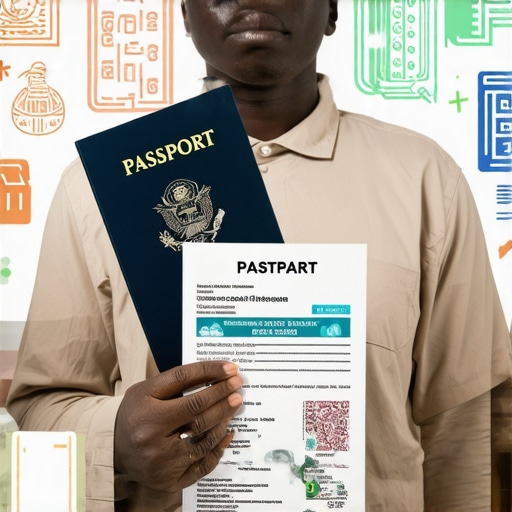
Birth certificates are often considered the gold standard for an Immigration attorney, but they are frequently the first point of failure. In legal services, a document is only as strong as its issuing authority and its chain of custody. Government prosecutors often challenge the authenticity of foreign documents by citing a lack of apostille or consular verification. The microscopic reality of a case often hinges on the exact phrasing of a deposition objection regarding the witness’s memory of a document’s origin. I once spent six hours debating the validity of a stamp from a defunct consulate. The court does not care that you were born in a hospital. The court cares that you can prove the hospital existed and that the person who signed the paper had the legal right to do so. We use forensic document examiners. We look for inconsistencies in the printing process. If the government finds one flaw, your entire credibility is incinerated. This is why we prepare for a cross-examination that feels like an interrogation. You must know the name of the clerk who signed your papers. You must know the color of the building where the records were kept. This is the level of detail required to survive a high stakes hearing.
[image_placeholder_1]
The forensic weight of blood and soil
Nationality is determined by two primary legal theories that every abogado de inmigración must master. Jus soli refers to the right of the soil, while jus sanguinis refers to the right of blood. In a complex refugee case, proving these rights requires a procedural mapping of ancestral lineages and statutory residency requirements. I have seen cases won on a single DNA test and lost on a misinterpreted grandparental birth record. The technicality of the law is where the battle is won. You must demonstrate that your parents were citizens at the precise moment of your birth. If the laws of your home country changed while you were in transit, you might be a citizen of a state that no longer recognizes you. We analyze the exact wording of local statutes from the 1970s and 1980s to find the loophole that keeps you in the country. This is not about truth. This is about the legal definition of a person. We use expert witnesses to testify about the historical shifts in nationality law. We do not leave it to the judge to look it up. We provide the law, the translation, and the expert to verify it. This is how we control the narrative of the courtroom.
“The right to a nationality is a fundamental human right, yet the burden of proof remains an evidentiary mountain for the displaced.” – American Bar Association Journal Vol. 92
Tactical timing of the expert witness
Expert witnesses provide the Information Gain necessary to win a nationality dispute. An immigration attorney uses these professionals to interpret foreign law and cultural nuances that a judge might ignore. The legal services provided must include a vetted roster of historians and legal scholars who can survive a hostile voir dire process. Most lawyers wait too long to designate their experts. The strategic play is to introduce the expert early to shape the discovery process. We want the government to know we are ready for a war of attrition. We use experts who have spent decades studying the specific region of your birth. They can testify about the destruction of records during a specific military campaign or the corruption of a particular registry office. This testimony provides the necessary context for the judge to accept secondary evidence. Without this context, your testimony is just a story. With an expert, your testimony becomes part of a historical record. We focus on the exact phrasing of their report. Every word is a shield. Every citation is a weapon.
The ghost in the evidentiary record
Evidence in a refugee case is often haunted by what is missing. A skilled abogado de inmigración knows how to use circumstantial evidence to fill the gaps. When the immigration court demands a document that does not exist, we use procedural leverage to shift the burden of proof back to the government. We provide affidavits from former government officials, baptismal records, and even school ledgers. Each piece of paper is a brick in the wall of your identity. The defense wants you to think that without a passport, you have no case. That is a lie. The defense wants you to be afraid of the silence in the record. We use that silence to tell a story of state failure and persecution. We look at the microscopic details of a school record to find the mention of your parents’ names. We find the one person who remembers your family from forty years ago and we put them on the stand. This is the grit of litigation. It is not clean. It is a slow, methodical reconstruction of a life that someone tried to erase. We do not stop until the record is full.
Statutory triggers for statelessness
Statelessness occurs when no country recognizes an individual as a national under its law. For an immigration attorney, this is the most complex legal service to provide. We must prove a negative. We must show that you are not a citizen of any state you have a connection to. This requires a global statutory analysis. We look at the 1954 Convention and the 1961 Convention. We look at the specific nationality laws of every country you have ever stepped foot in. The court will try to find any reason to say you belong somewhere else. Our job is to close every door. We provide certificates of non-nationality from foreign governments. We show that the laws of your parents’ home country do not apply to you. This is a game of legal exclusion. By proving you are not a citizen of country A, B, or C, we force the court to deal with the reality of your statelessness. This is a high stakes gamble. If we fail, you are in legal limbo. If we win, you have the strongest possible claim for protection. We use the technicality of the law to create a path where none existed.
The Final Verdict on Evidence
Winning a case of nationality is about the relentless pursuit of detail. It is about the smell of old paper and the precision of a legal argument. It is about knowing that the government is not your friend and the court is not your ally. You are alone until you have an advocate who understands the stakes. We do not settle for generic advice. We do not accept the first ‘no’ from the government. We stay in the fight until the very end. Your identity is the most important thing you own. Do not let a bureaucratic error take it away from you. We use the law like a scalpel to cut through the red tape and find the truth. Whether it is through complex genealogy or the tactical use of expert testimony, we build a case that cannot be ignored. This is the difference between a lawyer and a litigator. One fills out forms. The other builds a fortress around your life. We are here to build the fortress. The courtroom is our territory and we know every inch of the ground.