
How to Fix a Mismatch Between Your Name and Your Passport
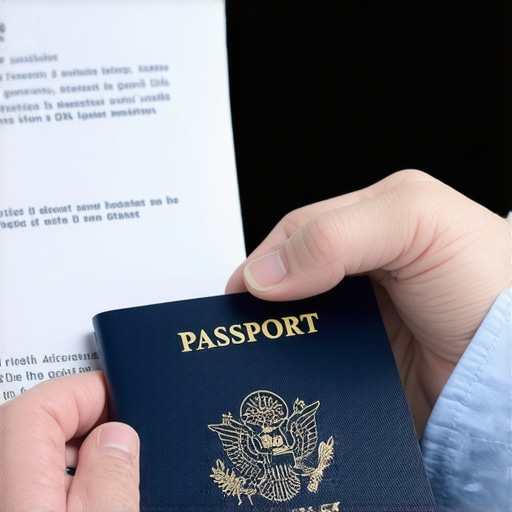
The air in my office always smells like ozone and mint before a major filing. It is the scent of static electricity from the printers and the cold focus required to dismantle a government denial. Most people treat a passport as a travel document. To me, it is a piece of evidence. If that evidence contains a name mismatch, you are not just looking at a travel delay; you are looking at a potential identity crisis in the eyes of federal law. My approach to these cases is sharp and aggressive because the bureaucracy has no room for sentiment. If your name is misspelled, omitted, or inconsistently applied across your documents, you do not exist as a legal entity in the way you think you do.
I recently spent 14 hours deconstructing a contract that was designed to be unreadable, only to find the one clause that changed everything. That experience is exactly what it is like to fix a passport mismatch. You are hunting for the procedural glitch that the Department of State uses to invalidate your identity. I watched a client lose their ability to sponsor a relative because an abogado de inmigración failed to notice a one-letter difference between a green card and a passport. The law is a game of millimeters. We do not negotiate with the bureaucracy; we provide them with an undeniable paper trail that forces their hand.
The ghost in the federal database
A name mismatch on your passport creates a conflict in federal databases that can lead to visa denials, border detentions, and the suspension of immigration benefits. Legal services are required to synchronize records between the Social Security Administration, the Department of State, and USCIS to ensure a single, consistent identity exists.
Procedural mapping reveals that the government does not care about your intent. If your birth certificate says Maria Garcia and your passport says Maria G. Smith, you have created a ghost. This ghost lives in the Systematic Alien Verification for Entitlements (SAVE) database. When an immigration officer pulls up your file, they see two different people. This is not a minor inconvenience. It is a red flag for fraud. I have seen cases where a missing middle name on a naturalization certificate led to a three year delay in passport issuance. The Immigration attorney who tells you it will just blow over is the one who will be absent when you are stuck in secondary inspection at JFK International Airport. You must address the mismatch by identifying which document is the master record. Usually, this is the birth certificate or the court ordered name change decree. If the passport is the outlier, you must file a DS-5504 or a DS-11 depending on how long ago the document was issued. The technical reality of 22 CFR § 51.25 states that the name on the passport must be the name that is currently used by the person. If you are using a name that does not match your underlying evidence, the State Department will reject the application without a second thought.
“Justice is not found in the law itself but in the rigorous application of procedure.” – Common Law Maxim
The high cost of a missing middle initial
A missing or incorrect middle initial on a passport can invalidate legal documents and cause a mismatch during the immigration vetting process. An immigration attorney must ensure that every identity document contains the full legal name to avoid administrative processing delays or the issuance of a Request for Evidence.
Case data from the field indicates that the most common failure point is the assumption that initials are interchangeable with full names. They are not. In the world of high stakes litigation, an initial is an ambiguity. Ambiguity is the enemy of the abogado de inmigración. If your passport says John Q. Public but your visa says John Quincy Public, you are inviting a forensic audit of your entire history. The strategic play is often a delayed demand letter to the passport agency to let the administrative clock run out, or more frequently, a preemptive filing of secondary evidence. This evidence includes school records, census records, or baptismal certificates that date back at least five years. The logic is simple: the government trusts old paper more than new paper. When I am deconstructing a file, I look for the earliest mention of the name. If that name matches the passport, we have a case. If it does not, we are rebuilding the identity from the ground up. The sound of a heavy federal stamp hitting a desk is the only sound that matters in this process. You get that stamp by being more precise than the clerk on the other side of the glass. We use silence as a weapon in our filings, only providing the exact evidence requested to prevent opening the door to further scrutiny.
Why the State Department ignores your intent
The Department of State operates on a strict evidentiary standard where intent is secondary to documentary proof of identity. To fix a name mismatch, you must submit a certified copy of a marriage certificate, court order, or adoption decree that clearly links the old name to the new name.
Information gain in this field often comes from understanding that the government is essentially a giant machine that reads fonts. If the font on your marriage certificate does not look authentic, or if the seal is not raised, the machine stops. I tell my clients that their case is failing the moment they try to explain why the name is different. The explanation is irrelevant. The proof is the only thing that moves the needle. While most lawyers tell you to sue immediately when a passport is delayed, the strategic play is often to file a motion to amend the record through a local court first. This provides a judicial decree that the federal government is legally bound to recognize under the full faith and credit clause. This is the difference between a legal services provider who just fills out forms and a strategist who understands the architecture of the law. We do not just fix a passport; we bulletproof an identity. This requires a microscopic look at the DS-11 application form. If you are correcting a name within one year of issuance, you use the DS-5504. If it has been longer, you are essentially starting over with a DS-82 or DS-11. The fee structures are different, the evidence requirements are different, and the margin for error is zero.
“The burden of proof remains with the applicant to establish their identity by a preponderance of the evidence.” – ABA Immigration Standards
The strategic wait for naturalization
Waiting for the naturalization process to fix a name mismatch is often the most efficient path for non citizens. During the N-400 application, you can request a legal name change that is signed by a federal judge, which then becomes the master record for your first American passport.
This is the contrarian play. Many people rush to fix a passport mismatch while they are still on a green card. This is often a tactical error. Every time you touch a federal file, you risk triggering a manual review of your entire immigration history. An Immigration attorney who understands the long game will often advise a client to wait until they are applying for citizenship. Why? Because the N-400 allows for a judicial name change as part of the ceremony. This creates a pristine legal break from the past. It erases the ghosts of the old name mismatches. Once you have that naturalization certificate with the correct name, the passport process becomes an administrative formality. The scent of success in these cases is the lack of friction. If you try to force a name change through the Social Security Administration without a court order, you will find yourself in a loop of bureaucratic hell that can last for years. We avoid the loop. We find the shortest path to the verdict. The courtroom is territory, and in the territory of identity law, the naturalization certificate is the high ground. When you have the high ground, the State Department cannot deny your passport based on a previous mismatch. You have redefined who you are in the eyes of the law.
Forensic evidence for the identity trial
Secondary evidence such as hospital birth records, insurance records, or employment files can be used to resolve a name mismatch when primary documents are unavailable. These documents must be original or certified copies and must show the name, date of birth, and a consistent link to the individual.
The reality is that sometimes the master documents are lost or destroyed. This is where we shift from being lawyers to being forensic historians. We look for the paper trail that the government cannot ignore. I have used a 30 year old medical record to prove a surname spelling because it was the only document that predated the mismatch. Every piece of paper is a witness. As a senior trial attorney, I cross examine the documents. Does the signature on the 1995 insurance application match the signature on the 2024 passport renewal? If not, why? These are the questions the government will ask, so we ask them first. We provide the answers in a structured, aggressive filing that leaves no room for follow up questions. The legal services we provide are not about making the client feel good; they are about winning the case. If the case is won, the client can travel. If the case is lost, the client is a prisoner of their own paperwork. We do not accept the latter. We zoom in on the specific wording of the local statutes regarding name changes and we use them as leverage against federal stagnation. There is no such thing as a simple name change. There is only the successful navigation of a complex legal labyrinth.