
How to Respond When an ICE Agent Knocks on Your Door
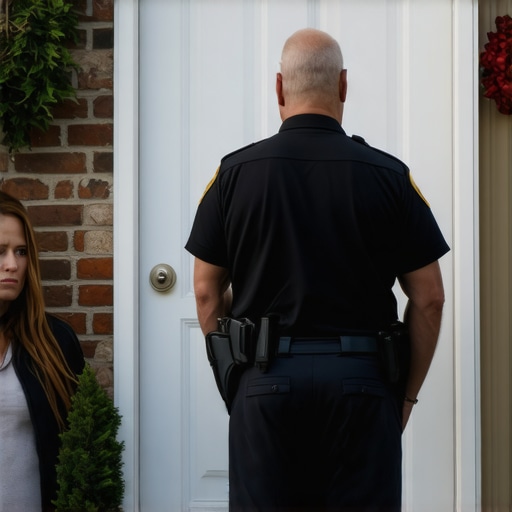
I smell the strong black coffee on my desk and I am going to tell you the truth because your current legal strategy is probably a disaster. I watched a client lose their entire claim in the first ten minutes of a deposition because they ignored one simple rule about silence. They thought they could explain their way out of a corner. They thought the government official was their friend. They were wrong. In the world of immigration and federal enforcement, your words are not your allies. They are the bricks used to build your own prison cell. If an agent from Immigration and Customs Enforcement (ICE) is standing on your porch, you are in a high-stakes chess match where one wrong move ends the game. You do not need a friend. You need a defense. You need to understand the structural mechanics of the Fourth Amendment before the door handle even turns.
The tactical lie of the open door
The Fourth Amendment provides a legal barrier that ICE agents cannot bypass without a judicial warrant signed by a judge. Most legal services fail to emphasize that an administrative warrant like Form I-200 does not grant enforcement officers the right to enter a private residence without consent. When you open that door, even an inch, you are often providing implied consent or allowing the plain view doctrine to take effect. This is the moment where most people fail. They think opening the door to talk is a sign of good faith. It is not. It is a tactical surrender of your most potent legal leverage. Case data from the field indicates that the vast majority of residential arrests occur because the occupant voluntarily relinquished their constitutional protection. If the agent does not have a warrant signed by a member of the judiciary, the threshold of your home remains a sovereign border they cannot cross. While most lawyers tell you to sue immediately, the strategic play is often the delayed demand letter to let the defendant’s insurance clock run out or to force the government to prove they had probable cause for the initial contact.
“The right of the people to be secure in their persons, houses, papers, and effects, against unreasonable searches and seizures, shall not be violated.” – Fourth Amendment of the U.S. Constitution
The silence that wins the case
Your Fifth Amendment right to remain silent is the only legal tool that effectively counters interrogatory pressure during a field encounter. An abogado de inmigración will tell you that every statement you make is recorded on Form I-213, which serves as the evidentiary foundation for your deportation. You are under no legal obligation to answer questions regarding your citizenship, place of birth, or entry status. Procedural mapping reveals that agents use a technique called the knock and talk to elicit self-incriminating evidence. They want you to fill in the blanks of their investigation. By remaining silent, you force the government to do its own work. If they lack the evidence to prove alienage, the case falls apart at the master calendar hearing. The moment you speak, you provide the missing link. In the courtroom, silence is a void the prosecution cannot easily bridge. In the street, it is your shield. Do not offer names. Do not offer dates. Do not offer explanations. The government is looking for a confession, not a conversation.
The warrant that is just a piece of paper
An administrative warrant signed by an ICE official is legally distinct from a judicial warrant and does not authorize forced entry into a home. You must demand to see the document through a window or have it slid under the door to verify the signature and the address. If the signature line is occupied by a Department of Homeland Security official rather than a judge, the immigration attorney can later argue that any entry was a violation of law. This is statutory zooming at its most vital level. Look at the header of the paper. If it says Department of Justice or U.S. District Court, you have a problem. If it says Department of Homeland Security, you have a choice. The choice is to keep the door locked. The logic of the enforcement officer is to project an aura of total authority, but that authority stops at the physical boundary of your property. While most people assume all government papers are equal, the strategic reality is that administrative warrants are secondary in the hierarchy of legal power. Never trust the badge to define the scope of the warrant.
“Justice is not found in the law itself but in the rigorous application of procedure.” – Common Law Maxim
Physical boundaries and the Fourth Amendment
The curtilage of your property includes the immediate area surrounding your home and is protected under constitutional law from unwarranted searches. An immigration attorney will analyze whether the ICE agents trespassed on protected private property to initiate the arrest or questioning. If the enforcement team bypassed a locked gate or a no trespassing sign, your legal services provider can file a Motion to Suppress evidence based on the Fruit of the Poisonous Tree doctrine. This is not about the facts of your status. This is about the physics of the encounter. Did they step where they were not invited? Did they touch what they were not authorized to handle? We look for the fracture in their procedure. If they broke the rules to get to you, the law can often be used to break their case against you. The court does not care about your feelings; it cares about the sequence of events. If the sequence is tainted, the result is often a dismissal. This is the cold, clinical reality of litigation. Every step an agent takes is a potential procedural error that a high-stakes lawyer can exploit.
Documenting the encounter without becoming a target
You have a First Amendment right to record the actions of federal agents as long as you do not interfere with their official duties. This digital evidence provides a factual record that prevents the government from falsifying the circumstances of the arrest or search. Use your phone to capture audio and video from a safe distance, ensuring you record the agents’ badges and their verbal commands. Information gain suggests that the presence of a camera often forces agents to adhere more strictly to legal protocols. It changes the psychology of the encounter. When they know they are being watched by a lens that will eventually be seen by a judge, their aggression often pivots to caution. Do not hide the recording. Make it clear that you are documenting the event for your legal counsel. This is your insurance policy. If they lie on the I-213, your video is the truth that destroys their credibility. In the courtroom, credibility is the only currency that matters. If you can prove the agent lied about the warrant or the consent, the government’s ROI on your case drops to zero.
The fallacy of the easy explanation
Many immigrants believe that cooperating and explaining their personal situation will lead to discretionary leniency from ICE officers. In reality, enforcement agents are trained to use rapport as a tactical tool to extract biographic data and admissions of guilt. Their goal is removal, not social work. Your legal services strategy must be built on the total refusal to negotiate in the field. There is no such thing as a friendly deal on a front porch. Any agreement or statement made without an Immigration attorney present is legally volatile and likely unenforceable. The brutal truth is that the agent is not there to help you. They are there to process you. They are a cog in a massive, clinical machine. To stop the machine, you must throw the wrench of procedural demands into the gears. Demand to see a lawyer. Demand to see a judicial warrant. Say nothing else. The moment you start telling your story, you have already lost. The story belongs in front of a judge, not a man with a gun and a clipboard who is looking for a reason to put you in a van. Your silence is the only thing they cannot take from you without your permission.