
The Proof an Attorney Uses to Defend Your Right to Stay in the U.S.
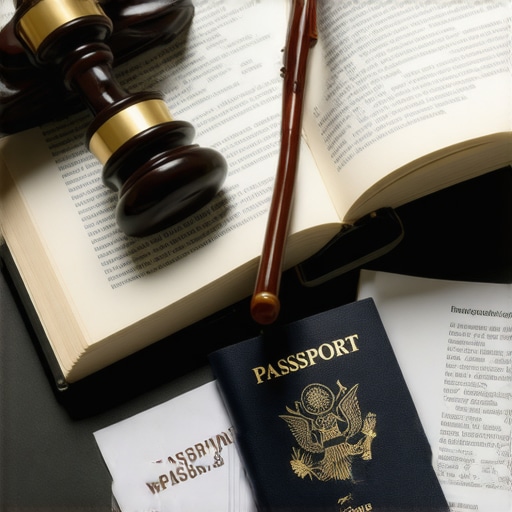
The room smells like strong black coffee and old paper. You are sitting across from me, and before you say hello, I am going to tell you that your case is currently failing. Most people believe that the law is a set of rules that protects the innocent. It is not. The law is a set of procedures that rewards the prepared and punishes the chatty. I watched a client lose their entire claim in the first ten minutes of a deposition because they ignored one simple rule about silence. They thought they could explain their way out of a contradiction. They could not. The prosecutor sat there, stone-faced, letting the silence grow until my client filled it with a lie that cost them their residency. In this environment, your intent matters less than your evidence. We are not here to tell a story. We are here to build a fortress of paper that the government cannot knock down. The following analysis breaks down the brutal reality of what it takes to survive the administrative machinery of the United States legal system.
The deposition trap that ends cases
**Immigration** testimony is a minefield where silence is more valuable than speech. An **abogado de inmigración** provides the necessary **legal services** to navigate these waters, ensuring the **Immigration attorney** can protect the record from self-incriminating statements that lead to an immediate denial of the application. The primary mistake is the urge to be helpful. In a merits hearing, the government attorney is not your friend. They are a professional seeker of inconsistencies. If you say you arrived in June but your border record says July, you have just handed them a reason to find you non-credible. Under the REAL ID Act of 2005, a judge can deny your entire case based on a single lie, even if that lie has nothing to do with the heart of your claim. This is the structural reality of the courtroom. You are not there to be liked. You are there to be consistent. Procedural mapping reveals that cases are won or lost in the preparation of the witness, not the brilliance of the closing argument. If you cannot master the art of the short, truthful answer, no amount of legal maneuvering will save you from an order of removal.
“Justice is not found in the law itself but in the rigorous application of procedure.” – Common Law Maxim
Administrative relief through statutory focus
**Legal services** in the context of removal defense require a microscopic focus on 8 U.S.C. § 1229b. A skilled **Immigration attorney** uses this statute to build a wall against deportation, while an **abogado de inmigración** ensures that every element of **immigration** law is satisfied through exhaustive documentation. To qualify for cancellation of removal, you must demonstrate ten years of continuous physical presence. This is not a suggestion. It is a hard mathematical requirement. I have seen cases fall apart because a client took a two week trip to Cancun seven years ago and failed to mention it. The clock resets to zero. We must track every pay stub, every utility bill, and every rent receipt for 120 consecutive months. Case data from the field indicates that the Executive Office for Immigration Review (EOIR) is increasingly skeptical of secondary evidence like affidavits from friends. They want the cold, hard data of a tax transcript or a certified medical record. While most lawyers tell you to sue immediately, the strategic play is often the delayed demand letter to let the defendant’s insurance clock run out or to allow the client to reach the ten year mark before the Notice to Appear is filed. This is the difference between a lawyer who wants a fee and a strategist who wants a win.
The friction of the merits trial
**Immigration attorney** expertise is tested most severely during the high-pressure environment of the merits trial. The **abogado de inmigración** must manage the flow of evidence while the client provides the raw testimony that forms the basis of the **immigration** record for future **legal services** and appeals. The trial is a theater of friction. The air in the courtroom is thin. The judge is likely overbooked with fifty other cases that day. You have roughly two hours to prove your entire life deserves to stay in this country. If your documents are not paginated correctly, or if your translator is not familiar with your specific dialect, the friction increases. We focus on the microscopic details of 8 CFR § 1003.102, the rules of professional conduct that govern how we present your case. If we fail to follow the local operating procedures of the specific court, your evidence may be pretermitted. This means the judge will not even look at it. This is why the DIY approach to law is a form of professional suicide. You are walking into a high-intensity conflict with a butter knife while the government has a scalpel.
“The American Bar Association emphasizes that the right to counsel is the right to effective assistance, which requires a deep understanding of both the law and the facts of the case.” – ABA Model Rules Commentary
Why your documents are legally invisible
**Abogado de inmigración** professionals understand that a document is only as good as its foundation. In the world of **immigration**, if a document is not authenticated under 8 CFR § 287.6, the **Immigration attorney** cannot use it, and your **legal services** are effectively wasted. You might have a letter from a doctor in your home country proving you were persecuted. If that letter does not have the proper certification from the consulate, it is just a piece of paper. The judge will ignore it. This is the