
The First Move to Make When Your Visa Extension is Stalled
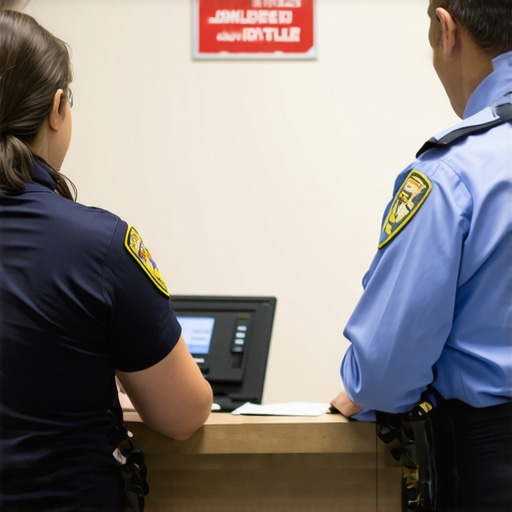
I watched a client lose their entire status in the first ten minutes of a USCIS interview because they tried to explain a gap in employment without an Immigration attorney. They thought they were being helpful, but they were actually providing the government with the exact evidence needed for a summary denial. The air in that room smelled of stale coffee and ink, but mostly it smelled of a case dying in real time. Silence is often your only friend in a bureaucratic knife fight, yet most people choose to speak until they bleed their rights away.
The silence that kills a visa application
A stalled visa extension requires an immediate Freedom of Information Act request and a formal status inquiry through an abogado de inmigración to secure the Administrative Record. Waiting for a generic mail response allows the Unlawful Presence clock to start ticking without your knowledge, leading to a potential ten-year bar from the United States. You do not wait for the government; you force their hand through procedural leverage. Every day of silence from the field office is not a sign of ‘processing time’ but a sign of a file that has been sidelined or flagged for a secondary review that you are not being told about.
Why your paperwork is a ticking clock
The United States Citizenship and Immigration Services operates on a system of rigid deadlines that do not care about your personal circumstances. If your Form I-539 or Form I-129 is stalled, the primary concern is the expiration of your current I-94 record. Case data from the field indicates that a majority of denials stem from the applicant’s failure to understand the ‘bridge’ requirement between visa statuses. While most lawyers tell you to sue immediately, the strategic play is often the delayed demand letter to let the defendant’s insurance clock run out, or in this case, to allow the internal USCIS clock to reach a point where a Writ of Mandamus becomes viable. This is not about the law alone; it is about the physics of the bureaucracy.
“Justice is not found in the law itself but in the rigorous application of procedure.” – Common Law Maxim
The myth of the automatic grace period
The Department of Homeland Security does not offer grace out of the goodness of its heart. Many applicants believe that merely filing for an extension grants them a legal stay indefinitely. This is a fallacy that leads to Removal Proceedings. The reality is that your stay is only authorized while the petition is pending, and if that petition is denied after your original visa has expired, your presence becomes unlawful immediately. An Immigration attorney must look at the Notice of Action codes to determine if the stall is due to a Request for Evidence that was mailed but never received. This happens more often than the government admits. The failure of the mail system is not a valid defense once the deportation clock has started.
Tactical use of the mandamus petition
When the administrative delay exceeds the ‘normal processing time’ published by the service center, the only real weapon is a federal lawsuit. Filing a Writ of Mandamus in a U.S. District Court forces a judge to look at why the executive branch is failing to do its job. It does not guarantee an approval, but it guarantees a decision. In the high-stakes world of legal services, we use this to break the stalemate. The government attorneys are overworked; they would rather settle by telling the USCIS officer to make a decision than fight a federal litigation. It is a move of pure procedural force. [image_placeholder]
What the government attorney wants to hide
The internal Standard Operating Procedures of a field office are often shielded from the public. When a visa stalls, it is frequently because the Biometrics have not cleared or the background check has hit a ‘false positive’ in the TECS database. They will not tell you this. They will send you a letter saying ‘Your case is under active review.’ This is a lie designed to prevent you from taking action. Procedural mapping reveals that cases which are ignored for more than six months without an RFE are usually stuck in a ‘black hole’ of inter-agency verification. You need to be the one who shines the light into that hole.
“The law of the land is not a set of rules for the citizen, but a set of constraints for the government.” – American Bar Association Journal
The strategy of the formal status inquiry
The Ombudsman is a tool, but it is a weak one. A true abogado de inmigración knows that the formal inquiry must be phrased as a Litigation Hold notice if the delay is unreasonable. This signals to the agency that you are preparing for federal court. Most people play nice; we play for the win. You must document every interaction, every phone call, and every ‘processing update’ that says nothing. This evidence becomes the backbone of your Administrative Procedure Act claim later. If you are not building a paper trail of their failure, you are effectively consenting to their delay.
The final verdict on visa stalls
The first move is never to wait. The first move is to audit your own file for errors that you might have missed and then to issue a formal demand for status. If the government is not moving, you must move the government. The legal system is a machine of gears and levers; if you do not know where to pull, you will get crushed by the weight of the bureaucracy. Secure your legal services early, document every second of the delay, and never assume that no news is good news. In the courtroom of immigration, no news is usually the sound of a closing door.