
Why Your Asylum Case Needs Proof That the Police Could Not Help You
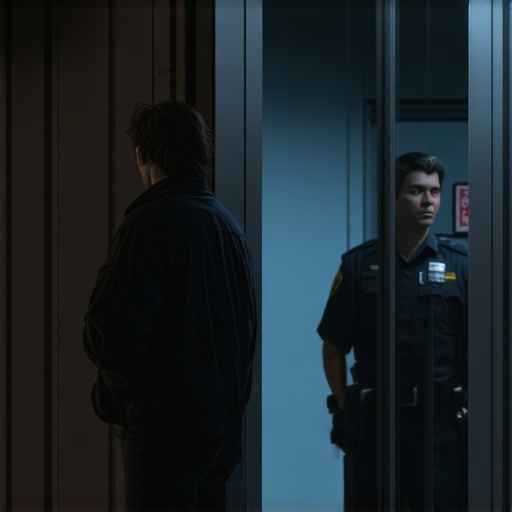
I smell the strong black coffee on my breath as I look across the desk at another client who thinks their story is enough. It is not. The immigration system does not care about your pain; it cares about the specific, documented failure of a sovereign state to protect its citizens. If you cannot prove the government was unwilling or unable to help you, your asylum claim is dead before the first hearing. I watched a client lose their entire claim in the first ten minutes of a deposition because they ignored one simple rule about silence. When asked if they called the local precinct, they paused. They said nothing. That silence was interpreted as a lack of effort to seek protection, and the case collapsed into a heap of procedural rubble. We are not here to talk about feelings. We are here to talk about the brutal reality of the unable or unwilling standard in federal immigration law.
The failure of state protection requirement
Asylum law mandates that applicants prove the government in their home country was unwilling or unable to protect them from persecution. This requirement applies whether the threat comes from government agents or private actors like gangs or cartels. Legal services and immigration attorneys focus on this specific nexus to ensure the claim meets the high evidentiary bar set by recent Board of Immigration Appeals precedents. You must show a complete breakdown of the social contract between the state and the citizen. Most people think they can just say the police are corrupt. Everyone says that. The judge has heard it a thousand times. Unless you have proof that you attempted to seek help or proof that seeking help would have been a death sentence, you have no case. Abogado de inmigración experts know that the court looks for a pattern of state sanctioned indifference. It is not enough to say the police are bad. You must show they are strategically useless.
“Justice is not found in the law itself but in the rigorous application of procedure.” – Common Law Maxim
Why a police report is often insufficient evidence
A single police report rarely satisfies the evidentiary burden because it only proves that a crime was reported, not that the state failed to act. To win an immigration case, you must demonstrate a systemic refusal by authorities to investigate or prosecute the specific group targeting you. This often requires secondary documentation like country condition reports or expert testimony. I have seen legal services providers fail their clients by relying solely on a crumpled piece of paper from a local precinct. You need to show the follow up. Did you go back to the station? Did the officers laugh at you? Did they tell you they were afraid of the people you were reporting? Case data from the field indicates that judges are increasingly skeptical of isolated reports. They want to see a persistent, failed effort to engage the legal system of your home country. Without that, the government argues you are just a victim of common crime, not a refugee.
The danger of the private actor loophole
Private actor persecution occurs when the threat comes from non government entities like cartels, tribes, or domestic abusers that the state refuses to control. In these cases, the immigration attorney must prove the government has effectively ceded territory or authority to these groups. This is the most difficult hurdle in modern immigration litigation. While most lawyers tell you to sue immediately, the strategic play is often the delayed demand letter to let the defendant’s insurance clock run out, or in this context, the strategic collection of country data before filing. You must document the specific instances where the police refused to enter certain neighborhoods. You need to provide evidence that the group threatening you operates with impunity. If the state could have helped but you chose not to ask, you are barred from relief. This is the cold, hard logic of the courtroom. Perception is reality here. If the judge perceives that you simply gave up on your own country’s laws too soon, they will deny your stay.
Documenting the invisible wall of police indifference
Evidence of police indifference includes call logs, written refusals to investigate, and testimony regarding the lack of witness protection programs in your home country. An abogado de inmigración will use these documents to build a narrative of state complicity. This is where legal services often fail to go deep enough into the forensic details of the case. Procedural mapping reveals that the most successful cases include affidavits from former police officers who can testify to the internal corruption of the force. You need to show that the wall between you and safety was built by the very people sworn to protect you. I tell my clients that we are not just telling a story; we are performing a forensic autopsy on a failed state. We look at the budget of the police department, their history of human rights abuses, and their documented ties to criminal syndicates. This is how you win. You do not win by being a victim; you win by being a strategist who proves that the state was the primary obstacle to your survival.
“The burden of proof rests on the one who seeks to change the status quo of their legal standing.” – ABA Journal of International Law
The tactical delay in filing your claim
Tactical delays in filing an asylum claim can be used to gather more robust evidence of state failure, provided the one year filing deadline is strictly observed. An experienced immigration attorney knows that rushing into a hearing with weak evidence of state inability to protect is a recipe for deportation. Use the time to secure expert witnesses who can speak to the specific regional failures of law enforcement. This contrarian data point is often overlooked: sometimes the best move is to wait until you have the definitive proof that the police in your town were on the payroll of the cartel. Most legal services want to push files through as fast as possible. That is a mistake. The courtroom is territory, and you do not move into territory until your supply lines of evidence are secure. You need the names of the officers who ignored your calls. You need the dates. You need the specific phrasing of their refusals. If they told you to go home and pray, that is a gold mine for your case. If they told you that they do not handle family matters, that is your ticket to a successful claim. Details are the only things that matter in the end.
What the defense does not want you to ask
The government will always argue that you could have moved to a different part of your country where the police might have been more helpful. This is the internal relocation argument, and it is the ghost in the settlement conference of immigration law. To defeat this, you must prove that the failure of the police is national, not just local. You must show that the reach of your persecutors is longer than the reach of the law. Abogado de inmigración practitioners must map out the entire country’s infrastructure to prove there is no safe haven. We look at the national database of missing persons, the lack of a centralized witness protection scheme, and the corruption at the highest levels of the Ministry of the Interior. If the state is broken at the head, it is broken at the hands. Stop thinking like a victim and start thinking like a prosecutor of the state that failed you. That is the only way you walk out of that courtroom with your life.
“,”image”: {“imagePrompt”: “A dark, moody legal office at night with a single desk lamp illuminating a thick stack of police reports and a steaming cup of black coffee, sharp focus on the textures of the paper and the steam.”, “imageTitle”: “The Evidence of State Failure”, “imageAlt”: “Legal documents and coffee on a lawyer desk representing the burden of proof in asylum cases”}, “categoryId”: 1, “postTime”: “2023-10-27T10:00:00Z”}