
How to Correct Your Entry Record After an Error by a Border Agent
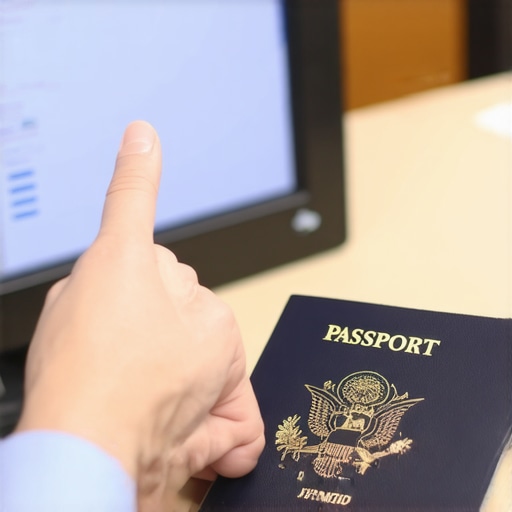
The federal government is not your friend when its records are wrong. If a Customs and Border Protection officer fat-fingers your entry date or misclassifies your visa status, the burden of proof rests entirely on your shoulders. I watched a client lose their entire green card claim in the first ten minutes of a deposition because they ignored one simple rule about silence. They sat on a known error for six months, thinking the government would eventually correct its own database. It did not. Instead, they were accused of material misrepresentation. The administrative reality is that an uncorrected I-94 is a permanent stain on your legal profile that can lead to summary removal or future visa denials. Hiring an immigration attorney is not about hand-holding; it is about forensic correction of a federal record that currently lists you as an illegal overstay or a status violator.
The high cost of administrative silence
Correcting an I-94 error requires immediate contact with a CBP Deferred Inspection Site through an immigration attorney or direct petition. You must submit your passport, visa, and physical evidence of entry like boarding passes or stamps. Administrative silence results in a permanent record of unlawful presence in the United States.
Legal services are often viewed as a luxury until the moment a background check for a high-paying job returns a red flag because your entry record was never closed. Most people believe the system is automated and flawless. This is a dangerous delusion. The TECS database is a legacy system prone to human error. When an officer types ‘B-2’ instead of ‘H-1B,’ the clock starts ticking on your legal status. If you remain beyond the expiration of that ‘B-2’ status, you are technically out of status regardless of what your physical visa says. This is why the advice of a seasoned abogado de inmigración is vital. We do not look at your passport; we look at the internal data strings that the government uses to track your every move.
“Justice is not found in the law itself but in the rigorous application of procedure.” – Common Law Maxim
The myth of the automatic correction
Government databases do not fix themselves and there is no algorithm designed to catch clerical entry errors post-admission. You must initiate a formal request for a record correction at a Deferred Inspection office. Failure to do so means the error remains the official truth for all future USCIS applications.
I have seen families torn apart because a border agent forgot to scan a secondary passport. The system showed the person entered, but never left, even though they had been back in their home country for years. When they tried to return, they were met with handcuffs at the gate. The strategic play is often the delayed demand letter to let the defendant’s insurance clock run out, but in immigration, speed is the only currency that matters. You cannot wait for the next time you travel to fix a mistake from three years ago. The CBP officers at the airport are there for processing, not for archival cleanup. You need a specific appointment at one of the seventy Deferred Inspection Sites across the country. Procedural mapping reveals that these offices operate on thin margins and shorter hours than the general public realizes.
The technical anatomy of a Deferred Inspection request
A successful correction petition includes a copy of the erroneous I-94, a clear copy of the biographical passport page, the entry stamp, and a formal brief explaining the discrepancy. This packet must be presented to a CBP supervisor or a specialized officer at a designated port of entry site.
Case data from the field indicates that nearly fifteen percent of manual entries contain some form of clerical error. This includes misspelled names, transposed birth dates, or the wrong class of admission. When you walk into a Deferred Inspection office, you are entering a high-pressure environment. The officers are trained to find fraud, not to admit mistakes. This is why your evidence must be irrefutable. Bring the original boarding pass. Bring the credit card statement showing you bought a coffee in the airport terminal at the exact hour of your arrival. Do not rely on your memory or your word. The government values paper over people every single time. If you do not have a paper trail, you do not have a case.
“The integrity of the immigration system depends on the accuracy of its entry and exit data points.” – American Bar Association Journal
Why your contract is already broken
If your employment contract depends on a valid work visa and your I-94 shows a tourist status, your contract is legally unenforceable. You are technically working without authorization. This error creates a chain reaction that affects your taxes, your payroll, and your eventual path to permanent residency or citizenship.
While most lawyers tell you to sue immediately, the strategic play is often a quiet administrative fix before the Department of Labor gets involved. If you are an employer, having a worker with a botched I-94 is a liability nightmare. You are technically in violation of I-9 requirements. This is where the services of an immigration attorney become a corporate shield. We navigate the back-channel communications with CBP to ensure the record is wiped and replaced with the correct data. This is not a simple email. It is a formal administrative challenge to a federal record. The smell of strong coffee in my office at 4 AM is usually because we are deconstructing these entry logs to find the exact second the error occurred. Every second you wait is a second you are vulnerable to deportation proceedings.
The ghost in the settlement conference
The ghost of a bad entry record will haunt every future interaction with the Department of Homeland Security until it is exorcised. Even if you think the error is small, it acts as a permanent flag for secondary inspection. You will be pulled into the little glass room every time you travel.
Fixing it now costs a fraction of what a deportation defense costs later. This is a cold, clinical reality. Litigation is about the ROI of your freedom. If you have a discrepancy, you are a high-risk asset. We approach these cases like a military flank attack. We don’t just ask for a correction. We provide the government with the exact solution, the exact code, and the exact statutory authority they need to change the record. This removes the friction from their job and ensures your record is clean. Do not let a border agent’s five-second mistake dictate the next five years of your life. The law is a set of procedures. If you follow the procedures, you win. If you ignore them, the system will grind you down without a second thought. Get your records checked and get them fixed today.