
The Document That Proves Your Step-Child Is Eligible for Your Green Card
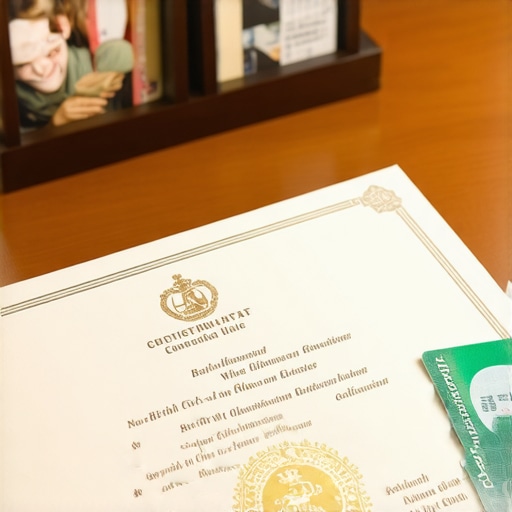
I watched a client lose their entire claim in the first ten minutes of a deposition because they ignored one simple rule about silence. They volunteered information about a separation that had not even happened yet, which contradicted the dates on their step-child’s petition. In the world of an immigration attorney, your silence is a shield, but your documents are the fortress. If you think a step-parent relationship is just about love, you are already losing. The law does not reward affection. It rewards the precise alignment of dates, signatures, and government seals. Every day, people walk into my office with a stack of papers they believe is a case. Most of it is garbage. They have photos of birthday parties and school plays, but they are missing the one document that actually matters under the Immigration and Nationality Act. This is the reality of the system. It is cold, it is bureaucratic, and it is unforgiving of mistakes. If you want your step-child to live in the United States, you stop looking at the family album and start looking at the statute. You are dealing with an agency that is trained to find a reason to say no. Your job is to make it impossible for them to do so.
The age eighteen wall
Under INA 101(b)(1)(B), a step-child is only eligible for a Green Card if the marriage between the biological parent and the step-parent occurred before the child reached eighteen years of age. This is the hard line in the sand that determines the fate of the entire family unit. The law does not care if the child lived with the step-parent since infancy or if the emotional bond is stronger than a biological one. If the legal marriage happened at 18 years and one day, the child is not a child for immigration purposes under this specific category. You must understand that legal services in the immigration sector are often about managing these rigid timelines rather than arguing the merits of a family’s love. The USCIS Policy Manual is clear. The marriage ceremony must be completed and legally recognized in the jurisdiction where it took place before that eighteenth birthday. I have seen families wait years for an appointment only to be told the basic math of their marriage date makes the petition void. It is a cold reality. It is the reality of the statute. While most lawyers tell you to sue immediately, the strategic play is often the delayed demand letter to let the defendant’s insurance clock run out, but in immigration, you have no such luxury. You either meet the date or you fail. This is the first thing an abogado de inmigración checks. If this date is wrong, nothing else you do matters.
“Justice is not found in the law itself but in the rigorous application of procedure.” – Common Law Maxim
The paper trail of a dissolved marriage
Every prior marriage of both the petitioner and the biological parent must be legally terminated before the new marriage that creates the step-child relationship can be recognized. This is where most cases bleed out. If you were married in a country that allows for customary divorce but you did not obtain a formal court decree, the United States government will not recognize your subsequent marriage. This means the step-parent relationship never legally existed in the eyes of the law. You can spend thousands on legal services, but if the divorce decree from 1998 is missing a stamp from the Ministry of Justice, you are done. We look for the jurisdictional validity of every document. A quickie divorce from a foreign country that lacks proper service of process will tank your current petition. The government looks for overlapping dates. If you were still technically married to your first spouse when you married the parent of your step-child, you have committed bigamy in the eyes of USCIS. That is a permanent bar to many immigration benefits. You need to prove the end of every previous union with absolute certainty. Death certificates, final divorce decrees, and annulment papers must be original or certified copies. Translations must be literal and accompanied by a certificate of translation accuracy. If the translator misses a single date, the fraud unit will be at your door. There is no room for error in the paper trail of a dissolved marriage.
The burden of the bona fide union
Proving a step-child’s eligibility requires proving the underlying marriage is not a sham designed to circumvent immigration laws through heavy documentation of shared life. You need more than a marriage certificate. You need commingled assets, joint tax returns, and shared residential history. The government assumes your marriage is a fraud until you bury them in evidence that proves otherwise. Case data from the field indicates that petitions involving step-children are scrutinized at a higher rate because they involve multiple parties. They want to see that the step-parent is actually acting as a parent. They want to see medical records where the step-parent is listed as an emergency contact. They want to see school records where the step-parent is authorized to pick up the child. If the child is living in a different country, the burden is even higher. You must show a consistent history of financial support and emotional communication. A few Western Union receipts from last month will not cut it. You need years of records. You need a history that predates the filing of the I-130 petition. If you only started acting like a parent after you decided to file for a Green Card, the officer will see right through it. They are trained to spot the eleventh-hour scramble for evidence.
“The burden of proof in an immigration benefit request lies squarely with the petitioner.” – Matter of Brantigan, 11 I&N Dec. 493 (BIA 1966)
Why a lawyer sees what you ignore
A seasoned abogado de inmigración looks for the date stamps and the seals on the back of the documents rather than the photos of the family dinner. USCIS officers are trained to find the one day of overlap where a person was married to two people at once. One mistake in a translated document creates a permanent record of fraud that follows the child forever. Procedural mapping reveals that the most common reason for a Request for Evidence is not a lack of love, but a lack of proper certification. We check the reciprocity tables of the Department of State to ensure the document you provided is the one the government expects from that specific country. If the table says a birth certificate must be from the National Archives and you provided one from the local village, your case will be delayed for months. We look at the ink. We look at the paper quality. We look at the signatures. We are looking for the reasons the government will use to deny you. Most people are blinded by their own narrative. They think because they are good people, the government will help them. That is a dangerous fantasy. The government is a machine. If you do not feed the machine the exact fuel it requires, it will grind your family’s future to a halt.
The risk of the fraudulent entry
If the step-child entered the United States without inspection, the path to a Green Card becomes significantly more complex and often requires a waiver of inadmissibility. This is the trap that catches many families. They think that because they are now married to a U.S. citizen, the child’s previous immigration history is wiped clean. It is not. If the child is over 18 and has accrued unlawful presence, they may be barred from the country for three or ten years if they leave for a consular interview. Procedural mapping shows that the timing of the filing is as important as the filing itself. You have to navigate the Child Status Protection Act to ensure the child does not age out while the application is pending. If the child turns 21 before certain steps are taken, they move into a different category that can take years or decades to process. You are racing against a clock that never stops. Every day you wait to gather documents is a day closer to a deadline that could end the child’s eligibility. The strategy is not just about filing. It is about the sequence of the filing. It is about knowing when to push and when to wait. It is about understanding that the law is a set of traps, and your only hope is a map provided by someone who has walked the minefield before.
The evidence beyond the certificate
Successful petitions for step-children include secondary evidence such as insurance policies, bank statements, and sworn affidavits from credible third parties who have observed the family dynamic. You need to build a wall of evidence that is so high the officer cannot see a way over it. I tell my clients that we are not just filing an application. We are building a case for trial. We prepare for the worst-case scenario. We look for the gaps in the residential history. We look for the inconsistencies in the employment records. If the step-parent and the biological parent have different addresses on their driver’s licenses, the case is in trouble. If the child’s school records list a different father, you need a legal explanation for that discrepancy. You cannot just ignore the problems and hope the officer does not notice. They will notice. They are paid to notice. Your evidence must be cohesive. It must tell a single, undeniable story of a valid marriage and a legitimate step-parent relationship. If there is a single crack in that story, the whole thing will come crashing down. This is why you do not use a settlement mill. You use a strategist. You use someone who understands that the document is just the beginning of the fight.