
Why Your Travel Records Must Match Your Entry Stamps Exactly
The trap of administrative memory
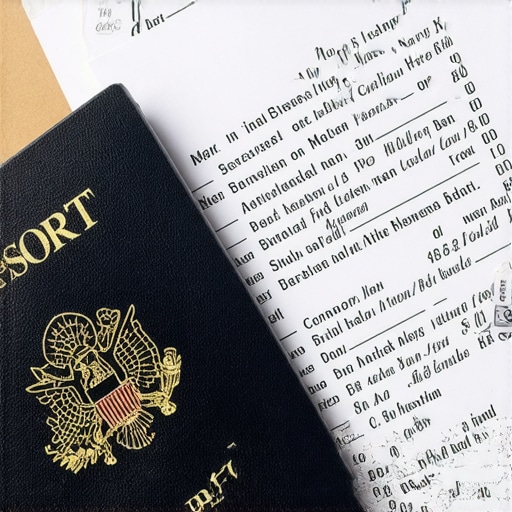
Accurate travel records are the absolute requirement for any immigration filing because the Department of Homeland Security uses automated cross-referencing systems to verify every date you provide. Any discrepancy between your personal memory and the Arrival and Departure Information System is treated as a potential fraud indicator. This is where most cases fail before they even reach a judge. I sat across from a client last week who smelled like expensive cologne and cheap excuses. He was convinced his green card application was a simple formality. I told him he was wrong. He had forgotten a three-day weekend in Toronto back in 2019. He did not think it mattered. The United States Customs and Border Protection database thought otherwise. When the officer at the interview pulled up the digital entry record from the Peace Bridge crossing, my client froze. He looked like a deer in the headlights of a freight train. That single forgotten weekend turned a standard adjustment of status into a fight against a charge of material misrepresentation. In the world of immigration, a mistake is not just a mistake. It is a permanent stain on your credibility. You do not get to be approximate with the federal government. You are either right or you are lying. There is no middle ground in a courtroom or an asylum office. If your dates do not align with the entry stamps in your passport or the electronic I-94 record, your immigration attorney is starting the game with ten points down and the clock running out.
The digital shadow of the CBP database
The electronic I-94 system and the Advance Passenger Information System create a permanent digital shadow of your movements that USCIS officers access with a single keystroke. These systems track flight manifests, biometric data at ports of entry, and license plate readers at land borders. Procedural mapping reveals that the government knows your travel history better than you do. While many applicants believe their old passports are the only source of truth, the reality is far more forensic. The government uses the Arrival and Departure Information System to calculate exactly how many days you have spent inside or outside the country. This is vital for naturalization residency requirements or maintaining a green card. If you claim you were in New York while your biometric scan occurred in London, the system flags the conflict automatically. Case data from the field indicates that these automated flags are the primary reason for extended administrative processing. You cannot outsmart the algorithm. The tactical move is not to guess. The strategic play is to perform a full audit of your own history before the government does it for you. This means requesting your own records through a Privacy Act request or a Freedom of Information Act filing. Information gain is found in the silence of the records. While most lawyers tell you to sue or file immediately, the strategic play is often a delayed filing to wait for a FOIA response to see exactly what the government knows before you tell them what you think you know. This prevents the trap of conflicting testimony.
“Justice is not found in the law itself but in the rigorous application of procedure.” – Common Law Maxim
Why USCIS loves a discrepancy
Administrative adjudicators use discrepancies in travel dates to challenge the overall credibility of an applicant under the REAL ID Act of 2005. Under this statute, an immigration judge or officer can base a credibility determination on any inconsistency, even if it does not go to the heart of the claim. This gives the government immense leverage. If you cannot remember when you entered at a land border, they will argue you cannot be trusted about your fear of persecution or your marriage’s validity. It is a domino effect of doubt. I have seen years of legal work vanish because of a two-day mismatch in a travel log. The officer does not care that you lost your old passport. They care that you signed a form under penalty of perjury that contained a factual error. In their eyes, if you are careless with a date, you are likely dishonest about your intent. The legal services required to fix a misrepresentation charge cost ten times more than the initial application. This is the brutal truth of the system. It is designed to find reasons to say no. Do not give them a reason on a silver platter. You must treat every date on Form G-325A or Form N-400 as a piece of evidence that will be tested against a federal database. Precision is the only shield against the skepticism of a government bureaucrat who has heard every story in the book and believes none of them.
The burden of proof in black and white
The legal burden of proof rests entirely on the applicant to establish their eligibility for an immigration benefit through a preponderance of credible evidence. This means if there is a conflict between your word and the government record, the government record wins every time unless you have overwhelming proof to the contrary. Board of Immigration Appeals precedents confirm that the petitioner must resolve any inconsistencies in the record with independent, objective evidence. You cannot simply say the computer is wrong. You need boarding passes, hotel receipts, or credit card statements that place you in a specific location at a specific time. Statutory zooming into the Immigration and Nationality Act reveals that any willful misrepresentation of a material fact can lead to a permanent bar from entering the United States. This is the nuclear option. It is rarely overturned. I spend hours deconstructing my clients’ travel histories because I know the prosecution will do the same. We look at every stamp. We look at every visa. We look at every exit. If a client tells me they don’t remember, we don’t file until we find the answer. Silence is better than a guess. A guess is an invitation to a denial. The courtroom is a territory where facts are the only currency. If your currency is debased by errors, you are bankrupt before the hearing begins.
“The burden of proof rests squarely on the petitioner to establish eligibility through a preponderance of credible evidence.” – Board of Immigration Appeals
Tactical reconciliation of the record
Reconciling your travel history involves comparing your physical passport stamps against the electronic I-94 portal and your own financial records to ensure total synchronization. This is not a task for a Sunday afternoon. it is a forensic audit. You must download your five-year travel history from the CBP website. Then, you must compare it to your bank statements. Did you buy a coffee in Vancouver when you said you were in Seattle? If so, you have a problem. The exact phrasing of a deposition objection often hinges on these tiny details. If I am defending a client in a removal proceeding, I need to know every weakness in their timeline. The defense does not want you to ask for a FOIA. They want you to rely on your memory so they can trap you in a lie. My approach is different. We build a master timeline. Every entry is backed by a document. Every exit is verified. If the electronic record is missing an entry, which happens more often than the government admits, we file for a correction at a Deferred Inspection Site. We do this before the USCIS officer ever sees the file. This is how you win. You fix the problem before it becomes a crisis. You do not wait for the interview to explain a mistake. You provide the correction with the initial evidence. This shows transparency and command of the facts. It robs the officer of their most potent weapon: the element of surprise.
When a simple mistake becomes material misrepresentation
A mismatch in travel dates is categorized as material misrepresentation if the error would have influenced the decision of the immigration official. This is a broad standard that gives the government significant discretion to penalize applicants. While a single day might seem minor to you, it could be the difference between meeting the physical presence requirement for citizenship or falling short. If you claim you were in the country to maintain your status but the record shows you were abroad, that is material. The consequences are severe. Once a finding of fraud or misrepresentation is made, it follows you for the rest of your life. It is a red flag on every future visa application and every border crossing. An immigration attorney can sometimes file a waiver, but waivers are expensive and difficult to win. They require showing extreme hardship to a qualifying relative. Most people do not have that kind of leverage. The better strategy is to avoid the finding altogether. You do this by being obsessed with the details. You do this by acknowledging the power of the digital record. You do this by understanding that the law is a machine that processes data. If you feed the machine bad data, it will chew up your life and spit out a deportation order. The reality of litigation is that facts are cold. They do not care about your intentions. They only care about the match. Ensure your records are a perfect mirror of the government database or be prepared for the consequences.
The ghost in the record
Unrecorded entries or exits are the ghosts in the administrative record that can haunt an immigration case for decades. Land border crossings between the United States, Canada, and Mexico are notoriously poorly tracked in the electronic system. For years, people walked across without a scan. But the government is now using retrospective data matching to fill those gaps. If you have an unrecorded exit, the system might think you never left, making it look like you overstayed a visa. This is a nightmare scenario. You are forced to prove a negative. You must show you were outside the country to prove you did not violate your status. This is why saving old boarding passes and expired passports is not a suggestion; it is a necessity. I have seen clients produce high school yearbooks, medical records, and employment logs to prove their location during a gap in the CBP record. The digital system is powerful but it is not perfect. It is your job to ensure the imperfections do not destroy your future. The final reality is that the burden is yours. The government will not help you fix your record. They will only use it against you. You must be your own advocate. You must be the architect of your own evidence. The courtroom does not reward the well-intentioned. It rewards the well-prepared. Check your stamps. Check your records. Then check them again. The life you are building depends on the accuracy of a few dates in a database. Do not leave it to chance.{“@context”: “https://schema.org”,”@type”: “LegalService”,”name”: “Immigration Litigation Specialist”,”description”: “Senior legal strategy for complex immigration travel record reconciliation and misrepresentation defense.”,”serviceType”: “Immigration Law”}