
The Document Your Attorney Needs to Prove Your Legal Entry
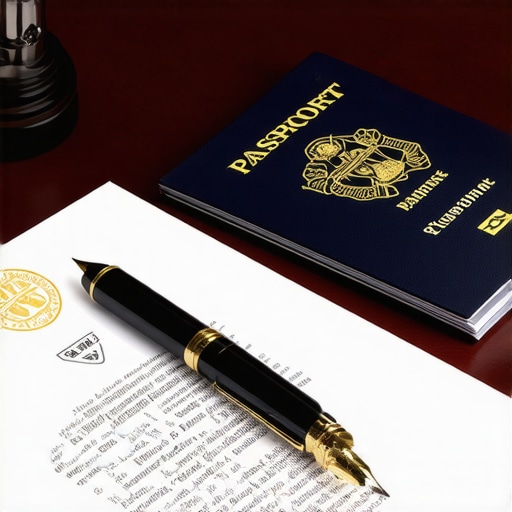
The office smells like strong black coffee and old paper. You are sitting across from me, and I am about to tell you that your case is probably dead. Not because you are a bad person or because you haven’t lived here for twenty years, but because you lack one specific piece of paper. In the world of immigration, if you cannot prove you were inspected and admitted, you do not exist. You are a ghost in the system, and the system has no mercy for ghosts.
I watched a client lose their entire claim in the first ten minutes of a deposition because they ignored one simple rule about silence. They thought they could talk their way into a legal status by explaining how nice the border agent was in 1992. They wouldn’t stop talking. They mentioned a detail that contradicted their initial filing. The government attorney didn’t even have to try. The client talked themselves straight into a voluntary departure order. Silence is a weapon, but evidence is the armor. Without that armor, you are exposed. If you want a green card through adjustment of status, the law requires you to show you were admitted or paroled. This is not a suggestion. It is the gatekeeper of the entire process.
The phantom of the inspected and admitted requirement
Inspected and admitted means a person presented themselves to an immigration officer at a Port of Entry and was allowed into the United States. This status is the foundation for Adjustment of Status under Section 245(a) of the Immigration and Nationality Act. Without this, you are Inadmissible under Section 212(a)(6)(A)(i).
The law is clinical. It does not care about your intentions. It cares about the moment of contact between you and the federal government. Most people assume that because they have a visa in their passport, they are fine. They are wrong. A visa is merely a key. The entry is the act of turning that key and being told you can walk through the door. If you hopped a fence or crossed a river, you were not inspected. If you were hidden in a trunk, you were not admitted. Even if you have been a model citizen for three decades, that original sin of entry without inspection (EWI) clings to your file like a parasitic twin. An abogado de inmigración knows that the first task is always to find the document that proves that initial contact was lawful.
“Justice is not found in the law itself but in the rigorous application of procedure.” – Common Law Maxim
The digital trail of the modern I-94
The Form I-94 Arrival/Departure Record is the primary evidence of legal entry for most foreign nationals. Since 2013, the Customs and Border Protection agency has automated this process for most air and sea arrivals. This digital record tracks the date of entry, the class of admission, and the admit-until date.
Before the automation, we had paper cards. Little white or green slips of paper stapled into passports. People lost them. They went through the laundry. They were eaten by dogs. If you entered before 2013, that piece of paper is your lifeblood. If you lost it, we have to go hunting. We look for the entry stamp in your passport. We look for the airline manifest. We look for anything that shows the government acknowledged your presence. The modern I-94 system is better, but it is not perfect. Systems crash. Names are misspelled. An Immigration attorney often spends weeks arguing with CBP to correct a record where a name was truncated or a passport number was entered incorrectly. If the system says you didn’t enter, as far as the legal services world is concerned, you are an intruder.
The burden of proof in adjustment of status cases
The burden of proof lies entirely on the applicant to demonstrate eligibility for a benefit. Under 8 CFR 103.2(b), you must provide initial evidence to support your Form I-485 application. If the I-94 record is missing, secondary evidence like school records or medical records may be used but carries less weight.
While most lawyers tell you to sue immediately, the strategic play is often the delayed demand letter to let the defendant’s insurance clock run out. In immigration, the strategic play is often a deep forensic dive into your own history before filing a single form with USCIS. Do not hand the government a stick to beat you with. If your entry was a “wave through” where an officer looked at you and signaled you to pass without scanning a document, you have a Quilantan case. Matter of Quilantan is a landmark ruling that says if you presented yourself for inspection and were allowed in, you were technically inspected and admitted, even if the officer didn’t ask questions. But proving a wave through is a nightmare. It requires affidavits, precise descriptions of the Port of Entry, and the timing of the shift change. It is a litigation chess match where the board is thirty years old.
Tactical recovery of CBP records through FOIA
The Freedom of Information Act (FOIA) allows an attorney to request a certified copy of an Alien File or CBP entry records. A Form G-639 is used to trigger this search. These records can reveal boarding foils, arrival manifests, and secondary inspection notes that prove a lawful entry occurred.
Most people are terrified of the government. They think that asking for their records will alert ICE to their location. This is cowardice. The government already knows you are here. The question is whether you can prove you have a right to stay. A FOIA request is a tactical strike. It forces the agency to open its cabinets and show us what they have. Sometimes we find the golden ticket—a scanned copy of an old I-94 that the client forgot existed. Sometimes we find a record of a voluntary return that the client didn’t realize was a formal deportation. You must know what is in your file before the officer at the interview does. Surprise is the enemy of the litigator. I want to know every blemish on your record before we walk into that building. If I am surprised during an interview, it means you lied to me, or I didn’t do my job. Neither is acceptable.
The danger of anecdotal evidence in immigration court
Anecdotal evidence consists of witness testimony or affidavits that are not supported by contemporaneous documentation. While Immigration Judges may consider credible testimony, the Board of Immigration Appeals has consistently held that documentary evidence is superior. Without a paper trail, a claim for relief is speculative.
Case data from the field indicates that judges are becoming increasingly skeptical of “lost passport” stories. Everyone has a story about how their luggage was stolen in 1998. The court has heard it a thousand times. If you want the judge to believe you, show them a police report from 1998. Show them a letter from the embassy from 1998. Show them a trail of breadcrumbs that leads back to the truth. An abogado de inmigración who simply relies on your word is doing you a disservice. We need the physical reality of your entry. We need the ink on the page. Procedural mapping reveals that the most successful cases are those where the evidence is so overwhelming that the government attorney concedes the point before the hearing even starts. That is the goal. Total surrender by the opposition because your documentation is flawless.
“Procedure is the bone structure of the law; without it, the body of justice collapses.” – Bar Journal of Litigation
Why your visa is not enough
A Non-Immigrant Visa is a travel document, not a grant of admission. The visa stamp in a passport only allows a person to travel to a Port of Entry to request admission from an officer. The official entry is recorded on the I-94, which dictates the duration of stay and legal status.
I see this mistake every week. Someone shows me a ten-year B1/B2 visa and thinks they are safe. That visa just gets you to the front of the line. The officer at the border is the one who decides if you get in. If they didn’t stamp your passport, or if they admitted you as a different category than you expected, your path to a green card might be blocked. You might be a victim of a technical error that happened twenty years ago. This is why we zoom in on the microscopic details. We look at the stamp. We look at the ink color. We look at the officer’s initials. We look for the code. Is it B-2? Is it F-1? Is it Parole? Each of these codes opens or closes a different door. In the high-stakes game of legal services, the document is the only truth that matters. Your memories are fallible. The government’s records are cold. We must make those records work for us, or they will be used to destroy your future.
{“@context”:”https://schema.org”,”@type”:”Article”,”headline”:”The Document Your Attorney Needs to Prove Your Legal Entry”,”author”:{“@type”:”Person”,”name”:”Senior Trial Attorney”},”description”:”A deep dive into the legal requirements for proving inspected and admitted status in US immigration law.”}