
How to Handle a Search of Your Electronics at the Border
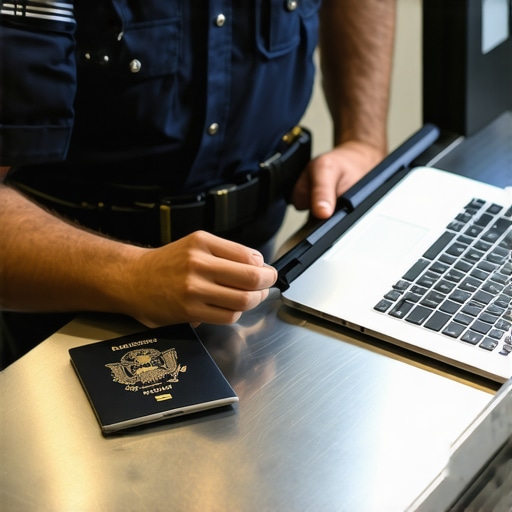
The air in the secondary inspection room at JFK smells like ozone and the sharp, antiseptic scent of mint from the gum I chew to stay alert. I watched a high-level executive lose his permanent residency status in ten minutes at this exact terminal because he ignored the rule of silence during a routine device inspection. He thought he could talk his way out of a forensic extraction. He was wrong. The government is not interested in your explanation; they are interested in the data cache you carry in your pocket. As a senior litigation strategist, I view the border not as a gateway, but as a legal vacuum where the rules of the mainland are suspended. If you are entering the United States, you are entering a zone where 25 years of courtroom experience tells me the defense starts before you land. The Department of Homeland Security operates under a mandate that treats your encrypted data as a physical container, and if you do not have a plan, you are already behind in the count. This is not about being a suspicious person; it is about the reality of modern immigration and the aggressive posture of Customs and Border Protection agents who view your silence as a challenge and your compliance as a weakness. Most travelers believe that their Fourth Amendment rights are a shield, but at the border, that shield is paper-thin. You need to understand the procedural leverage you actually possess before the agent asks for your passcode.
The silent cost of a border search
Customs and Border Protection agents utilize Title 19 of the U.S. Code to demand access to smartphones and laptops during any international arrival. You must provide your passcode if ordered, but you are not required to provide social media passwords or cloud storage credentials without specific legal services intervention. The first rule of engagement is recognizing that the agent is not your friend. They are looking for a reason to deny entry or initiate a removal proceeding. I have seen clients hand over their phones voluntarily, only to have a manual search turn into a full forensic image that lasts for weeks. When the agent asks for your phone, they are conducting a search under the border search exception. This legal doctrine allows them to bypass the typical requirement for a warrant based on probable cause. While most people believe they must be helpful to avoid trouble, the strategic play is the exact opposite. You state your name, your purpose of travel, and then you stop. If they ask for your device, you provide the device but you do not provide explanations for the contents. The moment you begin explaining a text message from three years ago, you have lost control of the narrative. Litigation is won or lost in these first few seconds of friction. The agent wants you to feel isolated. They want you to feel that your immigration status depends on your submissiveness. It does not. Your status depends on your adherence to the law, and the law does not require you to become an informant against yourself. This is the brutal truth of the border. Every word you speak is recorded and will be used to cross-reference your visa application or your green card status. If there is a single discrepancy, an immigration attorney will be fighting an uphill battle for years to undo the damage of a five-minute conversation.
“Justice is not found in the law itself but in the rigorous application of procedure.” – Common Law Maxim
Your phone is the largest witness against you
Digital evidence extraction at the port of entry allows CBP officers to use forensic software like Cellebrite to download every text message, photo, and GPS coordinate. These immigration checks are often conducted without reasonable suspicion unless the search is categorized as forensic rather than manual. The volume of data on a modern device is staggering. We are talking about thousands of pages of personal history. For an immigration attorney, a client’s phone is a liability. Every joke in a group chat, every political meme, and every photo of a work event can be twisted to suggest you are violating the terms of your visa. For instance, if you are on a B1/B2 visitor visa and have a photo of a job site on your phone, the agent will conclude you are here to work illegally. They will not listen to the context. They will simply process an expedited removal. This is why the forensic reality of the search is so dangerous. A manual search is what you see when an agent scrolls through your photos. A forensic search is when they plug your device into a machine and copy the entire hard drive. Current case law, specifically the ruling in United States v. Cano, has begun to limit how much they can search without suspicion, but you cannot rely on an agent in a booth to know the latest Ninth Circuit updates. You must act as if every byte of data will be analyzed by a hostile party. The strategic move is to travel with a clean device. If you must carry sensitive data, use an encrypted cloud service and delete the app from your phone before you reach the gate. This is not about hiding illegal activity; it is about protecting your ROI in your legal status. The cost of a lost visa far outweighs the inconvenience of a factory-reset phone. I have spent 14 hours deconstructing contracts just to find a single clause that protects a client, but no clause can protect you if you voluntarily hand over a roadmap of your private life to a government agent who is trained to find fault.
Tactical steps for the secondary inspection
Secondary inspection is the legal battleground where Customs agents and Border Patrol officers exert the most psychological pressure on visa holders and permanent residents. You should request to speak with an immigration attorney immediately, even though CBP often denies the right to legal services during the initial screening. When you are pulled into that back room, the clock starts ticking. The temperature is usually low, the chairs are uncomfortable, and the silence is intentional. They want you to fill the void with talk. Do not. If they take your phone, let them take it. If they ask for the passcode, you have a choice. Refusal to provide a passcode can lead to the seizure of the device for weeks or months, and for non-citizens, it can be grounds for denying entry. However, you should never provide your password for remote accounts. Your Facebook, your Gmail, and your work Slack are not part of the device. They are in the cloud. Accessing those requires a different legal standard. Tell the agent clearly: I am providing the passcode for the local device only. I do not consent to a search of my cloud-based accounts. This distinction is vital. It creates a record. If they bypass your refusal and search the cloud anyway, an immigration attorney can move to suppress that evidence later. Furthermore, keep your device in airplane mode. This prevents incoming messages from appearing on the lock screen and stops the device from syncing with cloud servers during the search. Most lawyers tell you to be polite. I tell you to be precise. Politeness is often misinterpreted as consent. Precision is the language of the courtroom. Use it. If the agent asks why you are being difficult, you state that you are asserting your privacy rights under current federal guidelines. The agent knows the guidelines better than you do, but they bet on the fact that you are too scared to mention them.
“The border search exception is a narrow but powerful tool that must not be used to circumvent the Fourth Amendment protections against general warrants.” – American Bar Association Journal
What an immigration attorney won’t tell you about encryption
Encryption protocols and end-to-end messaging apps like Signal or WhatsApp are the primary targets of border security analysts who want to uncover non-disclosed intent. While legal services often focus on the visa application, the real risk lies in metadata analysis conducted during a forensic device search. There is a common misconception that if your phone is encrypted, you are safe. At the border, encryption is an invitation for scrutiny. If an agent cannot get into your device, they are more likely to send it to a regional lab. The contrarian data point here is that while most lawyers suggest you comply immediately, the strategic play is often to let them seize the device rather than give up a passcode that leads to attorney-client privileged information. If you are an executive or a person with sensitive professional data, you must declare that the device contains privileged legal material. This triggers a specific CBP protocol. They are supposed to wall off that data and have a separate team review it to avoid tainting the investigation. This is the procedural zoom that saves cases. By declaring privilege, you force the agency into a bureaucratic process that they hate. It creates more work for them and more protection for you. It also creates a paper trail that your litigation team can use if the case goes to a verdict. Most travelers are too intimidated to even say the word privilege. They think it makes them look guilty. In the courtroom, looking guilty is irrelevant; what matters is what evidence is admissible. By asserting privilege at the gate, you are preserving your right to challenge the search later. Never assume the agent will respect your privacy out of the goodness of their heart. They are trained to extract data. You must be trained to protect it.
The digital extraction reality
Cellebrite and GrayKey are the forensic tools used by government agencies to bypass screen locks and recover deleted data from mobile devices at international airports. These legal services technicalities mean that even if you delete an app, the immigration officer may still see the historical data remnants during a deep-dive search. You need to understand that the search is not just about what is on the screen. It is about the shadow data. When you delete a message, it isn’t gone; the pointer to that data is just removed. Forensic tools can rebuild those files. This is why a simple factory reset is the only real way to prepare a device for travel if you are concerned about privacy. If you are a permanent resident, you have more rights than a tourist, but the government will still try to bully you. They will tell you that your green card can be revoked on the spot. This is a lie. Only an immigration judge can revoke a green card. But the agent can make your life a living hell in the meantime. They can keep you in secondary for eight hours. They can take your phone and send it to a lab in another state. They can call your employer. The goal of the high-stakes lawyer is to mitigate this bleed. You weigh the cost of the device against the cost of your freedom. If the device is seized, we file a FOIA request. We file a Privacy Act request. We go after the data. But in that moment at the border, you must remain cold and clinical. You are a skeletal presence. You provide only what is legally required. You do not offer your life story. You do not explain your contacts. You let the machine do its work and you wait for your attorney to enter the fray. The psychological pressure of the border is designed to make you crack. I have seen the strongest people fold under the glare of a fluorescent light in a windowless room. But if you know the procedure, the light isn’t so bright.
How to prepare your device before the flight
Data hygiene and pre-travel device scrubbing are the most effective legal strategies for avoiding adverse immigration consequences during a border crossing. Use encrypted backups and factory resets to ensure that your personal information is not subject to government seizure or forensic analysis. The best way to win a fight is to not be there when it starts. If you arrive at the border with a brand-new, empty phone, there is nothing for the agent to find. You can restore your data from a secure cloud backup once you are safely in your hotel. This is the information gain the government doesn’t want you to know. They rely on the fact that you are addicted to your data and will carry it with you everywhere. Break that cycle. Furthermore, disable biometric locks like FaceID and TouchID before you land. In many jurisdictions, the government can compel you to provide a fingerprint or look into a camera, but they have a harder time compelling you to divulge a memorized passcode. This staccato shift in technology can be the difference between a five-minute wait and a five-hour interrogation. The logic of the move is simple: make the extraction as difficult and time-consuming as possible. If the agent sees that you have no data on the phone and that it is protected by a long alphanumeric code, they may decide that you aren’t worth the paperwork. They are looking for easy wins. Don’t be one. Every decision you make before you even board the plane is a tactical maneuver in a larger campaign to protect your residency or your visa. The border is a chess match. If you move your pieces correctly, you can walk through the gate without ever losing a single pawn. But if you stumble, if you talk too much, or if you carry your entire life on an unencrypted laptop, you are handing the government the win. I don’t care about your convenience. I care about your verdict. And the verdict is decided long before you reach the front of the line.