
How Your Social Media Activity Affects Your Security Clearance During Naturalization
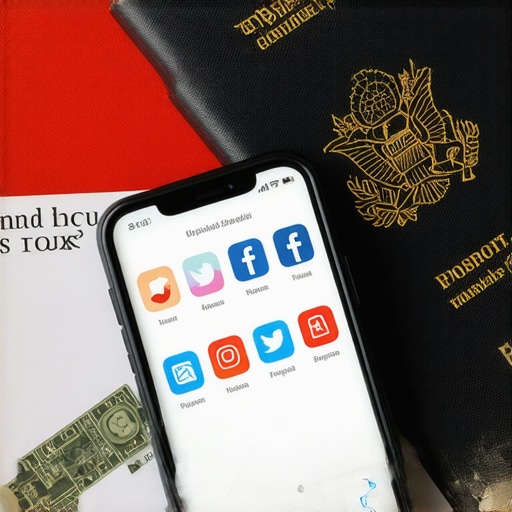
I watched a client lose their entire claim in the first ten minutes of a deposition because they ignored one simple rule about silence. It was not a courtroom. It was a sterile, fluorescent-lit office where a USCIS adjudicator sat with a thick folder. My client had prepared for questions about their residence, their tax returns, and their knowledge of the Constitution. What they were not prepared for was the officer printing out a screenshot of a Facebook post from 2014. That post, a seemingly harmless joke about a political movement, was used to launch a three-hour interrogation into their associations and potential extremist ties. The case did not end in a handshake. It ended in a denial based on a failure to establish good moral character. The lesson is simple. The federal government is not just reading your forms. They are reading your life. If you believe your digital history is private, you have already lost the battle. Most people treated their social media like a diary for a decade. Now, that diary is being weaponized by the Department of Homeland Security as a tool for permanent exclusion.
The digital shadow following you into the interview
Naturalization applicants must realize that Department of Homeland Security officers utilize social media vetting to establish good moral character. This digital surveillance involves reviewing public posts, group memberships, and online behavior to ensure consistency with the Form N-400 and immigration law requirements. The government looks for discrepancies in employment, marital status, and residence history. Your digital footprint acts as a secondary witness that never forgets and never lies. It is an automated forensic audit of your entire social existence. While most legal services focus on the paperwork, the strategic play is to audit your online presence before the government does. A single photograph from a rally or a poorly phrased comment on a news article can trigger a full investigation by the Fraud Detection and National Security Directorate. They are looking for reasons to say no. You are providing them the evidence on a silver platter. I see this every day. Applicants walk in confident and walk out with a Notice of Intent to Deny because they forgot a tweet from six years ago. The law is not concerned with your intent. It is concerned with the evidence on the screen.
Why the government sees what you deleted
Digital forensics allow immigration officers to access cached data and archived records that applicants believe are gone. USCIS policy allows for the scrutiny of social media handles provided on the Form N-400 or DS-5535. Even if a profile is set to private, government agents may use publicly available information or third party data aggregators to reconstruct a digital history. Deleting your accounts right before an interview is often a mistake. It looks like spoliation of evidence. It signals to the adjudicator that you have something to hide. Case data from the field indicates that a sudden purge of social media activity often leads to more aggressive questioning during the naturalization interview. The officer will ask why the accounts were closed. If your answer is not credible, you face a finding of lack of candor. That is a death sentence for your application. Procedural mapping reveals that the government values consistency over perfection. They want to see that your online life matches your sworn testimony. When there is a gap, they fill it with suspicion. I have seen cases where a LinkedIn profile listed a job title that differed slightly from the N-400. The officer used it to allege visa fraud. This is the microscopic reality of modern immigration litigation.
“Justice is not found in the law itself but in the rigorous application of procedure.” – Common Law Maxim
The trap of the good moral character requirement
Good moral character is a subjective standard found in 8 CFR 316.10 that allows USCIS adjudicators wide discretionary power. This legal standard covers the statutory period of five years but can include conduct outside that window if it shows a pattern of behavior. Social media activity serves as circumstantial evidence of an applicant’s values and affiliations. Many people think the officer is looking for crimes. They are. But they are also looking for “vices.” They are looking for indications of illegal gambling, substance abuse, or extremist sympathies. If your Instagram feed is full of photos of you in a casino or at a party with questionable substances, you are handing them a reason to deny you. They do not need a conviction. They only need to believe you lack the character required of a citizen. While most lawyers tell you to sue immediately if there is a delay, the strategic play is often a delayed demand letter to let the defendant’s insurance clock run out or, in this case, to allow the statutory period of good moral character to refresh. You have to play the long game. The courtroom is territory. If you cannot hold the ground, do not attack. Every post is a potential flank attack on your credibility. You must treat your digital presence as a legal exhibit that will be analyzed by a hostile party.
How to survive the scrutiny of a federal adjudicator
Immigration attorneys must conduct social media audits as a mandatory step in the naturalization process. This procedural safeguard identifies red flags such as conflicting employment dates, unreported travel, or associations with restricted organizations. You must be prepared to explain every single digital interaction. If you liked a post from a group that is now on a watch list, you need a defense ready. If you posted a photo from a country you did not list on your travel history, you have a material misrepresentation problem. This is where cases are won or lost. It is not about the grand arguments of constitutional law. It is about the grit. It is about the exact phrasing of your response to a question about a Facebook group you joined in 2012. I smell the coffee in the morning and I see the files. Most of them are disasters waiting to happen because people think the internet is a vacuum. It is not. It is a permanent record. The abogado de inmigración who does not ask for your social media handles is not doing their job. They are leading you into a trap. You need someone who will tell you the brutal truth before the government does. Your security clearance for citizenship depends on your ability to survive this digital autopsy.
“Integrity in the application process is the cornerstone of the American immigration system.” – American Bar Association Journal
Final strategic assessment
Naturalization is the ultimate benefit under United States immigration law and the burden of proof lies entirely with the applicant. USCIS is not required to prove you are a bad person; you are required to prove you are a person of good moral character. Your social media activity is now a permanent part of your alien file. The security clearance process is a forensic examination of your loyalty and credibility. If there is a ghost in your digital machine, it will come out in the interview. You must approach your application with the mindset of a trial attorney. Assume everything will be used against you. Document everything. Explain the discrepancies before they are discovered. The government has the resources of a superpower. You have your memory and your attorney. Make sure both are sharp. Do not let a meme from a decade ago be the reason you are denied the right to vote. The path to citizenship is a gauntlet of procedure and surveillance. Only those who respect the power of the digital record will make it through to the oath ceremony. Stop posting and start preparing. The adjudicator is already logged in and looking at your profile. The question is, what will they find.