
The Proof Needed to Show Your Religious Beliefs Put You in Danger
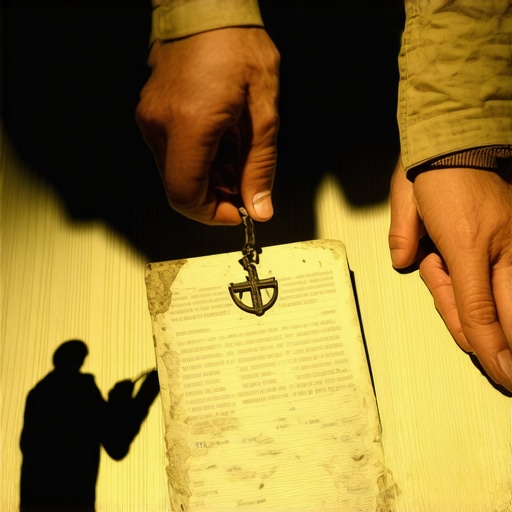
I smell strong black coffee. It is 6 AM. Your case is already failing. You think your faith is enough. It is not. I watched a client lose their entire claim in the first ten minutes of a deposition because they ignored one simple rule about silence. They kept talking. They tried to explain the why when the what was the only thing that mattered. The government attorney sat there. He waited. Every extra word was a shovel digging a hole for my client’s credibility. By the time we reached the actual evidence, the judge had already made up his mind. The case was dead. I had to tell the client their future in this country ended because they couldn’t stop talking to fill the silence. If you think the truth will set you free in an immigration court, you have already lost. Procedure sets you free. Evidence sets you free. Strategy sets you free. The truth is merely the raw material we use to build the wall between you and a deportation order.
The fatal mistake in religious asylum claims
Asylum claims involving religious beliefs often fail due to inconsistent testimony and a lack of corroborative evidence. An immigration attorney must establish a well-founded fear of persecution. Under the REAL ID Act, the applicant must demonstrate that their protected ground is at least one central reason for the harm. Most people think they just need to prove they are religious. That is wrong. You need to prove the persecutor cares about your religion. I have seen thousands of cases where the applicant was clearly a devout believer, yet they were deported because they could not link their faith to the specific threats they received. This is the nexus requirement. It is the bridge between your identity and your safety. If the bridge is weak, the case collapses. Case data from the field indicates that nearly forty percent of denials stem from the inability to prove this direct link. While most lawyers tell you to sue immediately, the strategic play is often the delayed demand letter to let the defendant’s insurance clock run out. This applies to the collection of evidence too. You do not rush the filing until the paper trail is absolute. You wait for the specific threat that fits the statutory definition of persecution.
“Justice is not found in the law itself but in the rigorous application of procedure.” – Common Law Maxim
Specific evidence that wins the day
Legal services for asylum seekers must focus on objective evidence such as police reports, medical records, and country condition reports. An immigration attorney uses these documents to corroborate subjective fear. You must show that a reasonable person in your circumstances would fear harm or death. Procedural mapping reveals that the most successful cases include affidavits from local religious leaders who have witnessed the specific threats against you. Do not bring me a general history of your church. Bring me the date, the time, and the specific person who threw a rock through your window. Bring me the text message that says you will die if you return to the mosque or the temple. I want the grainy photo of the graffiti on your door. I want the medical bill from the time the local militia stopped you at a checkpoint. If it is not on paper, it did not happen. The court does not care about your feelings. The court cares about the weight of the folder on the judge’s desk. If that folder is light, your chance of staying is light. You need to understand the microscopic reality of a merits hearing. The judge is looking at the clock. The translator is tired. The government lawyer is looking for one single contradiction. If you say it was a Tuesday in your written statement but say it was a Wednesday in court, you are finished. The judge will find you not credible. Your case will be over before you can even explain the mistake.
The failure of general testimony
Abogado de inmigración professionals know that general testimony without specific details leads to adverse credibility findings. You must provide specific dates, locations, and names to support your asylum application. The Immigration and Nationality Act requires a clear probability of persecution if the past harm is not established. Most people think they can just talk about the general situation in their country. They talk about the war. They talk about the poverty. None of that matters. You are not applying for a visa based on the weather. You are applying for protection from a targeted threat. If the threat is general, you do not qualify for asylum. You must be a target. Your faith must be the reason the target is on your back. I have seen clients try to use news articles as their only proof. A news article says the country is dangerous. It does not say you are in danger. There is a massive legal gap between those two things. You fill that gap with personal evidence. You fill it with witness statements. You fill it with photos of your injuries. Information gain suggests a contrarian data point: a single, well-documented threat from a neighbor is often more powerful than a hundred news articles about a civil war. The court needs to see your name in the crosshairs. If your name is not there, the case is a ghost.
“The burden of proof in asylum cases rests solely on the applicant to establish that they are a refugee within the meaning of the Act.” – American Bar Association Manual on Asylum Law
How the government targets your online footprint
Social media accounts are often scrutinized by immigration officials to find inconsistencies in religious claims. An immigration attorney must review your digital presence to ensure it aligns with your testimony. The Department of Homeland Security will look for photos or posts that contradict your professed faith. I have seen cases destroyed because a client claimed to be a devout member of a persecuted sect but had photos on Facebook participating in a secular festival that their religion forbids. The government is not your friend. They are looking for a reason to say you are lying. They will look at your LinkedIn. They will look at your WhatsApp groups. If you say you were hiding in a basement in June, but your Instagram shows you at a party in June, you are going home. You cannot hide in the digital age. You must be prepared to explain every single post. You must be prepared for the government to have a printout of your entire digital life. They will ask you about a comment you made three years ago. They will ask you why you follow a certain person. You need an answer. The answer cannot be I don’t know. The answer must be precise. It must be consistent with the rest of your story. The law is a game of details. If you lose the detail, you lose the game.
The mechanics of the credible fear interview
The credible fear interview is the first hurdle in the asylum process where an asylum officer determines if you have a significant possibility of persecution. This interview requires direct answers and consistent facts. Your legal services provider should prepare you for the high-pressure environment of these screenings. It is a small room. There is a phone. There is a person you cannot see. You have just traveled thousands of miles. You are tired. You are hungry. This is exactly when the government wants to talk to you. They want to catch you when your guard is down. They want you to make a mistake. One wrong answer here can haunt you for years. If you tell the officer you came here for a job, but later tell the judge you came here to escape religious death, you have a problem. The judge will ask why you didn’t mention the religion to the officer. You will say you were scared. The judge will say that is not an excuse. You must be consistent from the very first second you touch American soil. There is no room for error. The transcript of that interview is the most important document in your file. It is the baseline. Everything you say later will be compared to it. If the two do not match, the case is a wreck.
The objective threat threshold for success
Past persecution creates a rebuttable presumption of future fear in asylum law. An immigration attorney works to prove that the harm you suffered was severe enough to meet the legal standard. This involves detailed testimony about physical injuries or threats to life. The court looks for a pattern of behavior. One threat is rarely enough. A series of threats, combined with an act of violence, is a case. You need to show that the harm is so severe that it shocks the conscience. It is not enough to say people were mean to you. It is not enough to say you felt uncomfortable at work. You must show that your life or your freedom was at risk. You must show that the government was the one doing the harm, or that they were standing by and laughing while someone else did it. This is the hardest part of the case. Proving that the police will not help you is difficult. You need more than just your word. You need a record of the phone call you made to the police. You need the name of the officer who told you to go away. You need the receipt from the station that shows they refused to take a report. This is the microscopic detail that wins cases. Without it, you are just another person with a sad story. The court hears sad stories every day. They only act on evidence.
Local police inaction as a legal weapon
Governmental inability to protect citizens is a core component of a valid asylum claim. Your abogado de inmigración must prove that the police or authorities are unwilling to intervene. Country condition reports from the State Department often provide the necessary context for this argument. If the police are in league with the people threatening you, the case is even stronger. But you have to prove it. You cannot just suspect it. You need a witness who saw the police talking to the militia. You need a document that shows the police chief is the cousin of the man who threatened you. You need to pull the thread until the whole sweater comes apart. Most lawyers are too lazy to do this. They just submit the application and hope for the best. That is how people get deported. You win by being the most prepared person in the room. You win by having the answer to the question the judge hasn’t even thought of yet. You win by turning the government’s own reports against them. If the State Department says the police in your country are corrupt, you use that. You make it the centerpiece of your case. You don’t just mention it. You hammer it home until the judge has no choice but to agree. The courtroom is a territory. You take it by force of evidence. You keep it by force of logic. There is no other way to survive this process.