
Why your citizenship application requires a list of all your children
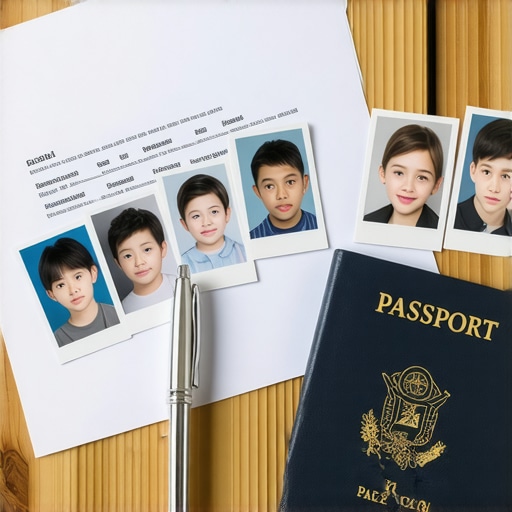
I sit across from people every day who think they can outsmart a federal database. They come in with their polished shoes and their hopeful eyes, and I tell them their case is a wreck before they even finish their first sentence. The air in my office always smells like strong black coffee and the ozone of a laser printer that never stops. I don’t offer comfort; I offer a survival map. I watched a client lose their entire claim in the first ten minutes of a naturalization interview because they ignored one simple rule about silence. The officer asked if they had any children. They said no. The officer then slid a birth certificate across the desk for a child born in a rural village twenty years ago. That client didn’t just lose their citizenship that day; they gained a permanent file in the fraud department. In the world of immigration, a lie by omission is just as lethal as a direct falsehood. If you think your immigration attorney is being paranoid when they ask about your ex-wife’s kids or the child you haven’t seen in a decade, you haven’t seen what I’ve seen in the basement of a federal building.
The shadow of the missing beneficiary
Listing all children on Form N-400 is a mandatory requirement that establishes your credibility and ensures you are not hiding prior biological or legal obligations. USCIS cross-references these names with previous visa applications, tax returns, and marriage licenses to detect inconsistencies that suggest fraud or a lack of good moral character. The government views your family tree as a forensic map of your past movements and legal commitments. If a name is missing, they assume you are hiding a criminal history, a previous marriage, or a financial obligation like child support. This is not about the children themselves; it is about your capacity for honesty under penalty of perjury. Information gain in this process often comes from revealing the difficult truths early. While many applicants believe hiding a child born out of wedlock protects their reputation, the strategic play is full disclosure to prevent a fraud finding that carries a lifetime bar. Procedural mapping reveals that the adjudicator already has access to your G-325A history and any DS-260 forms filed by relatives. Silence is not a shield; it is a target.
Material misrepresentation and the permanent bar
A material misrepresentation occurs when an applicant provides false information that influences the decision of the immigration official regarding their eligibility for a benefit. Omitting a child is frequently classified as material because it may hide a reason for local ineligibility, such as the failure to support dependents, which is a direct strike against the good moral character requirement. Under the Immigration and Nationality Act, specifically Section 316, an applicant must show they have been a person of good moral character during the statutory period. Failure to pay child support is a primary reason for denial. If you don’t list the child, the government assumes you aren’t paying the support. The microscopic reality of a case often turns on the exact phrasing of your response. When an officer asks, “How many children do you have?” and you answer with the number currently living in your house, you have committed a technical error that can be interpreted as a legal lie. The law does not care about your domestic arrangements or the quality of your relationships. It cares about the biological and legal existence of human beings tied to your identity.
“Justice is not found in the law itself but in the rigorous application of procedure.” – Common Law Maxim
Step-children and the legal fiction of family
The definition of a child for citizenship purposes includes biological children, legitimated children, and step-children, provided the step-relationship was created before the child reached the age of eighteen. This inclusive definition ensures that the government can track all potential derivative beneficiaries and verify the legitimacy of the marriages that created these relationships. Most applicants fail to realize that their current spouse’s children from a previous marriage must be listed, even if they have never lived in the same house. This is a point where the legal services of a seasoned attorney become mandatory. An abogado de inmigración knows that the USCIS computer system links files through A-numbers. If your step-son applied for a work permit and listed you as a step-parent, but you left him off your N-400, the system flags the discrepancy instantly. The logic of the law is cold and clinical. It views the family unit as a set of interlocking legal obligations. If you attempt to delete a branch of that tree, the whole structure collapses. Case data from the field indicates that step-child omissions are the leading cause of “Requests for Evidence” that delay applications by six to twelve months.
The microscopic audit of your family tree
USCIS officers are trained to look for gaps in the timeline of your life that suggest undisclosed children or marriages. They examine the period between your birth and your arrival in the United States, looking for any residential or financial indicators of a family left behind in your home country. This audit is exhaustive. They will look at your bank transfers to see if you are sending money to individuals who share your last name. They will check social media profiles for photos of “family reunions” that include faces not found on your application. The brutal truth is that your privacy ended the moment you signed the N-400. You are under a microscope, and the lens is focused on your integrity. The government is not looking for a perfect parent; they are looking for a transparent applicant. I have seen cases where an applicant admitted to having five children with three different mothers and was approved because they showed proof of support. I have seen people with one child denied because they tried to hide that child’s existence. The ROI of honesty in litigation is always higher than the cost of a cover-up.
“The duty of an attorney is not to the client’s comfort, but to the absolute integrity of the record presented before the tribunal.” – ABA Model Rules of Professional Conduct Commentary
Tactical errors in the initial filing
The most common tactical error is the assumption that deceased children or children who are now adults do not need to be listed on the naturalization form. Part 9 of the N-400 explicitly states that you must list all children, including those who are missing, deceased, or born out of wedlock, regardless of their current age. Ignoring this instruction is a procedural gift to the government. It gives them a simple, objective reason to deny your application without having to argue about your character. They simply point to the instruction and your signature. When you are preparing for your day in court, or your day in the interview room, you must understand that the process is not about truth in a philosophical sense. It is about the consistency of the record. If the record is broken, the applicant is broken. The strategic move is to gather birth certificates for every biological and step-child before the first draft of the application is even written. This is the logistics of litigation. You do not go into a fight without knowing where your flanks are exposed. A missing child is a wide-open flank that any competent immigration attorney would close before the file ever reaches a government desk.
The procedural cost of a forgotten name
Rectifying an omission after the N-400 has been submitted requires a formal amendment process that can trigger a second level of scrutiny from the fraud detection unit. While it is possible to correct the record during the interview, doing so places you on the defensive and gives the officer a reason to probe deeper into your background. The atmosphere of the interview changes the moment you say, “I forgot to mention my daughter.” The officer’s pen starts moving faster. They begin to wonder what else you forgot. Did you forget a secondary residence? Did you forget a brief arrest in 1994? Did you forget that you were still technically married to your first wife when you married your second? The ripple effect of a single omission can swamp the entire boat. Your citizenship application is a high-stakes chess match where the government has all the pieces and you only have your word. Don’t give them a reason to take your word away. Final strategy: treat every line of that form as if it were a deposition under the glare of a prosecutor’s lamp. Because in many ways, it is.
[{“@context”:”https://schema.org”,”@type”:”LegalService”,”name”:”Immigration Attorney Services”,”description”:”Expert legal advice on naturalization and Form N-400 family disclosures.”,”serviceType”:”Immigration Law”}]