
Why your abogado de inmigración wants to know about your ex-spouse
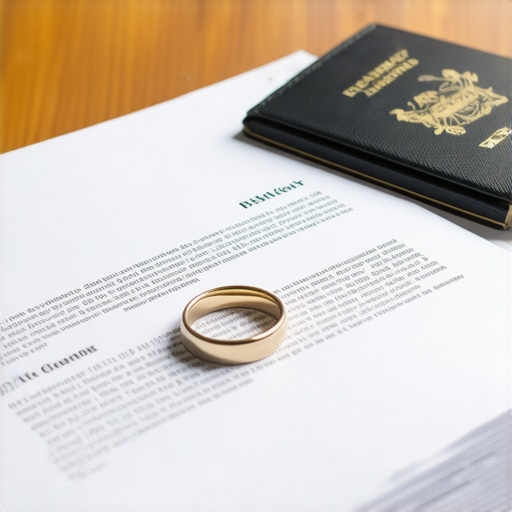
I watched a client lose their entire claim in the first ten minutes of a consultation because they ignored one simple rule about silence. They thought their past was a locked room. They were wrong. As an immigration attorney, I do not ask about your previous marriage to be nosy or to judge your personal life. I ask because your ex-spouse is a potential landmine buried in the middle of your USCIS path. If you hide the details of a failed union, you are not just hiding a relationship; you are inviting a finding of marriage fraud that will end your chances of staying in this country forever. My office smells like strong black coffee and the cold reality of federal litigation. We do not deal in hope; we deal in admissible evidence and the mitigation of risk.
The specter of the 204c bar
An Immigration attorney or abogado de inmigración asks about your ex-spouse because section 204(c) of the Immigration and Nationality Act creates a permanent bar if marriage fraud is found. Providing legal services requires identifying these visa risks before USCIS discovers them during a green card interview. This specific statute is the death penalty of immigration law. If a previous officer even suspected that your last marriage was entered into for the sole purpose of obtaining a benefit, every future petition is dead on arrival. Case data from the field indicates that USCIS officers frequently cross-reference your current Form I-130 with old filings to find even the slightest discrepancy in addresses or dates. While most lawyers tell you to sue immediately, the strategic play is often a deep forensic audit of your own history to ensure no 204(c) ghost is waiting to jump out during your testimony.
“Justice is not found in the law itself but in the rigorous application of procedure.” – Common Law Maxim
What the government sees in your divorce decree
The divorce decree is a roadmap for a USCIS fraud investigator looking for immigration inconsistencies in your legal services history. They look at the date of separation, the grounds for divorce, and the distribution of assets to see if the marriage functioned as a real partnership. If you claimed “irreconcilable differences” but the timeline shows you were living in different states while filing for a green card, the abogado de inmigración needs to know now. They will look at whether you paid alimony or if you shared a bank account until the very end. If your ex-spouse accused you of domestic violence or abandonment in the divorce papers, that record is public. The government will find it. I have seen cases where a simple no-contest divorce became a weapon for the prosecution because the applicant failed to mention a child support lien that suggested a lack of good moral character.
The danger of the anonymous tip
A bitter ex-spouse is the primary source of information for the Fraud Detection and National Security (FDNS) directorate within the Department of Homeland Security. When an immigration attorney asks about the terms of your breakup, they are gauging the likelihood of your ex-spouse picking up the phone to call USCIS. Procedural mapping reveals that disgruntled former partners often provide legal services to the government for free by submitting “statements of truth” that contradict your current visa application. This is why we examine the emotional volatility of your past. If the breakup was litigious or involved restraining orders, we must prepare for a Stokes Interview. This is a high-pressure, segregated interrogation where you and your current spouse are questioned separately to see if your stories align. One wrong answer about the color of your ex-spouse‘s car or the layout of an old apartment can trigger a denial.
“The integrity of the immigration system relies upon the veracity of the marital bond as a foundational element of the petition process.” – American Bar Association Journal of International Law
Patterns of fraud and the residency timeline
Your abogado de inmigración looks for patterns that suggest a marriage for hire scheme which would invalidate any legal services provided. If you have a history of marrying multiple U.S. citizens in a short period, you are a red flag. The immigration system is built on the presumption of fraud for certain categories of petitions. We look at the marriage certificate dates versus the visa expiration dates. If you married your ex-spouse three days before your student visa expired and divorced them three days after getting your permanent residency, you have a problem. The USCIS officer will treat your current marriage as a continuation of a fraudulent pattern. We must build a defense that shows the bona fides of the past marriage just as clearly as the current one. This involves digging up old photos, lease agreements, and affidavits from people who knew you both. We leave no stone unturned because the government certainly won’t.
The strategy of radical transparency
Effective legal services in the immigration field require that you treat your abogado de inmigración like a confessor rather than a fan. If I know about the ex-spouse and the potential legal problems, I can build a waiver or a rebuttal. If I find out in the middle of an interview at a federal building, I am toothless. We look at the Form N-400 for naturalization which asks if you have ever been married to more than one person at the same time. This is not just about bigamy; it is about tax returns and social security records. The immigration attorney must verify that all previous marriages were legally terminated before the new one began. A void marriage due to a technicality in a foreign divorce can lead to an immediate deportation proceeding. We analyze the jurisdiction of the divorce and the due process afforded to the ex-spouse. This is the microscopic reality of the law. It is cold, it is precise, and it does not care about your feelings. It only cares about the paper trail.