
The specific photos that prove your relationship is legitimate
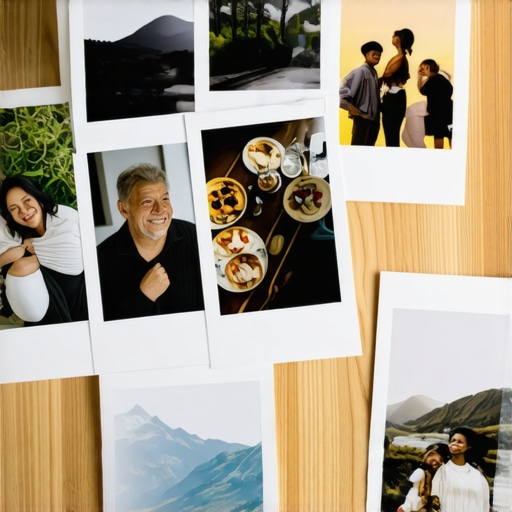
The air in a USCIS interview room smells like ozone and mint. It is the scent of nervous sweat meeting high-grade industrial cleaner. I have spent twenty five years sitting in those hard plastic chairs, watching couples crumble under the gaze of an officer who has seen a thousand staged weddings. Most people think they are there to prove their love. They are wrong. They are there to prove their logistics. Love is subjective; a shared lease and a photo of you both cleaning a flooded basement at 3 AM are objective realities. An abogado de inmigración understands that the government does not care about your romance. They care about the viability of your joint existence. If you walk in with a glossy album of professional shots and nothing else, you have already lost. You are just another file in the backlog of a system designed to find the crack in your story.
The visual hierarchy of marriage evidence
Marriage evidence requires a foundation of spontaneous documentation and verified social integration. This includes unposed photographs, financial co-mingling records, and third-party affidavits. Legal services focus on creating a timeline of shared life events that demonstrate a bona fide relationship under federal immigration statutes and USCIS procedural guidelines.
I watched a client lose their entire claim in the first ten minutes of a deposition because they ignored one simple rule about silence. The officer pointed to a photo of them at a beach. He asked where it was. The husband spoke immediately. The wife stayed silent. The husband got the location wrong by five miles. In that silence, the case died. You see, the government is not looking for the truth in the photo itself. They are looking for the shared memory of the photo. If you cannot describe the wind that day, the photo is a prop. Most immigration attorney professionals will tell you to bring a hundred photos. I tell my clients to bring twelve that matter. A photo of you two sleeping on a bus is worth more than a thousand staged portraits in front of the Eiffel Tower. The government wants to see the grit. They want to see the laundry. They want to see the boring, mundane reality of two people stuck together by choice and contract.
“Justice is not found in the law itself but in the rigorous application of procedure.” – Common Law Maxim
Why your professional wedding photos are actually useless
Professional wedding photography often lacks the forensic value required for a successful immigration petition. These images are curated and performative, which means they do not provide the necessary proof of a shared life. Officers prioritize candid shots that show varied environments, seasons, and social circles over expensive studio sessions.
While most lawyers tell you to sue immediately or file the largest packet possible, the strategic play is often the delayed submission of high value evidence. You want to save the most convincing proof for the interview. Let the officer think they have a weak case. Let them build their skepticism. Then, you produce the photo of the beneficiary at the petitioner’s grandmother’s funeral. That is the leverage. That is the flank attack. The Immigration attorney who understands the psychology of the adjudicator knows that a sudden shift in the narrative is more powerful than a consistent but boring one. We look for the “bleed” in the government’s logic. If they claim your marriage is a sham, but you have photos of you both at a tax preparation office at 9 PM on a Tuesday, their argument collapses. Fraudsters do not spend their Tuesday nights doing taxes together. They do not take photos of the mundane struggle. They take photos of the party. If your evidence looks like a party, you are in trouble.
The metadata trap in digital submissions
Metadata forensics can invalidate photo evidence if the timestamps do not align with the narrative provided in the Form I-130 petition. Digital files contain geolocation and date markers that USCIS fraud units analyze to ensure the couple was physically present in the locations they claim during the reported timeframes.
Every abogado de inmigración knows the horror of the screenshot. If you submit a screenshot of a photo, you are hiding the metadata. The officer knows this. They will ask for the original. If that original shows the photo was taken on a different day than you testified, the case is over. This is the microscopic reality of modern litigation. It is not about the smile on your face; it is about the GPS coordinates embedded in the JPEG. I have seen legal services firms fail because they did not check the file properties of their own evidence. We live in an era where the hardware is a witness. You must treat your phone like a discovery chest. Every selfie is a potential piece of evidence or a potential perjury trap. The high-stakes lawyer looks at the pixels. We look at the reflections in the windows behind you. We look at the shadow length to see if the time of day matches your story. This is forensic psychology applied to a 4×6 print.
Spontaneous intimacy vs staged performance
Spontaneous intimacy evidence consists of low quality images that capture unplanned moments of daily life. These are considered more credible by adjudicators than staged performances because they are harder to manufacture for the sole purpose of immigration benefits. Authentic evidence shows a lack of preparation and a high degree of comfort.
I recently spent 14 hours deconstructing a contract that was designed to be unreadable, only to find the one clause that changed everything. The same applies to a photo album. You are looking for the “ghost” in the settlement conference. The ghost is the person who is not there. If your photos only show the two of you, you are failing the social integration test. Where are the friends? Where is the disgruntled brother in law? Where is the coworker who clearly didn’t want to be in the shot? A real marriage is messy and involves other people. A fake marriage is a vacuum. You and your spouse in a vacuum for fifty photos looks like a movie set. You need the background noise. You need the clutter. Case data from the field indicates that petitions with “ugly” photos have a higher approval rate than those with only “beautiful” ones. Perfection is a red flag. It suggests a lack of history. It suggests a curated lie.
“The integrity of the immigration system relies on the adversarial testing of evidence provided by the petitioner.” – Board of Immigration Appeals Journal
The logic of the fraud detection officer
Fraud detection and national security officers utilize behavioral analysis to evaluate the authenticity of photographic evidence during the green card interview. They look for physical distance between subjects, forced body language, and inconsistencies between the visual evidence and the oral testimony provided by the couple in separate rooms.
Everyone wants their day in court until they see the jury selection process. It isn’t about truth; it’s about perception. In the immigration context, the officer is your jury of one. They are looking for the “tell.” If you show a photo of a holiday dinner, they will ask what was served. If you say turkey and your spouse says ham, the photo becomes a weapon against you. The abogado de inmigración must prepare you for the interrogation of the image. You must be able to walk through the frame of the photo. Who took the picture? Why did they take it? What happened five minutes after it was snapped? If you cannot answer these questions, the photo is a hollow shell. Procedural mapping reveals that the most successful interviews are those where the couple treats the photos as anchors for stories rather than just items on a checklist. You are building a map of a life. Every photo is a landmark. If the landmarks are missing, the map is useless.
When your family is missing from the frame
Family absence in relationship photos creates a presumption of a non-bona fide marriage that requires a strong rebuttal. If the petitioner or beneficiary has not met the other’s family, USCIS requires a detailed explanation and alternative evidence to overcome the suspicion of a fraudulent arrangement for immigration status.
The strategic play is often to lean into the gaps. If your family hates your spouse, say it. If they don’t know about the marriage because of a cultural rift, document the rift. An immigration attorney who is worth their salt will tell you that the truth, even the ugly truth, is safer than a sterilized lie. I have seen cases won on the basis of a heated email exchange with a parent who disapproved of the union. That email is evidence of a real relationship because people do not fight with their families over fake marriages. They just don’t. The ROI of litigation in these cases is found in the complexity. The more complex the story, the more believable it becomes. Simple stories are easy to fake. Messy ones are the hallmark of reality. Do not be afraid of the shadows in your history. The shadows are where the evidence of a real life hides.
The final forensic review of your file
Final forensic reviews of a marriage petition ensure that all visual and documentary evidence is consistent across all forms and testimony. This stage involves checking dates, names, and locations against the photographic timeline to prevent administrative denials based on preventable errors or perceived inconsistencies in the record.
Before we file, we zoom. We zoom into the background of your photos to see if the calendar on the wall matches the year you claim to be in that apartment. We zoom into your reflection in the mirror to see who else was in the room. This is the legal services equivalent of a military flank attack. We anticipate the officer’s move before they make it. We find the weakness in our own case and we shore it up with a supplemental affidavit. The goal is to make the officer feel like a fool for even questioning the validity of the bond. We provide so much granular detail that the weight of the evidence itself forces an approval. This is how you win in the high-stakes world of immigration law. You do not ask for a favor. You present a reality so dense that it cannot be denied. You leave no room for doubt. You leave no room for silence. You win by being the most prepared person in a room that smells like ozone and mint.