
Why your abogado de inmigración asks for your middle name spelling
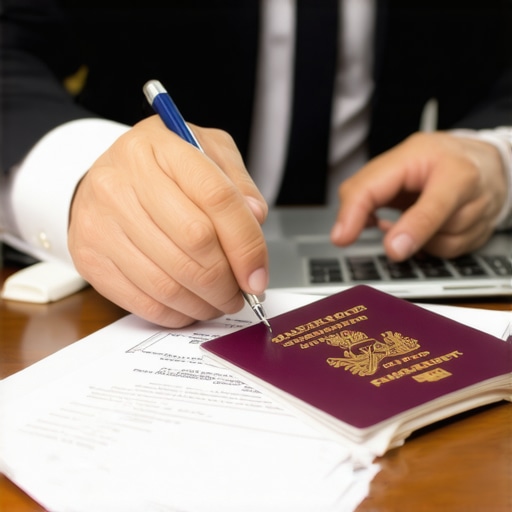
I smell the bitter, over-extracted scent of burnt black coffee and the clinical ozone of a law office at 2 AM. This is the reality of litigation. I once watched a client lose their entire claim in the first ten minutes of a deposition because they ignored one simple rule about silence, thinking that small details didn’t matter. In the world of federal immigration, that small detail is often a single character in a middle name. When your abogado de inmigración asks you to spell your middle name for the third time, it isn’t because they are forgetful. It is because they are trying to prevent the federal government from flagging your existence as a statistical anomaly or a fraudulent ghost. We operate in a system that values the rigid geometry of a database over the messy reality of human nomenclature. If your passport says ‘Jose’ and your birth certificate says ‘Jose Maria,’ you aren’t just one person with two names; you are a procedural nightmare waiting to happen.
The database trap behind a missing letter
Your immigration lawyer asks for your middle name spelling to prevent database mismatches that trigger administrative processing delays or identity fraud allegations. USCIS systems use strict character matching for background checks. A single letter discrepancy between a passport and a birth certificate can stall a green card application for years by triggering a manual review. The Department of Homeland Security utilizes the Automated Biometric Identification System, known as IDENT, which cross-references biographic data with biometric markers. When a name is entered into the system, it must align perfectly with the metadata associated with your fingerprints and facial recognition scans. A missing ‘e’ or an added ‘de’ in a Spanish surname creates a mismatch error that the software cannot resolve on its own. This forces a human officer to pull your A-File for a manual audit. In an agency currently drowning in backlogs, a manual audit is the administrative equivalent of being sent to a dark room for an indefinite period. We don’t ask for spelling because we care about the phonetics; we ask because the computer is a literalist that views a typo as a potential lie.
“Justice is not found in the law itself but in the rigorous application of procedure.” – Common Law Maxim
How biometrics and name variations collide
Biometric identification relies on the synthesis of physical data and biographical strings to confirm a legal identity. When an immigration attorney demands the exact spelling of a middle name, they are synchronizing your legal identity across multiple international jurisdictions. Discrepancies often lead to secondary inspection at ports of entry or denied work permits. Every time you provide fingerprints at a biometrics appointment, that data is tethered to the name on your Form I-485 or I-130. If the name provided to the lawyer differs from the name recorded by the Social Security Administration or the State Department, the system generates a ‘conflict flag.’ These flags are the silent killers of immigration cases. While you might think of your middle name as a secondary identifier, the FBI’s National Name Check Program treats it as a primary filter. A common name like ‘Santiago’ becomes a needle in a haystack of criminal records without the precise middle name to narrow the scope. We are not just filing forms; we are conducting forensic identity construction to ensure the person the government is investigating is actually you and not a criminal with a similar name.
The structural failure of name matching in USCIS systems
The internal logic of immigration databases often fails to account for cultural naming conventions found in Latin America or Europe. An immigration attorney must bridge the gap between your cultural identity and the rigid ASCII character requirements of federal software. Failure to do so results in documents being issued with truncated or misspelled names. Many federal forms are still processed using legacy systems that cannot handle special characters, accents, or names exceeding a certain character count. If your middle name is ‘del Socorro’ and the system only allows fifteen characters, the officer might cut it off at ‘del Soco.’ This creates a discrepancy between your green card and your driver’s license. When you later apply for naturalization, the N-400 officer will look at the two documents and ask why your name changed. If you cannot prove it was a system error, you face the burden of proving you didn’t obtain your status through misrepresentation. We spend hours on these ‘minor’ details because the alternative is a five-year delay while we file a Form I-90 to correct a name that should have been right the first time.
“Due diligence in identity verification remains the foundational pillar of competent legal representation in federal administrative proceedings.” – American Bar Association Standards
Procedural leverage in identity verification
Legal services involve more than just filling out paperwork; they involve the tactical management of your legal persona before the eyes of the law. Providing the exact spelling of your middle name allows your attorney to conduct a pre-emptive search of the Soundex algorithms used by law enforcement. This identifies potential red flags before the government finds them. Case data from the field indicates that the strategic play is often the delayed submission until every document is perfectly aligned. While some lawyers tell you to file immediately, the veteran trial attorney knows that a clean file is a fast file. If we find that your middle name is misspelled on your tax returns but correct on your birth certificate, we fix the taxes before the USCIS officer ever sees them. This removes the ‘bleed’ of the case. We are closing the gaps where a cynical adjudicator might find a reason to doubt your credibility. In a courtroom, credibility is everything. If you cannot even tell me how to spell your name correctly, how can I trust you when you testify about your marriage or your fear of persecution? The spelling is the first test of your testimony.
Why your birth certificate is the ultimate source of truth
The birth certificate serves as the anchor for all legal identity in the eyes of the Department of State and USCIS. An immigration attorney cross-references this document against your current passport to ensure a perfect match. Any variation must be explained through a legal name change decree or a marriage certificate to avoid a fraud finding. Procedural mapping reveals that the most common cause of a Request for Evidence is a name discrepancy that the applicant thought was trivial. I have seen cases where a ‘Maria’ was listed on the birth certificate but omitted on the passport because the applicant never used it. To the government, that omission is a discrepancy. We treat the birth certificate as the ‘Source of Truth’ because the law does. If we find an error there, we don’t just hope the officer won’t notice. We initiate a correction in your home country. We do this because we know that the defense, in this case the government, is looking for any procedural crack to deny your petition. We are architects of your legal status, and the spelling of your name is the foundation upon which the entire structure sits. Without it, the whole thing is built on sand. [IMAGE_PLACEHOLDER]