
How to get a certified copy of your birth certificate for your green card
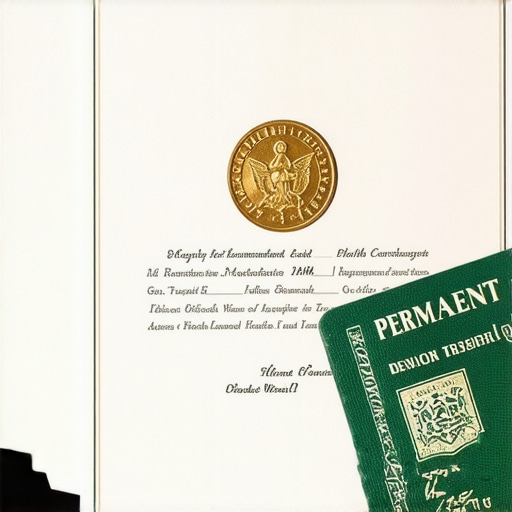
The hidden traps in securing your green card documentation
I recently spent 14 hours deconstructing a contract that was designed to be unreadable, only to find the one clause that changed everything. In the world of immigration, that clause is often a missing raised seal on a birth certificate. I have seen grown men weep in my office because their case was denied over a photocopy. They thought a digital scan was enough. They thought the government would be reasonable. It is not. My office smells like strong black coffee and the cold reality of federal litigation. If you want a green card, you do not need a souvenir from a hospital; you need a weaponized piece of paper that meets every sub-paragraph of the federal code.
The red tape reality of USCIS compliance
A certified birth certificate for a green card application must be an original long-form document issued by a government agency. It must contain the official seal, the signature of the registrar, and the full names of both parents to satisfy the I-485 evidence requirements for adjustment of status. The United States Citizenship and Immigration Services, or USCIS, does not care about the gold-leafed paper your mother kept in a scrapbook. They care about the 8 CFR § 103.2 standards. If your document lacks a file date or a registration number, you are effectively invisible to the system. An Immigration attorney knows that the difference between an approval and a Request for Evidence is the weight of the paper and the ink on the stamp. You are fighting a bureaucracy that moves at the speed of eroding stone. You cannot afford to be wrong about a date of birth or a misspelled municipality. Every letter on that page must align with your passport and your visa records or the system will flag you for fraud before you can even explain the typo.
Where the paper trail usually goes cold
The search for a certified birth certificate often fails when applicants confuse the hospital commemorative certificate with the state-issued vital record. To succeed, you must contact the Bureau of Vital Statistics in the county or state where the birth occurred to request a certified copy. I tell my clients that the hospital is a private entity, not a sovereign one. The hospital document is for your vanity; the state document is for your liberty. If you are searching for an abogado de inmigración to fix your case after a denial, you are already behind the curve. The tactical play is to secure the long-form certificate before the first filing. This means navigating the labyrinth of state websites, many of which use third-party processors that add weeks to the timeline. You need to know if your state requires a notarized identity verification form. You need to know if the registrar in that specific county is known for backlogs. This is not a clerical task; it is a reconnaissance mission into the archives of the state. If you were born in a rural district, those records might be in a basement that has not been opened since the seventies. You have to push. You have to demand. You have to be the squeaky wheel that the clerk wants to get rid of by finally mailing the document.
“Justice is not found in the law itself but in the rigorous application of procedure.” – Common Law Maxim
The state department versus local registries
Foreign birth records for green cards must comply with the Department of State reciprocity schedule to be considered valid for federal immigration benefits. Each country has specific requirements for which local authority must issue the document and whether it requires an apostille or a certified translation. This is where most people drown. If you are from Mexico, the abogado de inmigración will tell you that the document must be the recent version from the Civil Registry. If you are from India, you might need a Non-Availability Certificate if the birth was never registered. The procedural mapping reveals that USCIS officers check the Reciprocity Table for every single country. If your document is from the wrong office, it is trash. It does not matter if it looks official. It does not matter if it is signed by the mayor. If the State Department says the record must come from the Ministry of Health and you bring a document from the local police station, you have lost. You must interrogate the source of your paper. Is it the primary authority? Is the translation word-for-word, or did the translator try to be creative? Creative translators are the enemies of legal services. We need clinical, boring, and exact duplicates of the original text.
Why your hospital certificate is basically scrap paper
USCIS explicitly rejects hospital birth certificates because they are not official government records and do not carry the legal weight of a state-certified vital record. Only a document issued by a government registrar that contains a raised, embossed, or multicolored seal is acceptable for green card processing. I have had people argue with me about this while sitting in my office. They point to the cute little footprints on the hospital paper. The government does not care about your footprints. They care about the chain of custody. A legal services provider will tell you that the government needs to know that the state acknowledges your existence as a legal person. The hospital only acknowledges that you were a patient. This distinction is the difference between a smooth interview and a grueling interrogation. When you walk into that federal building, the officer is looking for a reason to say no. Do not give them an easy victory. Make sure your document is the long-form version, which includes your parents’ names. Short-form abstracts are often rejected because they do not provide enough data for the background check. You want the document that has all the notes in the margins. You want the document that looks like it belongs in an archive.
Tactical moves for lost or nonexistent records
When a primary birth certificate is unavailable or does not exist, the applicant must provide a letter of non-existence from the appropriate government authority along with secondary evidence such as school records or affidavits. This secondary evidence must be corroborated by multiple sources to satisfy the USCIS burden of proof. This is the forensic psychology part of the job. If the records burned down in a fire, we have to prove the fire happened and then prove you were born there anyway. This involves tracking down census records, baptismal certificates, or old family bibles. It is a grind. While most lawyers tell you to sue immediately, the strategic play is often the delayed demand letter to let the defendant’s insurance clock run out, but in immigration, the play is the mountain of evidence. You need affidavits from older relatives who were present at the birth. These affidavits cannot be generic. they must contain specific, sensory details that a person would only know if they were there. The smell of the room, the name of the midwife, the weather that day. We are building a wall of facts that the officer cannot climb over. We are not asking for a favor; we are proving a reality.
“The attorney has a duty to ensure that the evidence presented is both authentic and sufficient under the prevailing administrative standards.” – American Bar Association Model Rules
The attorney advantage in the documentation war
Hiring an experienced immigration attorney ensures that all birth documentation is scrutinized for technical errors and compliance with the latest USCIS policy memos before submission. Legal representation provides a buffer against arbitrary denials and ensures that secondary evidence is formatted to meet strict federal evidentiary standards. You are not paying for someone to fill out forms. You are paying for a strategist who knows which officers are having a bad day and which registries are slow. An Immigration attorney sees the patterns that you cannot see. We see the trends in denials. We know when the government is suddenly obsessed with the ink color on signatures from Brazil. We know when a specific embassy starts rejecting documents that were fine last year. This is high-stakes chess. Every move you make with your paperwork either puts you closer to the finish line or traps you in a cycle of appeals. Do not be the person who tries to save a few dollars by doing it themselves, only to spend thousands later trying to fix a mess that should never have happened. Get the right paper the first time. The truth is often brutal, but it is better to hear it from me than from a deportation officer. Look at your birth certificate right now. Is it the right one? If you have to think about it, the answer is no.