
The risk of applying for a green card while on a VWP entry
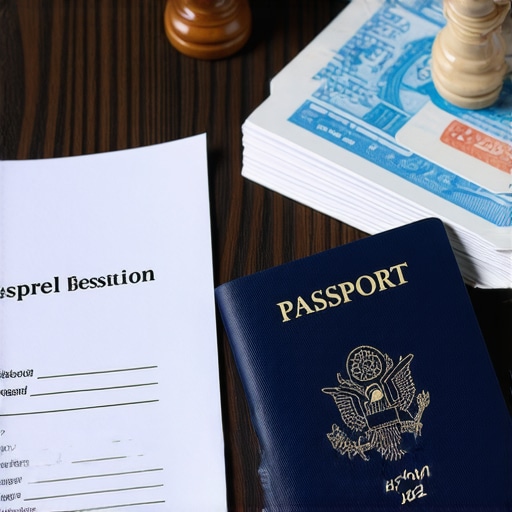
I watched a client lose their entire claim in the first ten minutes of a recorded interview because they ignored one simple rule about silence. They felt the need to fill the air, to justify why they arrived on a tourist waiver and suddenly decided to marry. The officer sat there, cold and clinical, letting them dig a hole of conflicting dates and intent. It was a procedural execution. In the world of high-stakes immigration, silence is your only shield, yet most people trade it for a nervous confession that guarantees a fraud charge. That single mistake turned a straightforward adjustment into a lifetime ban. This is the reality of the Visa Waiver Program (VWP) where you have already signed away your right to a judge before you even land on American soil.
The ticking clock of preconceived intent
Preconceived intent occurs when a foreign national enters the United States using the Visa Waiver Program or ESTA while secretly planning to file for an Adjustment of Status. USCIS officers use the 90-day rule as a high-speed analytical tool to determine if the applicant committed visa fraud by misrepresenting their true motives at the port of entry. Entering with a hidden agenda is a violation of federal law. If you fly into JFK or LAX telling the Customs and Border Protection officer you are here for a vacation but you have a wedding dress in your suitcase, you have already committed a material misrepresentation. The government views this as a direct assault on the integrity of the visa system. They do not care about your romance. They care about the fact that you bypassed the proper consular processing channels. The burden of proof rests entirely on your shoulders to demonstrate that your intent changed after you cleared the border. Spontaneous life changes are legal, but a pre-planned migration under the guise of a holiday is a fast track to summary removal.
Why the Visa Waiver Program functions as a procedural trap
The Visa Waiver Program is a contract of convenience that strips you of your constitutional protections. By checking the box on your ESTA application, you waived your right to contest any removal action other than an asylum claim. This means if the government denies your green card application based on fraud, you cannot ask a judge for a second opinion. You are gone. There is no courtroom drama, no long-drawn-out appeal, and no mercy from the bench. Most legal services providers fail to mention that the VWP is a narrow corridor with no exits. If the Immigration attorney you hired does not emphasize the finality of a VWP denial, they are doing you a massive disservice. The lack of a Notice to Appear means you are at the absolute mercy of the local field office director. This is not a standard negotiation. This is a one-shot environment where the paperwork must be perfect because there is no safety net of a removal defense hearing. You have traded your due process for the speed of an electronic travel authorization. In the eyes of the law, you are a guest who agreed to leave at the first sign of trouble.
“Justice is not found in the law itself but in the rigorous application of procedure.” – Common Law Maxim
The fraud charge that ends the American dream
Section 212(a)(6)(C)(i) of the Immigration and Nationality Act covers fraud and willful misrepresentation of a material fact. An abogado de inmigración knows that this specific charge is the death sentence of any immigration file. It is a permanent ground of inadmissibility. Unlike a simple overstay, a fraud finding requires a complex I-601 waiver involving extreme hardship to a U.S. citizen relative. Even then, the success rate is a coin flip. The Immigration attorney must map out every single interaction the client had with federal agents. Did you tell the officer you were visiting a friend? Did you say you were looking at schools? Every word is recorded in the system. The government looks for the bleed between your stated intent and your actual actions. If you signed a lease three days after landing on a 90-day waiver, the government will argue you lied at the border. They look at the logistics of your life. Moving your cat, shipping your furniture, or closing your foreign bank accounts are all markers of permanent intent. The prosecutor does not need to prove you are a bad person; they only need to prove you were a dishonest traveler.
Documentary evidence and the heavy burden of proof
Winning a case involving a VWP entry requires a mountain of forensic evidence that supports a spontaneous decision to stay. Case data from the field indicates that applicants who maintain their foreign ties for the first three months have a significantly higher success rate. You need to show that you kept your apartment abroad, that your job expected you back, and that you did not pack your entire life into those suitcases. The Immigration attorney acts as a curator of your history. We look for the paper trail that proves a shift in mind. Maybe it was a medical emergency, a sudden proposal, or a change in a family member’s health. Without these anchors, you are just another person who tried to jump the line. The government is skeptical by default. They see thousands of people trying to bypass the K-1 or CR-1 visa process every year. Your file is just another number in a stack of suspected frauds until you provide the specific, gritty details that prove your innocence. We analyze the timing of every text message, every social media post, and every bank transaction. The discovery process is where these cases are won or lost.
“The integrity of the immigration system relies on the truthfulness of the applicant at every stage of the process.” – Board of Immigration Appeals Perspective
The silent witness in your social media history
Your digital footprint is the most effective tool the government has to prove preconceived intent. Procedural mapping reveals that USCIS officers frequently scrub public profiles for mentions of moving, job hunting, or long-term plans in the United States. If you posted about your move on Instagram before you boarded the plane, you have handed the government the rope. While most lawyers tell you to sue immediately or file as fast as possible, the strategic play is often a delayed demand for status to let the insurance clock of credibility run out. We live in an era of total surveillance where your private thoughts are often public record. An abogado de inmigración must be a digital detective. We have to see what the government sees before they see it. One reckless comment on a forum about how to bypass the visa process can trigger a secondary inspection that ends in an immediate flight back to your home country. This is the tactical reality of modern litigation. It is not just about the forms. It is about the narrative you have built across the internet. If that narrative contradicts your ESTA application, you are walking into an ambush.
The reality of the interview room
The interview is the final hurdle where the Immigration attorney must often remain a silent observer while the client is grilled on their arrival. The air in those rooms smells like stale coffee and ozone. The officer will ask the same question five different ways to see if your story shifts. They are looking for the flicker of hesitation. A VWP applicant has no right to an attorney’s intervention during the questioning in the same way a criminal defendant might. We are there to ensure the record is accurate, but we cannot answer for you. This is why the preparation is more important than the performance. You must know your dates, your reasons, and your history better than the officer does. If you stumble on why you brought your birth certificate with you on a vacation, the interview is over. There is no such thing as a small lie in an immigration office. Every detail is a brick in the wall of your future. You are fighting for the right to stay in a country that is looking for any procedural reason to push you out. This is high-stakes chess, and the VWP is the most vulnerable position on the board.