
The Legal Trap of Relying on Notario Advice for Your Application
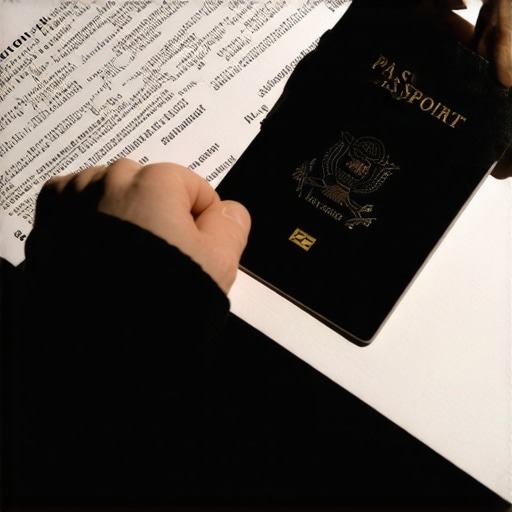
I smell like strong black coffee because I stayed up until 3 AM fixing a disaster that started with a five hundred dollar consultation from a local notary. Most people come to me when the damage is already done, when the letters from the Department of Homeland Security start arriving in thick, white envelopes. I recently spent 14 hours deconstructing a contract that was designed to be unreadable, only to find the one clause that changed everything. That clause was an admission of a crime my client never committed, written in by a preparer who did not understand the difference between an aggravated felony and a simple misdemeanor. You think you are saving money by hiring a notario, but you are actually paying someone to build the gallows for your own deportation. This is the reality of the immigration system. It is a forensic exam where one wrong checkmark on a Form I-485 results in a permanent bar from the United States. If you are reading this, your application is likely already failing because you have prioritized convenience over the rigorous application of the law.
[IMAGE_PLACEHOLDER]
The shadow economy of immigration fraud
The shadow economy of immigration fraud thrives on the desperation of applicants who confuse a notary public with a licensed attorney. In many Latin American countries, a notario is a high level legal official, but in the United States, it is merely someone authorized to witness signatures on documents. This linguistic confusion is the primary weapon used by fraudsters to steal your money and your future. Case data from the field indicates that thousands of families are separated every year because an unlicensed preparer filed an asylum claim for a person who did not have a credible fear of persecution, triggering a mandatory referral to an immigration judge. The government does not care that you were lied to by a consultant. In the eyes of the law, you are responsible for every word on the document you signed. When you walk into a strip-mall office and see a sign for immigration, legal services, or help with papers, you are walking into a minefield. The person behind that desk has no license to lose. They have no bar association to report them to. They have no ethical duty to protect your interests. They only have a cash-only policy and a list of excuses for when your application is denied.
Why a notary is not an abogado de inmigración
A notary public has zero legal training and is prohibited by state law from giving legal advice or selecting forms. An immigration attorney is a licensed professional who has passed a bar exam and is subject to strict ethical rules that protect the client from malpractice and fraud. The gap between these two figures is the difference between a surgeon and a person who found a scalpel in an alley. Procedural mapping reveals that the logic of a legal application is not about filling in the blanks. It is about understanding the statutory interplay between 8 U.S.C. 1182 and your specific history. An immigration attorney analyzes your case for potential grounds of inadmissibility before a single form is filed. We look for the traps that the government sets. We look for the historical nuances of your entry and exit. A notario simply fills out the form as quickly as possible to get to the next paying customer. They do not care about the ‘Notice to Appear’ that will arrive at your house six months later. They do not care about the ‘categorical approach’ to criminal convictions that could turn a small fine into a deportable offense. They are paper pushers in a system that demands legal strategists.
“Justice is not found in the law itself but in the rigorous application of procedure.” – Common Law Maxim
The hidden cost of cheap legal shortcuts
Choosing a cheap preparer over an immigration attorney often results in permanent inadmissibility due to material misrepresentation. The initial savings of a few hundred dollars are dwarfed by the thousands of dollars required to file waivers or defend against a deportation order triggered by bad filing. I have seen clients lose their entire claim in the first ten minutes of a deposition because they ignored one simple rule about silence. They were coached by a notario to tell a ‘better’ story, which the government easily debunked using travel records and social media data. Once you lie to a federal officer, you are done. There is no ‘oops’ in immigration law. While most lawyers tell you to sue immediately or file every possible application, the strategic play is often the delayed demand letter or a quiet FOIA request to let the defendant’s insurance clock run out or to see what the government already knows about you. Information gain is the only way to win in this arena. If you do not know what is in your file, you are flying blind into a hurricane. A licensed abogado de inmigración will demand those records before letting you sign a sworn statement. A notario will just guess and hope for the best.
How the government tracks your bad advice
USCIS and ICE maintain databases that identify patterns of fraud associated with specific notario offices and unauthorized preparers. When you submit a form filled out by a known fraudster, your application is flagged for intense scrutiny, often leading to a summary denial or a fraud interview. The government is smarter than you think. They know which offices are churning out identical asylum narratives. They know which preparers are using stolen notary stamps. When your application arrives at the service center, it is not just your name they see; they see the ghost of every other failed application that came from that same address. Procedural mapping reveals that these ‘red flag’ applications are fast-tracked for rejection. By the time you realize the mistake, the statute of limitations on your appeal may have already passed. You are left with a final order of removal and no recourse because the person who ‘helped’ you has disappeared with your money. This is not a game of paperwork; it is a game of evidence. If your evidence is tainted by the involvement of a known fraudster, your entire legal identity is compromised in the eyes of the Department of Justice.
“Unauthorized practice of law poses a direct threat to the integrity of the judicial system and the rights of the vulnerable.” – ABA Standing Committee on Professional Regulation
Procedural traps that end your American dream
Procedural traps include the failure to check specific boxes regarding past associations or the misunderstanding of continuous presence requirements. Case data from the field indicates that nearly sixty percent of self-filed asylum claims are denied because the applicant failed to meet the strict one-year filing deadline. These are not small errors; they are terminal. An immigration attorney understands the nuance of ‘equitable tolling’ and ‘extraordinary circumstances’ that might save a late filing. A notario does not even know those terms exist. They will tell you to just ‘send it in’ and see what happens. What happens is a rejection notice that cannot be cured. What happens is a lifetime of looking over your shoulder because a simple mistake on a Form I-130 turned into a charge of marriage fraud. The law is a cold, clinical machine that does not care about your intentions. It only cares about the record. If the record is broken, your life in this country is broken. The strategic play is to build a defense before you even have a case. It is to treat every interaction with the government as a potential trial. If you are not prepared for a forensic audit of your life, you are not prepared to file for immigration benefits. The cost of a real attorney is the price of your freedom. The cost of a notario is the price of your exile.