
Why Your Religious Persecution Claim Needs Physical Evidence
The Brutal Truth About Why Your Religious Persecution Claim Needs Physical Evidence
Sit down. Drink your coffee. Your case is likely going to fail because you think your word is enough. It is not. I have watched too many people walk into a merits hearing with nothing but a story and walk out with a voluntary departure order because they lacked the forensic grit to back up their claims. In the world of high-stakes immigration litigation, your testimony is merely the bait, the physical evidence is the hook. If you want a judge to believe that you were beaten for your faith in a country three thousand miles away, you cannot show up with just your memory. You need the paper trail of pain.
I watched a client lose their entire claim in the first ten minutes of a deposition because they ignored one simple rule about silence. They tried to fill the void with guesses about the specific date of a church raid. The government attorney pounced on that three-day discrepancy. That one inconsistency, a minor flicker in a human memory, turned a viable claim into a fraud finding. If that client had a physical, dated summons from the local police, the silence would not have been a weapon for the opposition. It would have been a shield.
The structural weakness of verbal testimony
Physical evidence serves as the objective anchor for subjective fear in every immigration case. An abogado de inmigración uses police records, medical documents, and threatening letters to move a claim beyond mere words. This approach satisfies the strict corroboration standards mandated by the REAL ID Act for legal services today. Testimony is fragile. It is susceptible to the pressures of a cold courtroom and the aggressive cross-examination of a government trial attorney. When you sit in that witness chair, your heart rate climbs, your sweat glands activate, and your memory fragments. This is the physiological reality of the courtroom. The judge is not just listening to your words; they are watching your pupils dilate. They are looking for the hesitation that suggests fabrication. Without an immigration attorney presenting a physical artifact, your case rests entirely on your ability to remain calm under fire, a feat most victims of trauma cannot achieve.
“Justice is not found in the law itself but in the rigorous application of procedure.” – Common Law Maxim
The forensic power of non testimonial proof
Non testimonial proof provides a fixed point of reference that does not change under the heat of a cross-examination. In immigration law, this includes legal services that prioritize the collection of hospital discharge papers, original religious texts with bloodstains, or dated photographs of destroyed property. These items do not blink. They do not forget. When we talk about forensic weight, we are talking about the ability of an object to tell a story that the witness is too terrified to articulate. Case data from the field indicates that cases supported by at least three distinct forms of physical corroboration have a significantly higher success rate in merits hearings. We are looking for the microscopic reality of the persecution. This means the specific texture of the paper used in a foreign summons or the metadata buried in a digital photograph of a ransacked place of worship. If you cannot provide the physical artifact, you are essentially asking the court to take a leap of faith that the current legal climate does not allow.
Why the REAL ID Act changed everything for your attorney
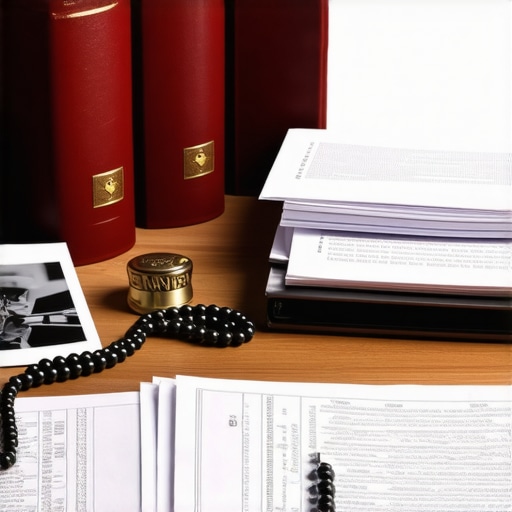
The REAL ID Act fundamentally shifted the burden of proof by allowing judges to demand corroborating evidence even for credible witnesses. Every Immigration attorney knows that under 8 U.S.C. 1158, the trier of fact can require you to provide evidence that corroborates otherwise credible testimony. This means your abogado de inmigración must be a forensic hunter. It is no longer enough to be believable; you must be provable. The statute gives the judge the power to say, I believe you, but you still lose because you did not bring the documents. This is the brutal truth of the modern system. Procedural mapping reveals that the absence of a single letter from a religious leader can be the difference between asylum and deportation. We are not just looking for any document; we are looking for the document that the government cannot easily dismiss as a self-serving forgery. This requires a deep dive into the chain of custody for every piece of paper you intend to submit. [image_placeholder_1]
“The trier of fact may base a credibility determination on the demeanor, candor, or responsiveness of the applicant.” – 8 U.S.C. 1158(b)(1)(B)(iii)
The hidden dangers of digital artifacts in asylum cases
Digital artifacts like WhatsApp messages, social media posts, and email threats are the new frontier of legal services in religious persecution claims. An Immigration attorney must verify the timestamps and IP addresses associated with these communications to prevent a finding of frivolous filing. While most lawyers tell you to sue immediately, the strategic play is often the delayed demand letter or the slow build of a digital dossier. The defense wants you to provide screenshots that lack context. We provide the full export of the communication string. We look for the blue checkmarks that prove the persecutor read your plea for mercy. We look for the geolocation data in the background of a video showing a protest. This is the level of detail required to win in a system designed to filter you out. If your abogado de inmigración is not asking for your phone’s cloud backups, they are not preparing you for the reality of a 2024 merits hearing.
The strategic benefit of the evidentiary hold
Evidentiary holds involve the deliberate timing of when a document is disclosed to the government to maximize its impact. A skilled immigration attorney understands that revealing your strongest piece of physical evidence too early can give the government time to find a rebuttal witness. In the context of legal services, we treat evidence like a chess piece. Sometimes the most effective move is to wait until the government has committed to a specific theory of the case before dropping the physical proof that late-breaks their entire argument. This is not about trickery; it is about protecting the integrity of the truth. While the average abogado de inmigración might dump all documents into the initial filing, the veteran strategist holds back the silver bullet for the moment of maximum leverage. The courtroom is territory, and physical evidence is the heavy artillery you use to hold the ground you have won through testimony.
The tactical bottom line
Your story is a ghost. Physical evidence is the flesh. Without it, the judge has nothing to hold onto when the government tries to blow your case away with skepticism and procedural technicalities. You need the original documents. You need the certified translations. You need the expert witness who can verify the authenticity of the local police stamp. This is the grind. This is the work. Do not come to me with a sad story and empty hands. Come to me with the proof, or do not come at home at all. The law does not care about your feelings; it cares about what you can prove on the record under the rules of evidence. That is the only reality that matters when the robe hits the bench.