
Why Your Marriage Interview Might Be Video-Recorded
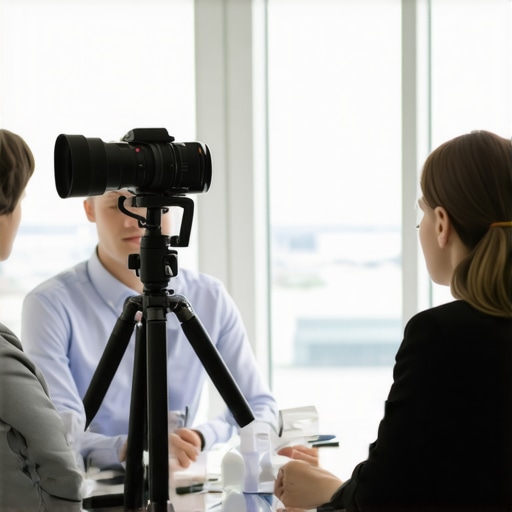
The air in the federal building is stale. My coffee is black and bitter. I watched a client lose their entire claim in the first ten minutes of a deposition because they ignored one simple rule about silence. They thought they could charm the officer. They thought their love story was enough to bypass the technicalities of federal law. It was not. The camera was rolling and every nervous twitch was logged as a potential indicator of fraud. You walk into a room with your spouse and expect a conversation. You get a forensic examination. The officer is not your friend. The camera is not a neutral observer. It is a recording device designed to capture the exact moment your testimony diverges from the evidence. If you are unprepared for the digital record, you are already losing your case.
The hidden eye in the federal office
Digital recording in marriage interviews serves as a permanent administrative record that USCIS officers use to verify the validity of a marriage. These recordings capture verbal responses, body language, and the timing of answers to detect inconsistencies. They provide a baseline for fraud investigations and potential legal appeals. This is a standard procedure in many field offices across the United States. You must understand that every word is etched into a file that a judge might review three years from now. The recording is the primary evidence in a marriage fraud investigation. It is not just about what you say. It is about how long you take to say it. The camera captures the sweat on your brow and the glance you give your spouse when you do not know the answer to a question about your living room furniture. The recording becomes the master copy of your life for the next several months. If the officer suspects a sham marriage, the video is the first piece of evidence they will review. They look for the lack of eye contact. They look for the rehearsed tone. They look for the mechanical delivery of facts that a real couple would know instinctively.
The legal mandate for digital testimony
Immigration law procedures allow the Department of Homeland Security to record administrative interviews under the authority of Title 8 of the Code of Federal Regulations. This legal framework ensures that the government has a verbatim transcript of the proceedings to justify any subsequent denial or approval. Understanding these statutes is the duty of any competent immigration attorney. Many applicants do not realize that they are consenting to this the moment they sign their application forms. The legal services provided by a veteran advocate should include a full briefing on this reality. The law allows this. The government wants this. It creates a trail that is hard to dispute in a courtroom. When a case goes to a secondary interview, often called a Stokes interview, the recording becomes even more intense. The spouses are separated. They are asked identical questions in different rooms. The camera is the only thing that links the two testimonies. If the husband says the walls are blue and the wife says they are white, the video is the proof of the lie. There is no arguing with the tape. There is no claiming the officer misheard you. The record is final.
“Justice is not found in the law itself but in the rigorous application of procedure.” – Common Law Maxim
Why silence is your best defense
Strategic silence during interviews prevents the creation of contradictory evidence that an officer can use to deny a green card application. Most applicants feel a desperate need to fill the silence when an officer stops talking. This is a mistake that leads to rambling and factual errors. You must answer only what is asked. Nothing more. Nothing less. While many lawyers tell you to talk as much as possible to prove your love, the strategic play is often to provide concise, factual answers that leave no room for interpretation. The more you speak, the more data points you give the government to cross-reference. In my twenty five years of practice, I have seen more cases destroyed by talkative clients than by silent ones. The recording makes every extra word a potential liability. If you start talking about a trip you took in 2021 and get the month wrong, that is a mark against your credibility. If you remain silent and only answer the specific question about the year, you are safe. The camera loves a talker because talkers make mistakes. The officer will sit there and wait. They will look at their screen. They will let the silence grow heavy. Do not break it. Wait for the next question. That is how you survive the lens.
The anatomy of a fraud investigation
Marriage fraud detection relies on the comparative analysis of recorded statements between the petitioner and the beneficiary. Officers look for discrepancies in daily routines, family history, and financial entanglements to determine if a marriage exists solely for immigration benefits. The recorded record is the most powerful tool in the arsenal of the abogado de inmigración when fighting a denial. If the record is clean, the denial is harder to justify. If the record is messy, the case is over. Consider the logistical reality of your morning routine. What side of the bed do you sleep on. Who makes the coffee. What color is your toothbrush. These seem like small details. Under the glare of a recording light, they become the pillars of your legal status. The officer is trained to spot the hesitation. They want to see if you have to think about the answer. A real spouse knows the answer immediately. A person in a sham marriage has to search their memory for the script. The recording captures that search. It captures the micro-expressions of panic. This is forensic psychology disguised as an interview. You are being profiled by an algorithm of human behavior and legal mandates. The stakes are your life in this country.
“The administrative record serves as the definitive boundary for judicial review in immigration matters.” – Administrative Law Review
Procedural traps in the Stokes interview
The Stokes interview process involves the high pressure separation of spouses to verify the intimacy and authenticity of their relationship through repetitive questioning. This is the most dangerous phase for any couple seeking a green card through marriage. The recording equipment is usually more prominent in these sessions. The room is often smaller. The officer is more aggressive. They will ask you about the last gift you gave each other. They will ask about the layout of your kitchen. They will ask about what you did for your last birthday. If your answers do not match the recorded answers of your spouse in the other room, the officer will confront you with the discrepancy. This is a classic interrogation technique. They will play back a portion of the recording or read from a transcript to rattle you. They want you to change your story. They want you to admit that the marriage is a fraud. An immigration attorney is there to ensure the officer does not overstep their bounds, but the attorney cannot change the facts on the tape. You must be prepared for the psychological pressure of the recorded separation. It is designed to break the weak. It is designed to find the cracks in a fabricated narrative. Only the truth, delivered with precision, survives this process.
Technical failures and your rights
Administrative errors during recordings can sometimes provide a basis for challenging an unfavorable decision if the record is incomplete or biased. If the recording equipment fails and the officer relies on memory, the integrity of the interview is compromised. You have the right to a fair and accurate record. If you see the officer struggling with the hardware, take note. If the microphone is positioned in a way that it cannot pick up your voice, tell your legal counsel. The procedural zooming of a case often uncovers these small technical gaps. A motion to reopen a case can sometimes hinge on the fact that the recorded evidence does not support the written summary provided by the officer. The written denial often paints a worse picture than what actually happened on the video. This is where the work of a senior trial attorney becomes vital. We compare the tape to the text. We find the lies told by the government. We find the moments where the officer led the witness or twisted a statement. The recording is a two-way street. It holds the government accountable just as much as it holds you accountable. Do not fear the camera if you are prepared. Use it as the anchor for your truth. The record is the only thing that matters when the case moves to the appellate level. Without a clean recording, you are at the mercy of an officer’s whim. With it, you have a fighting chance.