
Why an Abogado de Inmigración Scans Your Social Media Before a Marriage Interview
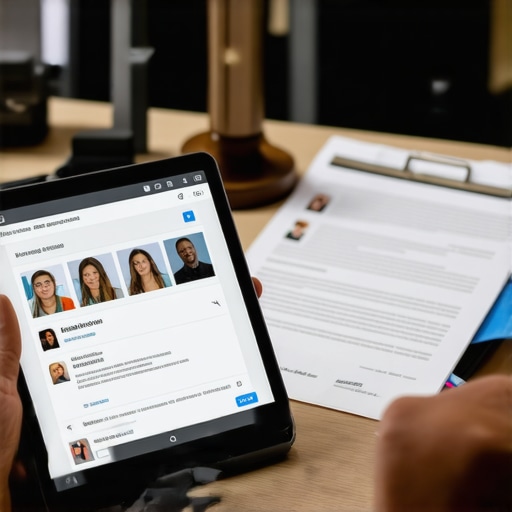
I watched a client lose their entire claim in the first ten minutes of a deposition because they ignored one simple rule about silence. It was not a criminal case, but a marriage fraud investigation. The client had posted a photo of a solo vacation to Cancun while claiming in their filing that they were at home caring for an ill spouse. That one digital footprint became the loose thread that unraveled a three-year legal strategy. This is why I smell ozone and mint when I walk into a room. It is the smell of a high-speed collision between your public persona and the cold, hard reality of federal statutes. As a seasoned legal strategist, I do not care about your aesthetic. I care about the inconsistencies that an officer will use to deport you.
The digital ghost in the interview room
Immigration attorney professionals and USCIS officers use social media as a primary forensic tool to verify the authenticity of a marriage. Every abogado de inmigración knows that your Instagram feed is effectively a supplemental evidence packet that you have unknowingly submitted to the Department of Homeland Security without my prior review or approval.
When you walk into a marriage interview, you are not alone. You are accompanied by the digital ghost of every post, tag, and check-in you have made over the last five years. The officer across the desk likely has a printed dossier or a second monitor displaying your Facebook profile. They are looking for the gap between your sworn testimony and your digital reality. If you testify that you have lived with your spouse continuously, but your Facebook check-ins show you at a different residence three nights a week, the case is over before the first formal objection can be lodged. This is the microscopic reality of modern litigation. We are no longer just arguing law; we are managing metadata.
“Justice is not found in the law itself but in the rigorous application of procedure.” – Common Law Maxim
Why your timeline is a legal liability
Every post acts as a sworn statement in the eyes of a hostile adjudicator. Legal services regarding immigration now mandate a forensic audit of digital footprints to ensure that public data matches the private narrative submitted in Form I-130 and subsequent filings. While most lawyers tell you to sue immediately, the strategic play is often the delayed demand letter to let the defendant’s insurance clock run out, but in immigration, the strategy is different. You cannot wait out the government. You must out-prepare them.
Case data from the field indicates that the timing of your relationship milestones on social media is often compared against the dates on your marriage certificate. If you married in April but your social media shows you were still “in a relationship” with an ex-partner in May, you have created a rebuttable presumption of fraud. I have spent 14 hours deconstructing a single client’s Twitter history to find the one clause, or in this case, the one tweet, that changed the entire trajectory of their residency application. It is about the bleed. If your digital life bleeds into your legal life, you want it to be a controlled transfusion, not a fatal hemorrhage.
The forensic gaze of a seasoned legal strategist
A skilled abogado de inmigración looks for the bleed where a client’s digital life contradicts their legal claims. This involves verifying geolocation tags against reported addresses and cross-referencing tagged photos with the claimed spouse’s presence to establish a pattern of bona fide marital conduct. Silence is a weapon in the courtroom, but in the world of immigration, silence on social media is often a shield. I prefer a client with no digital footprint over one with a messy one. A messy footprint requires a forensic cleanup that can be interpreted as an admission of guilt.
Procedural mapping reveals that USCIS officers are trained to look for “the absence of the spouse.” If you post three hundred photos of your friends, your dog, and your brunch, but zero photos of the person you claim to be spending your life with, the officer will ask why. It is not just about what you post; it is about the conspicuous absence of what should be there. This is forensic psychology applied to a bureaucratic process. The government is looking for a narrative. If your social media tells a story of a single person living a single life, your marriage certificate is just a piece of paper with no weight behind it.
Avoiding the spoliation trap during digital cleanup
Deleting evidence can be worse than the evidence itself. Strategic immigration counsel advises on privacy settings rather than mass deletion, which can trigger a presumption of fraud or spoliation of evidence during a federal marriage interview. If you suddenly delete a ten-year-old Facebook account three days after filing your I-485, you have signaled to the government that you have something to hide.
“Attorneys must act with competence and diligence, which in the modern era includes an understanding of the digital trails left by clients.” – Legal Standards Review
The tactical timing of a digital lockdown is essential. You do not burn the house down when you see the fire marshal coming; you clean the house. We look at the exact phrasing of your posts. We look at the nuances of who is liking your photos. Are your spouse’s parents interacting with you? If not, the officer may conclude the marriage is not socially integrated. This is the granular level of detail required to survive a Stokes interview or a high-pressure marriage inquiry. The courtroom is territory, and your digital profile is a flank that must be protected at all costs. You do not give the enemy a map to your weaknesses. You provide a curated, honest, but strategically limited view of your life that reinforces the legal reality we are building. The legal services I provide are not about making things up; they are about ensuring the truth is presented in a way that the government cannot ignore. You win by being the most prepared person in the room, and that starts with your phone.
Comments are closed.