
Why Your Asylum Story Must Match Your Original Border Statement
The brutal reality of the first interview
Asylum stories must match border statements because the Department of Homeland Security uses initial transcripts to identify fraud. An immigration attorney knows that any deviation between the credible fear interview and the I-589 application results in an adverse credibility finding, ending the case immediately.
I smell like strong black coffee because I have been up since 4 AM reviewing transcripts that make me want to retire. I am going to tell you the truth before I even say hello. Your case is likely failing. Not because you do not have a fear of your home country, but because you talked too much at the border. I watched a client lose their entire claim in the first ten minutes of a deposition because they ignored one simple rule about silence. They thought the border agent was their friend. They thought the intake interview was just a formality. It was not. It was the foundation of their legal coffin. In the world of immigration, the first word you speak is the one that carries the most weight. If you told a Border Patrol agent you came here for work, but your legal services application says you came here fleeing a cartel, the judge will look at you as a liar. It does not matter if you were tired, hungry, or terrified. The record is the record.
The trap of the credible fear interview
The credible fear interview is a gatekeeping mechanism designed to filter out asylum seekers who lack a well-founded fear of persecution. During this process, an asylum officer records every detail of your claim to see if it meets the significant possibility standard. Any immigration attorney will tell you that this transcript is the government’s primary weapon against you. Case data from the field indicates that inconsistency is the number one reason for denial. While most lawyers tell you to sue immediately, the strategic play is often the delayed demand letter or a formal request to correct the record before the interview ends. You have to understand that the government is not looking for the truth; they are looking for a reason to say no. When you sit in that small room, the officer is typing. Every pause, every hesitation, and every change in your timeline is being memorialized. If you say your brother was killed on a Tuesday at the border, but your formal application says it happened on a Friday, you have just handed the abogado de inmigración for the government a gift. They will use that three-day gap to destroy your life.
“Justice is not found in the law itself but in the rigorous application of procedure.” – Common Law Maxim
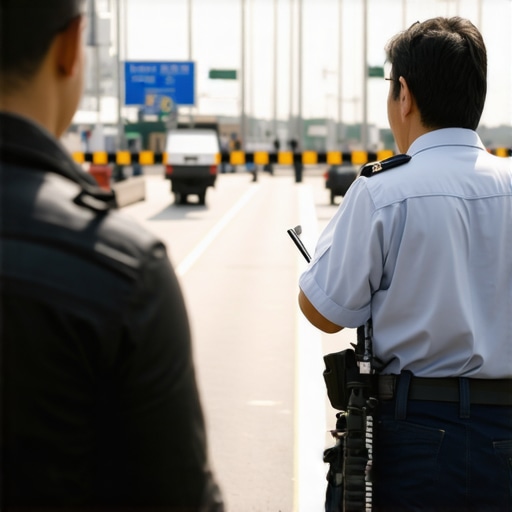
The procedural reality is cold. The law operates on the REAL ID Act, which allows a judge to find you not credible based on any inconsistency, even if it does not go to the heart of your claim. This is the legal services nightmare. You could be a genuine victim of torture, but if you forgot the color of the car the kidnappers used during your first talk at the bridge, your case can be dismissed. [image_placeholder_1] The Department of Justice expects a level of memory precision that most human beings do not possess under stress. This is why immigration law is a game of high-stakes chess. You are not just fighting for your life; you are fighting against a transcript you likely never even read.
Why the government keeps the receipts
Government immigration files, known as A-Files, contain every document you have ever signed and every statement you have ever made. A skilled abogado de inmigración must review these files via a FOIA request before filing a single piece of paper with the court. Procedural mapping reveals that the government often waits until the merits hearing to spring a border transcript on the respondent. This is a tactical ambush. If you do not know what you said at the border three years ago, you are walking into a trap. The immigration judge will sit there with the transcript in their hand while you testify. They are looking for the “gotcha” moment. They want to see the look on your face when they read back a statement you made while you were dehydrated and exhausted. They do not care about your exhaustion. They care about the statutory requirement of consistency. This is not about equity; it is about the burden of proof. If the foundation is cracked, the house falls.
The price of a shifting narrative
A shifting asylum narrative is viewed by the Executive Office for Immigration Review as evidence of a frivolous application. When a legal services provider sees a client changing their story, they must decide whether they can even ethically continue the representation. The immigration attorney is bound by rules of professional conduct that prohibit the presentation of false testimony. If you change your story because you think the new one sounds better, you are committing perjury. The consequences are permanent. A finding of a frivolous asylum application means you are barred for life from any benefit under the Immigration and Nationality Act. There is no waiver for this. There is no second chance. You have effectively deported yourself by trying to be clever. The courtroom is a territory, and if you do not know the terrain, you will be flanked by the trial attorney representing the government. They have litigation experience that far outweighs your desire to stay in the country. They see you as a number, a statistic to be cleared from the docket.
“Credibility is the currency of the court, once spent, it cannot be reclaimed.” – ABA Journal of Litigation
What an immigration attorney can actually fix
A professional immigration attorney can fix a legal error or a procedural mistake, but they cannot fix a lie or a contradiction. The strategic move is to address any discrepancies early in the I-589 filing by providing a detailed declaration that explains the context of the initial statement. Perhaps the translator at the border spoke a different dialect. Perhaps the agent was aggressive and did not let you finish. These are procedural defenses that require legal services expertise to execute. You cannot just ignore the mistake and hope it goes away. You must attack the reliability of the initial interview. Was it conducted in a private setting? Was there an interpreter? Were you given a copy of the statement to review? These are the microscopic details that win cases. This is not about the “real story” the media likes to talk about. This is about the forensic reconstruction of an interrogation. If you want to survive the immigration system, you must be as clinical and cold as the law itself. You must be obsessed with the logistics of your own story. Every date, every name, and every location must be a fixed point in your mind. If you cannot provide that level of detail, the government will find someone who can, and they will use it to remove you from the country. The final verdict is always written in the ink of your first interview.