
Why an Abogado de Inmigración Is Vital for Your Removal Hearing
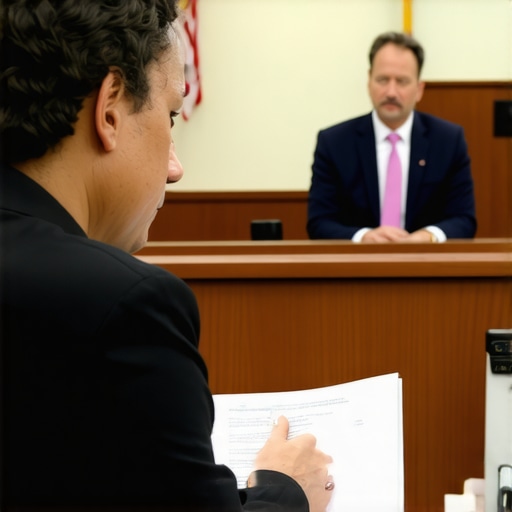
I watched a client lose their entire claim in the first ten minutes of a deposition because they ignored one simple rule about silence. It was not a deposition in a civil suit, but a Master Calendar hearing in a windowless room where the stakes were not money, but the right to remain in this country. The respondent, thinking they were being helpful, offered a detail about their entry that was not asked for. That single sentence gave the government attorney enough ammunition to establish a ground of inadmissibility that took two years and twenty thousand dollars in legal fees to eventually untangle. Most people walk into an immigration court thinking it is a conversation. It is not. It is a forensic autopsy of your life, conducted by a professional prosecutor whose job is to ensure the law is applied literally, often to your detriment. This is why an abogado de inmigración is not a luxury; they are a tactical necessity in the high-stakes chess match of immigration litigation.
The silence that kills a defense
Immigration attorneys understand that the most powerful tool in a removal hearing is the strategic use of silence and the precise control of the evidentiary record. An abogado de inmigración prevents the respondent from making self-incriminating statements that the legal services of the government will use to build a case for deportation. During a removal hearing, every word is recorded. If you speak when you should listen, or if you provide data that contradicts a form filed five years ago, you are finished. I have seen respondents try to explain their way out of a technical violation of the Immigration and Nationality Act, only to realize that the judge is not looking for an explanation, but for a statutory reason to grant relief. Without counsel, you are essentially bringing a knife to a gunfight where the other side has a thermal scope. [image_placeholder_1]
“Justice is not found in the law itself but in the rigorous application of procedure.” – Common Law Maxim
Why the government wants you alone
Immigration attorneys act as the primary defense against removal proceedings by identifying legal relief options like asylum or cancellation of removal that most respondents miss. The system is designed for efficiency, and efficiency usually means the rapid removal of those who do not have a professional advocate to gum up the works with procedural motions. Case data from the field indicates that respondents with counsel are significantly more likely to identify a viable defense. While most lawyers tell you to sue immediately, the strategic play is often the delayed demand for discovery. You want to see what the government has on you before you commit to a story. If you represent yourself, you are flying blind. The government has the A-file, the rap sheet, and the entry records. You have your memory, which is often flawed under the pressure of a black-robed judge staring you down. Legal services provided by an experienced immigration attorney involve more than just filling out forms; they involve the aggressive litigation of your rights under the Due Process Clause.
The microscopic failure of the self-represented
Immigration attorneys focus on the microscopic details of the Notice to Appear to find jurisdictional defects that can lead to the termination of a case. Procedural mapping reveals that many NTAs are issued with missing dates or times, a flaw that was highlighted in recent Supreme Court jurisprudence. A self-represented individual will simply show up to the hearing at the time the court eventually tells them, effectively waiving their right to challenge the document that started the whole mess. An abogado de inmigración will not waive that right. We look for the crack in the foundation. We look for the missed signature, the incorrect statute, or the failure of the government to meet its burden of proof. The burden is on the government to prove you are removable. If you speak too much, you carry that burden for them. This is the brutal truth of the courtroom: the more you try to help yourself with words, the more you help the prosecutor with evidence.
Tactics used by the ICE trial attorney
Immigration attorneys know that the Department of Homeland Security trial attorneys are not your friends. They are professional litigators who handle dozens of cases every single day. They know the predilections of every judge. They know which arguments will be shut down and which ones will fly. They use a technique called the categorical approach to turn a minor state law conviction into an aggravated felony that bars you from all relief. If you do not have an abogado de inmigración who can argue the nuances of criminal law versus immigration law, you will be categorized into a corner you cannot escape. I have seen people deported for crimes that were not even deportable offenses, simply because they did not have a lawyer to point out that the state statute was broader than the generic federal definition. It is a game of definitions, and the one with the better dictionary wins.
“The right to be heard is of little avail if it does not comprehend the right to be heard by counsel.” – Powell v. Alabama, 287 U.S. 45 (1932)
Statutory reality of the Immigration and Nationality Act
Immigration attorneys must navigate the Immigration and Nationality Act, a body of law that is frequently cited as second only to the Tax Code in its complexity. Every removal hearing is governed by specific sections of the INA, such as Section 240, which dictates the conduct of proceedings. An abogado de inmigración understands the difference between being inadmissible under Section 212 and being deportable under Section 237. These are not just numbers; they determine who has the burden of proof and what waivers are available. If you are applying for legal services to help with an adjustment of status, you must understand that the government is looking for any reason to deny the petition. They are looking for fraud, for willful misrepresentation, or for a break in continuous presence. One mistake on an I-589 asylum application can lead to a finding of a frivolous filing, which is a permanent bar to any immigration benefit in the future. The margin for error is zero.
The strategic value of a meticulous evidentiary packet
Immigration attorneys build evidentiary packets that are designed to be bulletproof. A common mistake made by those without an abogado de inmigración is the submission of too much irrelevant information. The judge does not want to see your elementary school diplomas if you are applying for cancellation of removal based on hardship to a U.S. citizen child. They want to see medical records, psychological evaluations, and financial transcripts that prove the hardship is exceptional and extremely unusual. This is a very high legal standard. An immigration attorney knows how to curate the evidence to meet that standard without overwhelming the clerk of the court. We use tabs, indices, and trial briefs to tell the judge exactly why they have the legal authority to grant the relief. We do the work for the judge, which makes it much easier for them to rule in our favor. A disorganized file is a denied file. In the world of immigration, logistics are just as important as the law itself.
Hidden traps in the Master Calendar hearing
Immigration attorneys treat the Master Calendar hearing as a tactical staging ground rather than just a scheduling meeting. This is where you plead to the charges on the Notice to Appear. If you admit to a charge that the government cannot actually prove, you have just done their work for them. An abogado de inmigración will often deny the charges or stand mute to force the government to produce the underlying evidence, such as a Form I-213 or a conviction record. Sometimes that evidence does not exist or was obtained in violation of the Fourth Amendment. If you are there alone, you will likely admit to everything the judge asks, thinking that honesty is the best policy. In a removal hearing, honesty without strategy is often a one-way ticket to a detention center. The goal is to survive to the next hearing, to buy time for a change in the law, or to wait for a priority date to become current. Time is the most valuable commodity in immigration court, and only a lawyer knows how to buy it legally.
The lie of the easy settlement
Immigration attorneys are often approached by clients who think there is an easy way out or a secret deal to be made. There are no secret deals. There is only the law and the discretion of the judge. Many people fall victim to notarios or people offering legal services without a license, promising a guaranteed result. These people are the vultures of the immigration world. They will take your money, file a garbage application, and disappear when the hearing date arrives. A real abogado de inmigración will tell you that your case is difficult. They will tell you that the judge is tough. They will give you the brutal truth because that is the only thing that can save you. Litigation is not about feelings; it is about the ROI of your freedom. If you are not willing to invest in a professional strategist, you have already decided that your case is not worth winning. The courtroom is a cold place for those who are unprepared. The air is dry, the coffee is stale, and the law does not care about your intentions. It only cares about the record. Hire someone who knows how to write it.