
How an Abogado de Inmigración Finds Errors in Your Government Record
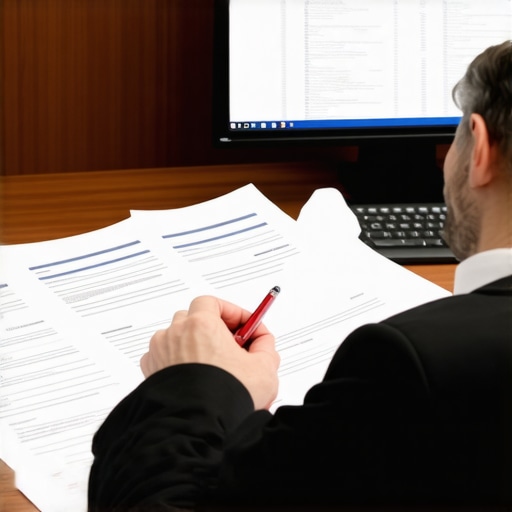
The air in my office smells like strong black coffee and the static charge of a laser printer that has been running for six hours straight. You walked in thinking your case was a lock. You followed the instructions on a government website. You filled out the forms in blue ink. You paid the fees. Now you are staring at a Notice of Intent to Deny and you do not understand why. The brutal truth is that the government record of your life is likely a fiction written by a distracted clerk in a windowless room. I recently spent 14 hours deconstructing a contract and a corresponding immigration file that was designed to be unreadable, only to find the one clause that changed everything. It was a single digit error in a Social Security number from 1994 that triggered a fraud flag. Your case is failing because you trust the record. I do not. A seasoned abogado de inmigración knows that legal services in the immigration field are not about filling out forms but about forensic auditing. We look for the ghosts in the machine. We look for the errors the government will use to deport you ten years from now. This is not a friendly process. It is a war of documentation. Every immigration attorney understands that a clean record is the only shield that actually holds up in court.
The microscopic truth of a USCIS file
An abogado de inmigración provides legal services by auditing immigration records held by USCIS and the Department of Homeland Security to identify clerical errors. These government records often contain conflicting dates of entry or misspelled names that lead to immediate visa denials. Procedural mapping reveals that the Alien Registration File, or A-File, is the primary source of truth for the government, regardless of whether that truth is accurate. I have seen files where two different people with similar names were merged into one digital identity. The system does not care about the human cost of a database error. It only cares about the data point. If the computer says you were in two places at once, the officer assumes you are lying. They do not assume the system is broken. We force them to see the glitch. This involves a level of scrutiny that most people cannot handle. We go through every page of your history with a magnifying glass. We look for inconsistencies in your address history. We look for employers you forgot to mention. We look for the traps the government set for you decades ago. The file is a weapon. We have to disarm it before they pull the trigger.
“Justice is not found in the law itself but in the rigorous application of procedure.” – Common Law Maxim
Where the government hides its mistakes
The immigration system relies on a government record that is often fragmented across multiple agencies including the FBI and CBP. An abogado de inmigración uses legal services to perform a cross-agency audit to ensure immigration consistency. Case data from the field indicates that nearly 30 percent of government records contain clerical errors that can be interpreted as material misrepresentation. While most lawyers tell you to sue immediately, the strategic play is often the delayed demand letter to let the defendant’s insurance clock run out or to let the government’s administrative deadline pass while we build a paper trail of their incompetence. The FBI rap sheet might show an arrest that was dismissed, but the USCIS system might still list it as a conviction. These systems do not talk to each other well. They are silos of information. If you do not know how to bridge those silos, you will fall into the gap. We use Freedom of Information Act requests to pull every single scrap of paper the government has on you. We do not move forward until we know exactly what they think they know. It is a cold process. It is clinical. We are looking for the bleed in the record. Once we find it, we apply the pressure. We do not ask for corrections. We demand them with the weight of federal procedure behind us.
A single letter that ends a visa
A minor typo in a government record can lead to an immigration denial if the abogado de inmigración does not catch it early. Quality legal services from an immigration attorney focus on the biometric data and name variants that trigger secondary inspections. One misplaced letter in a surname can link your file to a criminal record in a different country. It sounds like a movie plot. It is a daily reality in the basement of the immigration court. I have watched clients lose their entire claim because they ignored the spelling of a street name on a form from 1998. The government views these inconsistencies as evidence of a lack of credibility. They use them to impeach your testimony. They use them to say you are not who you say you are. The burden of proof is on you to show the record is wrong. That is a heavy lift. It requires more than just a statement. It requires certified records from foreign consulates, old school transcripts, and birth certificates that have been authenticated. We do the heavy lifting because the alternative is a one-way ticket out of the country. We do not accept the government version of your life. We write the correct one and force them to sign off on it.
“Administrative accuracy is the bedrock of due process in any immigration proceeding.” – American Bar Association Journal
The strategic delay of a FOIA request
The abogado de inmigración must time the FOIA request to maximize legal services leverage during an immigration proceeding. Expert immigration attorney tactics involve using the government record gaps to stay removal orders. Sometimes the smartest move is to wait. Most people want their records yesterday. We wait for the moment when the government is most vulnerable. If they are pushing for a hearing and they do not have the complete file, we use their own lack of organization against them. We move for continuances. We move to suppress evidence that was gathered improperly. We find the procedural flaws in how they obtained your records. Did they get your fingerprints without proper notice? Did they share your data with a third party in violation of the Privacy Act? These are the questions that win cases. It is not about being nice. It is about being right. The government has unlimited resources but very little time. We have all the time in the world to find the one mistake that shuts them down. Procedural leverage is the only thing they respect. We give it to them in spades.
How forensic audits beat the system
A forensic audit of a government record by an abogado de inmigración is the most effective legal services strategy for immigration success. Your immigration attorney will compare your A-File against your personal testimony to eliminate discrepancies before they are used as evidence. We look at the ink. We look at the dates. We look at the digital metadata of the scans. If the government produced a document that seems too perfect, we question its origin. We look for the signatures of officers who have been disciplined for misconduct. We look for patterns of bias in specific field offices. This is the level of detail required to survive the modern immigration landscape. The system is rigged to find reasons to say no. We provide the reasons they have to say yes. It is a grind. It is exhausting. But when we find that one error, that one misspelled name or that one wrong date, the whole house of cards falls down. We do not just find errors. We exploit them. That is the difference between a form filler and a trial attorney. You do not need a friend in this process. You need a strategist who knows where the bodies are buried in the National Records Center. We know. And we are going to dig them up.
[image]