
How to apply for an emergency travel document
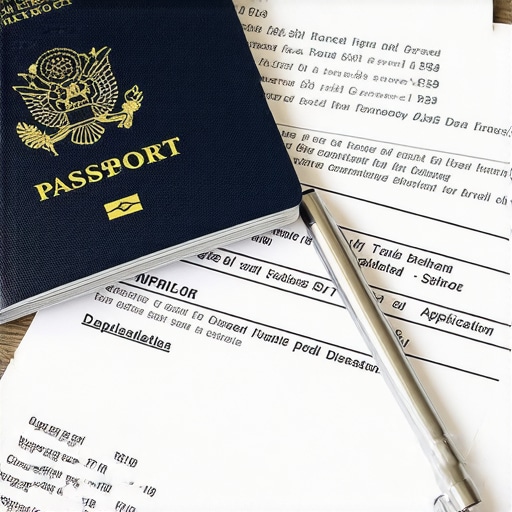
The office smells like strong black coffee and the cold residue of a long night. I tell my clients their case is failing before I even say hello because most people walk into the immigration process with a hope that the system is fair. It is not. The system is a machine of procedural hurdles designed to filter out the unprepared. Applying for an emergency travel document is the ultimate test of this machine. I watched a client lose their entire claim in the first ten minutes of a deposition because they ignored one simple rule about silence. They thought they could explain their way out of a missing signature. They were wrong. When you are fighting for the right to leave the country and return without losing your status, you are not asking for a favor. You are engaging in a high stakes tactical maneuver with a federal agency that does not care about your personal tragedy unless it fits into a specific regulatory box.
The fast track for urgent travel authorization
Applying for an emergency travel document requires the submission of Form I-131 to USCIS with a request for expedited processing. Applicants must prove an urgent humanitarian reason or significant financial loss to the agency. Most successful cases involve an InfoPass appointment at a local field office for Emergency Advance Parole issuance. You cannot simply wait for the mail. You must force the issue by presenting a complete evidence packet that meets the strict definitions of 8 CFR section 223.2. This is the only way to bypass the standard processing times that currently stretch into months. The burden of proof lies entirely on the applicant to show that the emergency is not self-created or a result of their own procrastination.
“Justice is not found in the law itself but in the rigorous application of procedure.” – Common Law Maxim
The machinery of the emergency petition
The Immigration attorney knows that a travel document is not just a piece of paper; it is a shield. If you leave the United States without Advance Parole while a green card application is pending, the government considers your application abandoned. That is a death sentence for your legal status. I have seen families torn apart because they thought an email from a relative was enough proof of a medical emergency. It was not. The abogado de inmigración must assemble a forensic level of evidence. This means original medical records, certified translations of death certificates, and a letter from a physician on official letterhead that leaves no room for interpretation. The government officers look for any reason to say no. They look for inconsistencies between your initial filing and your emergency request. If your story changes by even a single detail, they will flag you for fraud and your travel plans will vanish along with your future in this country.
Where the paper trail ends
Legal services for immigration are often misunderstood as mere form filling. This is a dangerous lie. The real work happens in the statutory zooming of the USCIS Policy Manual. Volume 7, Part B, Chapter 4 governs the discretion of the officer. Discretion is the word lawyers fear most because it means the officer can have a bad day and you suffer the consequences. When you walk into the field office for your emergency travel document, you are walking into a theater of logistics. You need a duplicate of every document already filed. You need proof of payment. You need two passport style photographs that are exactly two inches by two inches. If the lighting on your photo is off, the machine rejects it. If the translation is not certified under 8 CFR 103.2, it does not exist. This is the microscopic reality of the law. There is no room for error or the casual mistakes of a layman. You are playing chess against a wall and the wall does not move unless you hit it with the exact right combination of procedural force.
“The power of the government to control the movement of people across its borders is an inherent attribute of sovereignty.” – Kleindienst v. Mandel, 408 U.S. 753 (1972)
What the officer sees at the window
The Immigration attorney prepares you for the window because the window is where cases die. The officer is tired and has seen a hundred people today. They are looking for the Answer Capsule in your testimony. They want to know why this travel cannot wait thirty days. If you say it is for a wedding, you have already lost. If you say it is for a business meeting, you must show that the business will collapse without your physical presence. While most lawyers tell you to sue immediately, the strategic play is often the delayed demand letter to let the defendant insurance clock run out, but in the realm of immigration, the play is the Expedite Request. This request is a formal prayer for relief that must be backed by a mountain of paper. I tell my clients to bring the physical evidence of their life. Bring the plane tickets you cannot afford to lose. Bring the surgical schedule from the hospital. Do not use vibrant language or beg for mercy. Use clinical, hard facts. The law does not care about your tears; it cares about the 8 CFR requirements. If you fail to provide a receipt notice for your underlying case, you are wasting everyone’s time. The officer will hand you a rejection slip and you will be back at zero.
The document that saves your status
The emergency travel document is officially known as Form I-512L if it is an authorization for parole of an alien into the United States. This is a high stakes document because it allows you to bypass the visa requirement at the border. However, it does not guarantee re-entry. That is the brutal truth. Customs and Border Protection still has the final word. Every time you cross that border, you are at the mercy of the officer in the booth. This is why the immigration strategy must be airtight. You need to know exactly what was in your original file. If you have a criminal record, even a minor one, leaving the country is a gamble that you might not win. The legal services you hire must do a deep dive into your history before you ever sign a Form I-131. One mistake on that form and you are barred from the country for ten years. The law is a set of traps. My job is to make sure you do not step on them while you are trying to get to a funeral or a hospital bed. We do not look for the picturesque solution; we look for the one that works under the cold light of a federal office. We use the procedural mapping of the field office to ensure we are at the right door at the right time. This is not about travel; it is about survival in a system that is designed to keep you out.