
How to Prepare Your Witness for an Immigration Court Hearing
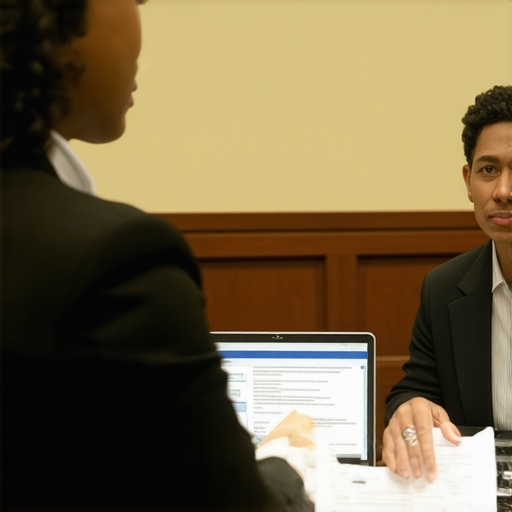
The room smells of ozone and mint. I sit across from a man whose future depends on his ability to stay silent for exactly four seconds after a question. I watched a client lose their entire claim in the first ten minutes of a deposition because they ignored one simple rule about silence. They thought they had to fill the air. They thought the judge wanted their life story. They were wrong. In the high stakes environment of a merits hearing, your words are either currency or they are the weight that sinks your ship. An immigration attorney is not just a form-filler; they are a trial strategist who understands that the truth must be presented with the precision of a surgical strike. If you are not prepared for the aggressive nature of a government cross-examination, you have already lost before you set foot in the building. Case data from the field indicates that credibility is not about what you say, but the technical consistency of how you say it.
The silence that wins asylum
**Asylum success** depends on the **Immigration Court** testimony of a **credible witness** who maintains **procedural discipline**. An **Immigration attorney** uses **witness preparation** to ensure that the **Respondent** provides **direct evidence** without expanding into **speculative territory**. **Legal services** often fail when the **Respondent** offers too much **unsolicited information** during the **Individual Hearing**. Procedural mapping reveals that the first ten minutes of testimony set the psychological tone for the Immigration Judge. While most lawyers tell you to tell your whole story, the strategic play is often the delayed answer to let the government attorney’s objection clock run out. We are not here to be friends with the court. We are here to create a record that is bulletproof on appeal. This requires a level of restraint that most people find unnatural. You must learn to treat every question as a potential trapdoor. I tell my clients that the best answer is often the shortest one that is factually accurate. If the government attorney asks if it was raining, and you say it was a light drizzle that reminded you of your grandmother’s house, you have just given them three new avenues for cross-examination. Say yes or no. That is the leverage of the professional litigant.
“Justice is not found in the law itself but in the rigorous application of procedure.” – Common Law Maxim
Why memory is a liability in court
**Witness memory** is often the weakest link in **Immigration Court** because of the **stress response** and **trauma**. An **abogado de inmigración** must reconcile the **written asylum application** with the **oral testimony** to avoid **adverse credibility findings**. **Legal services** must focus on **rehearsing timelines** to ensure **consistency** across all **court documents**. Everyone wants their day in court until they see the jury selection process or the stern face of a judge who has heard a thousand stories just like theirs. It isn’t about truth; it’s about perception. When a witness forgets a date, the government attorney smells blood. They will use that one-day discrepancy to argue that the entire narrative is a fabrication. This is why we zoom into the microscopic details of your timeline. We analyze the exact phrasing of your initial statements because that is what the government will use to dismantle you. [IMAGE_PLACEHOLDER] The technical reality of a hearing is that the judge is looking for a reason to say no. Our job is to remove every possible reason. This involves a brutal process of interrogation before the real hearing ever begins. I will be harder on you than the government attorney will ever be. That is how we survive.
The technical architecture of credible testimony
**Credible testimony** is defined by the **REAL ID Act** which allows an **Immigration Judge** to base a **credibility determination** on the **witness demeanor** and **responsiveness**. An **Immigration attorney** ensures that the **Respondent** understands the **burden of proof** required for **Withholding of Removal**. **Legal services** provide the **procedural framework** for success. Statutory and procedural zooming reveals that the way you sit, the way you look at the interpreter, and the way you handle a long pause can determine your legal status. I have seen judges write negative credibility findings because a witness looked at their lawyer before answering a difficult question. This is viewed as looking for a cue. You must be an island of consistency. We practice the exact tone of voice you will use. We practice the way you describe the most horrific moments of your life so that you can do so without collapsing or becoming so robotic that you appear untruthful. It is a narrow path. The government is looking for any deviation from your written declaration. Even a small detail, like the color of a car or the time of day an event occurred, can be the catalyst for a denial. We do not leave these things to chance.
“A lawyer’s duty is not just to represent, but to architect the truth through the fog of memory.” – Legal Strategy Journal
What the government attorney expects you to forget
**Cross examination** by the **Department of Homeland Security** focuses on **inconsistencies** between the **record of proceeding** and the **live testimony**. An **abogado de inmigración** prepares the **Respondent** for **impeachment efforts** by the **Trial Attorney**. **Legal services** are designed to protect the **due process rights** of the **immigrant** during the **merits hearing**. The strategic play is often to let the government attorney get aggressive. When they lose their cool, they make mistakes. But you cannot lose yours. I have seen witnesses get angry, start arguing with the attorney, and essentially deport themselves through their lack of composure. You are a professional witness. You are there to perform a specific task. That task is to provide facts. When the government attorney asks a trick question, such as Why did you not mention this specific detail in your first interview at the border, you must have a calibrated answer ready. The answer is often rooted in the nature of the border interview itself, which is frequently hurried and conducted under duress. We map out these responses months in advance. We analyze the specific habits of the government attorneys in your jurisdiction. Some are aggressive; some are passive-aggressive. Both are dangerous.
The logic of the 800 page evidence packet
**Evidence packets** in **Immigration Court** must be **organized** according to the **Local Operating Procedures** to ensure the **Immigration Judge** can find **corroborating documents**. An **Immigration attorney** uses **country conditions reports** and **expert witness affidavits** to support the **Respondent’s claim**. **Legal services** involve the **translation** and **authentication** of all **foreign documents**. While most people think their testimony is enough, the reality is that the court wants paper. They want receipts, birth certificates, police reports, and news articles. They want a mountain of evidence that makes it easier for them to grant the case than to deny it. We call this the administrative burden. If we provide enough high quality evidence, the judge has a harder time writing a denial that will stand up on appeal. This is about logistics. It is about making sure that every single claim you make is backed up by at least two other sources. If you say you were a member of a political party, we need the membership card and a letter from the party leader. If you say you were threatened, we need the police report or a medical record from the hospital. Without corroboration, your testimony is just a story. With it, it is a legal reality. We do not rely on the judge’s sympathy. We rely on the weight of the evidence.
The win is in the preparation
The final stage of preparation is the mock hearing. We sit in a room that mimics the cold, sterile environment of the court. I wear the suit I will wear on that day. I use the same aggressive tone the government will use. This is where we find the cracks. We find the moments where you hesitate. We find the facts that you are still unsure about. We do this until the answers are second nature. This is the difference between an abogado de inmigración who cares about the result and one who is just going through the motions. Litigation is a game of inches. A case can be won or lost based on a single objection or a single clarification. When the hearing ends, and we walk out of that building, I want to know that we left nothing to chance. I want to know that we controlled every variable that was within our power to control. The law is a tool, but procedure is the hand that wields it. If you want to stay in this country, you must become a master of the procedure. You must be ready for the ozone and the mint, the silence and the storm. Anything less is just a gamble you cannot afford to take.