
How to Prove Continuous Residence When You Work Remotely Abroad
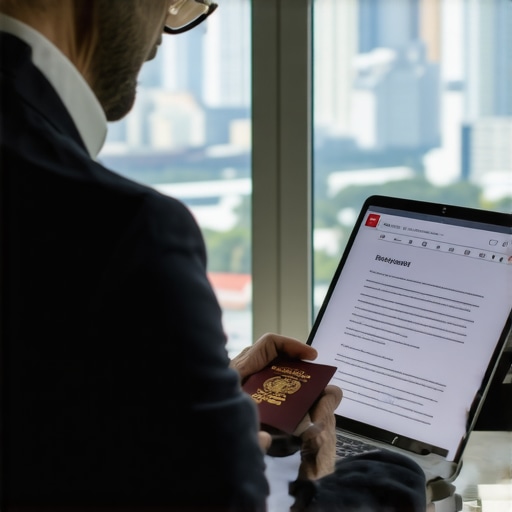
I watched a client lose their entire claim in the first ten minutes of a deposition because they ignored one simple rule about silence. We were sitting in a sterile conference room in downtown Manhattan, the air smelling of ozone and the sharp tang of mint. My client, a brilliant software engineer with a Green Card, thought he could outsmart the system. He had spent ten months working from a beach in Thailand while maintaining a P.O. Box in New Jersey. When the government attorney asked if he considered Thailand his home during that period, he didn’t just say no. He rambled. He talked about the cheap rent, the local community, and how his work didn’t require him to be in the States. In those ten minutes, his five year path to citizenship evaporated. He gave away the game because he didn’t understand that immigration law does not care about your lifestyle flexibility. It cares about your physical presence and your intent to remain. This is the brutal reality of the continuous residence requirement in the age of the digital nomad. If you are working remotely from another country, you are walking a tightrope over a canyon of administrative denial. You need more than just a return ticket. You need a forensic trail of evidence that proves your heart, your money, and your legal existence never left American soil.
The myth of the digital nomad visa
Continuous residence means that an applicant for naturalization has maintained a permanent dwelling place in the United States for a specific period. While immigration regulations allow for brief trips abroad, remote work often creates a presumption that the applicant has abandoned their U.S. domicile. An abogado de inmigración must prove that the foreign stay was temporary and lacked the intent to relocate. The existence of a digital nomad visa in a foreign country is often used by USCIS as evidence that you intended to stay there long term. Most applicants think that as long as they return to the U.S. every few months, the clock stays active. This is a dangerous falsehood. The government looks at the totality of the circumstances. If you are working for a U.S. company but living in a villa in Bali for six months, you have created a rebuttable presumption that you broke your residence. You are now in the territory of litigation where the burden of proof is entirely on your shoulders. You must show that you kept your apartment, paid your utilities, and maintained your local ties. The law is not interested in your Zoom background; it is interested in your property tax bill.
“Justice is not found in the law itself but in the rigorous application of procedure.” – Common Law Maxim
Why your passport stamps are not enough
Legal services professionals often see clients who believe a passport full of entry stamps proves they live in the United States. In reality, a passport only tracks movement, not residence. An immigration attorney will tell you that the government is looking for the ghost of your presence in your bank statements and tax filings. They want to see that you are spending money at the local grocery store in your home state, not just at an ATM in Lisbon. If your bank records show 90 percent of your transactions are in a foreign currency, you have lost the argument before it begins. Procedural mapping reveals that the most successful cases are those where the applicant can produce a paper trail of mundane, local life. This includes dental appointments, car insurance payments, and even gym memberships. If you are working abroad, you should be over-documenting your life in the States. Keep the lease on your apartment even if it sits empty. Keep your car registered and insured at your U.S. address. These are the anchors that prevent the government from claiming you floated away. While most lawyers tell you to sue immediately if a case is delayed, the strategic play is often a delayed demand letter to let the defendant’s insurance clock run out or to allow more time to accumulate residency evidence.
The paper trail that survives USCIS scrutiny
Immigration officers are trained to look for gaps in your domestic history that suggest a shift in your center of life. Every abogado de inmigración knows that the N-400 interview is a test of consistency and evidence. You must present a mountain of documents that prove your U.S. residence was never interrupted. This is not about one or two letters; it is about a multi-layered defense of your status. You need your W-2 forms showing a U.S. employer and a U.S. home address. You need your 1040 tax returns filed as a resident, never as a non-resident. If you filed as a non-resident to save money on taxes while working abroad, you essentially told the government you do not live here. That is a self-inflicted wound that is almost impossible to heal. Case data from the field indicates that applicants who maintain active involvement in U.S. based organizations, such as professional associations or local charities, have a much higher success rate. It shows that your social and professional gravity is still centered in the United States. Do not rely on the officer’s discretion. Provide so much evidence that they would have to work harder to deny you than to approve you.
“An applicant for naturalization has the burden of proving by a preponderance of the evidence that he or she has complied with all requirements.” – American Bar Association Section of International Law
What your tax returns say when you are not looking
Legal services regarding naturalization often hinge on the technicalities of the Internal Revenue Code. Your tax returns are the most powerful piece of evidence in your file. If you are an immigration attorney, the first thing you check is whether the client claimed any foreign tax credits or exclusions. Taking the Foreign Earned Income Exclusion is a massive red flag for USCIS. It tells the government that you consider yourself a resident of another country for tax purposes. While this might save you ten thousand dollars today, it could cost you your citizenship tomorrow. The IRS and USCIS are separate agencies, but they read the same documents. You cannot tell one you live in France and the other you live in Florida. This inconsistency is the primary weapon used by the government to prove a break in continuous residence. You must be prepared to explain every single line of your tax history. If you worked abroad, you should have paid U.S. taxes on that income as a resident. This is the price of admission for the naturalization process. It is a cold, financial calculation. If you are not willing to pay the taxes, the government will assume you are not willing to be a citizen.
Avoiding the trap of the abandoned domicile
Continuous residence is destroyed the moment the government decides you have abandoned your domicile. An abogado de inmigración will explain that domicile is not just where you sleep, but where you intend to return. If you sell your house, pack your belongings into a shipping container, and move your family to a foreign country, you have abandoned your domicile. It does not matter if you still have a U.S. bank account or a Green Card. The physical act of moving your life’s infrastructure signals a change in intent. To protect your status while working remotely, you must keep your U.S. infrastructure intact. This means keeping your furniture in your U.S. home, not in a storage unit. It means keeping your children enrolled in U.S. schools if possible, or maintaining a clear and documented reason why they are with you temporarily. The defense will look for any sign that you have put down roots elsewhere. They will look at whether you bought property abroad, joined a local church, or registered a business in a foreign jurisdiction. Every root you plant in foreign soil weakens your connection to the United States. You must remain a ghost in the foreign country and a solid, tax-paying entity in America.
Strategic timing for the naturalization filing
Immigration strategy requires a deep understanding of the five-year and three-year look-back periods. An immigration attorney will meticulously count every day you spent outside the country. If you have any trip over six months, you have a problem. If you have a trip over a year, you have a catastrophe. The timing of your application is the difference between a smooth approval and a multi-year legal battle. If you broke your continuous residence, you must wait until a full new period of residence has passed before you file. Filing too early is not just a waste of money; it puts you on the radar of the fraud detection and national security units. They will scrutinize your entire history, not just the last few years. Procedural zooming shows that the exact date of your filing must be calculated based on your most recent return to the U.S. after any significant absence. Do not guess. Do not assume the officer will be nice. They are trained to be skeptical. They are trained to find the one trip that broke the chain. Your job is to make sure that chain is made of reinforced steel. If there is a gap, wait. Let the time pass until your record is clean. In the world of high-stakes litigation, patience is often the most effective weapon in your arsenal.