
How to Re-Enter the US After an Extended Stay Abroad
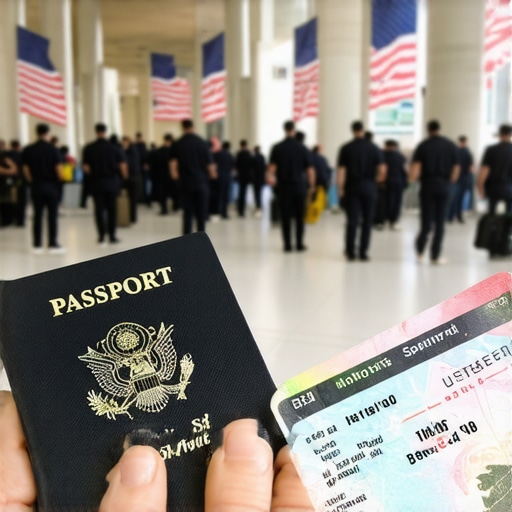
The legal strategy for re-entering the United States after a long absence abroad
The air in my office always smells like ozone and mint just before a crisis. I watched a client lose their entire claim in the first ten minutes of a Customs and Border Protection interview because they ignored one simple rule about silence. They thought being helpful meant talking. They thought their Green Card was an invincible shield. It was not. In the world of high stakes litigation and immigration enforcement, the moment you cross the one year mark outside the domestic borders, you are no longer a resident in the eyes of the government. You are a problem to be solved. An abogado de inmigración does not just fill out forms; we build a fortress around your intent. If you have stayed abroad for too long, you are walking into a trap designed by the Department of Homeland Security to strip you of your status. This is the reality of the border. It is not a welcome mat. It is a checkpoint where your history is dissected under the harsh fluorescent lights of secondary inspection.
The trap of the abandoned residence
Returning to the United States after more than one year abroad requires specific legal documentation because the government presumes you have abandoned your permanent residency status. This presumption creates a shift in the burden of evidence where the traveler must prove their ties to the domestic soil remained unbroken. Under 8 CFR 211.1, a valid unexpired Form I-551 is usually sufficient for entry, but this only applies if the absence was less than one year. Once you cross that 365 day threshold, the document alone is worthless. The officer at the port of entry is trained to look for signs that you have moved your life elsewhere. They look at your bank accounts, your tax filings, and your property holdings. If you have been living in a foreign country, working a foreign job, and paying foreign taxes, you have essentially signed your own deportation order before you even landed. The legal services required to fix this after the fact are far more expensive than the preparation required to prevent it. High stakes litigation begins the moment you hand over your passport. You must have a narrative that explains your absence as temporary, fixed, and non-negotiable.
“The burden of proof remains with the applicant to demonstrate that their absence was temporary and that they never intended to abandon their permanent residence.” – American Bar Association Immigration Law Manual
The specific wording of the law focuses on the concept of a temporary visit abroad. If the visit was not for a relatively short period, it must have been for a period that will terminate upon the occurrence of an event having a reasonable possibility of occurring within a relatively short period. This is the Matter of Huang standard. It is a narrow window. I have seen residents stuck in the dark for three years due to medical emergencies only to be told their emergency lasted too long. The government does not care about your misfortune. They care about the calendar. This is why every single day you spend outside the country must be documented with the precision of a forensic accountant. You need a paper trail that screams your intention to return. This includes active utility bills in the US, a valid driver license, and a credit card that sees regular domestic activity.
The specific mechanics of SB-1 visas
An SB-1 returning resident visa is the primary mechanism for a permanent resident who has remained outside the United States for more than one year due to circumstances beyond their control. This process takes place at a United States consulate and requires a formal interview where you must convince a skeptical officer of your intent. The evidentiary standard is high. You must show that your stay was protracted by reasons you could not influence. A pandemic, a sudden illness, or a government shutdown are valid starting points. However, the logic of the consulate is often cold. If you could have returned and chose not to, you have abandoned your status. The SB-1 process is essentially a trial before you even reach the border. You must file Form DS-117 and provide medical records, employment letters, or legal documents from the foreign country that explain your delay. If the officer denies this, you lose your Green Card on the spot. There is no appeal. You are back to square one. This is why immigration attorney counsel is mandatory for these filings. You cannot afford to guess what the officer wants to hear. You must give them the facts that fit the narrow statutory definition of a returning resident.
Why your green card is not a shield
The physical Green Card is merely evidence of status and not the status itself, meaning it can be revoked if the underlying residency requirements are not met. Many travelers believe that as long as the plastic card has a future expiration date, they are safe to travel indefinitely. This is a dangerous lie. The moment you are suspected of abandonment, the officer may ask you to sign Form I-407. This is a voluntary abandonment of status. Never sign it. If you sign that document, your rights as a permanent resident vanish instantly. You have the right to a hearing before an immigration judge. You have the right to fight for your status in a courtroom. The officer might threaten you with detention. They might tell you that you will never be allowed back if you do not sign. These are tactics. In my experience, the silence of a well prepared client is more powerful than any explanation given under duress. You must insist on your right to a hearing. The litigation of abandonment is won in the details of your ties to the community. Do you have a house? Do you have children in school here? Do you have a job waiting for you? These are the weapons we use to beat the government in court.
“A returning resident must show a continuous, uninterrupted intention to return to the United States during the entirety of the stay abroad.” – Board of Immigration Appeals Precedent
The tactical timing of the re-entry permit
A Re-entry Permit issued via Form I-131 acts as a formal declaration of intent to return and protects a resident for up to two years while abroad. If you know your stay will be long, you do not wait for the problem to arise. You preempt it. The permit is a contract with the government. It says that you are leaving but you are definitely coming back. However, even with this permit, you are not immune to scrutiny. The permit only guards against the one year abandonment rule. It does not guard against other grounds of inadmissibility. If you commit a crime abroad or if you engage in activities inconsistent with your status, the permit will not save you. I treat the I-131 as a strategic maneuver. It buys time, but it does not buy a permanent pass. You still need to maintain your US tax filings. The Internal Revenue Service and the United States Citizenship and Immigration Services are two heads of the same beast. If you file as a non-resident on your taxes to save money, you have just admitted to the government that you are no longer a resident for immigration purposes. The fiscal greed of a client is often the source of their legal downfall. You cannot have it both ways. You are either a resident with all the tax burdens that entails, or you are a visitor.
How to handle the secondary inspection room
The secondary inspection room is a controlled environment designed to elicit admissions of abandonment through repetitive questioning and psychological pressure. If you are sent there, the officer has already flagged you as a potential jumper. This is where the forensic psychology of the law comes into play. You must remain calm. You must be concise. Every word you speak is being recorded and will be used against you in an immigration court. Do not offer information that is not asked for. If they ask why you were gone for 14 months, give the specific legal reason. Do not tell stories about your family or your feelings. The officer is looking for contradictions. They will ask the same question five different ways. They are looking for the crack in your story. If you have an immigration attorney, you should have their contact information ready. While you do not have a right to counsel during the primary inspection, having a pre-drafted statement or a packet of evidence ready to hand over can change the dynamic of the room. It shows the officer that you are prepared for a fight. It shows them that you know your rights. Often, the path of least resistance for an officer is to let a well prepared resident through rather than dealing with the litigation that follows a wrongful detention.
Documentary evidence that survives scrutiny
The most effective evidence of maintained residency includes certified tax transcripts, active property deeds, and records of continuous domestic employment or business ownership. A pile of loose receipts is not evidence. A coherent, tabbed, and indexed folder of legal documents is evidence. We look for the bleed in the documentation. We look for the gaps where the government might find a reason to doubt you. If you have been abroad for medical reasons, we need the original records from the foreign hospital, translated by a certified professional, and accompanied by an affidavit from the treating physician. If the reason was a family emergency, we need proof of the relationship and the necessity of your presence. The goal is to make it impossible for the officer to claim you intended to stay away. The strategic play is often the delayed demand for entry. If you know your evidence is weak, you do not fly into a major hub like JFK or LAX where the officers are jaded and aggressive. You consult with your attorney to find the best possible approach. Litigation is about territory and timing. You choose the ground on which you fight. You do not let the government choose it for you.
The final verdict on returning home
The process of re-entering the United States after a long absence is a high stakes legal chess match. One wrong move and your life in America is over. You must treat every interaction with the government as a step toward a potential trial. You must document every day of your life. You must maintain your ties to the soil. If you have been abroad for more than six months, you are in the danger zone. If you have been abroad for more than a year, you are in a crisis. The solution is not to hope for the best. The solution is to hire an immigration attorney who knows how to build a case that the government cannot break. This is not about travel. This is about your right to exist in this country. Do not leave it to chance. Prepare your evidence, know your rights, and never sign anything without a fight. The border is waiting, and it does not forgive mistakes.